
After twenty years behind the chair, I've learned that the most beautifully marketed products aren't always the most effective. Black rice shampoo is the perfect example-it's everywhere right now, promising everything from dramatic growth to mirror-like shine. But as someone who's studied the chemistry behind hair care formulations for decades, I need to tell you: there's a massive gap between what black rice could do for your hair and what most products actually deliver.
Let me pull back the curtain on the fascinating (and sometimes frustrating) science of black rice hair care, so you can make truly informed decisions about what you're putting on your hair.
The Beautiful Problem with Anthocyanins
Black rice gets its stunning deep purple color from anthocyanins-the same powerful antioxidant compounds that make blueberries blue and red wine red. In theory, these molecules are hair care gold. They could protect your strands from UV damage, neutralize the oxidative stress from heat styling, and shield against environmental pollution.
Here's the problem nobody talks about: anthocyanins are incredibly fragile.
These compounds start breaking down the moment they encounter:
- pH levels outside the 1-4 range (and most shampoos need to be pH 5-7 to be comfortable on your scalp)
- Light exposure, even through those pretty translucent bottles
- Heat during the manufacturing process
- Oxygen every time you open the bottle
- Metal ions that naturally occur in water
This creates what I call the "black rice paradox": the pH that would keep anthocyanins stable and active is far too acidic for regular use on your scalp. The pH that feels good when you wash your hair is the exact environment where anthocyanins fall apart into much less beneficial compounds.
That gorgeous dark color you see when you first buy the product? It often fades to brownish-gray within weeks-a visible sign that those precious anthocyanins are degrading.
NOT SURE WHICH PRODUCT IS RIGHT FOR YOU?
TAKE THE QUIZTakes 30 seconds · 134,000+ customers matched
Rice Water vs. Rice Extract: Not the Same Thing
When you see "black rice" on an ingredient label, you need to ask: what form is it actually in?
Traditional rice water-like the Red Yao women of China's Longsheng region have used for centuries-is a fermented infusion. And that fermentation step? It's everything. Here's what happens during that process:
- Days 1-3: Starches break down into simpler compounds your hair can actually absorb
- Days 4-6: Proteins transform into beneficial amino acids
- Days 7-10: Inositol (a vitamin B8 derivative) reaches peak concentration-this is the compound clinically shown to strengthen hair from within
Fermentation also produces pitera, an ingredient so prized in skincare that some companies have built entire product lines around it. It's rich in vitamins, minerals, amino acids, and organic acids that naturally condition hair.
Most commercial products, however, use rice extract-which is processed completely differently:
- Produced using alcohol or glycol solvents
- Heated to high temperatures that can denature proteins
- Standardized in labs for consistency
- Often missing the fermentation step entirely
It's faster to produce, easier to standardize, and more shelf-stable. But it's not the same thing as the traditional fermented rice water that centuries of results are based on.
The Protein Problem No One Warns You About
Black rice is exceptionally protein-rich compared to other rice varieties. Hydrolyzed rice protein absolutely can strengthen hair, improve elasticity, and reduce breakage.
But here's what I've learned from two decades of fixing hair problems: not everyone needs more protein.
Your hair exists on a delicate moisture-protein balance. Think of it like a seesaw-too much of either side causes problems. Protein-hungry hair (chemically treated, heat-damaged, high-porosity) can thrive with regular protein treatments. But healthy, low-porosity hair can actually become damaged from protein overload.
I see this in my chair constantly-clients using black rice shampoo daily, wondering why their previously healthy hair now feels:
- Straw-like and crunchy, even when wet
- Impossibly tangled
- Brittle, with lots of clean-snap breakage
- Less defined in their natural curl pattern
- Like it's shedding more than usual
They're experiencing protein overload, then buying more products to fix the damage they've unknowingly caused. It's a frustrating cycle, and it's entirely preventable with the right information.
The Chemistry Your Shampoo Bottle Won't Explain
Here's something most people don't know: black rice contains gamma-oryzanol, a compound with impressive anti-inflammatory properties. Sounds great, right?
The catch is that gamma-oryzanol is lipophilic-it loves fat, not water. It doesn't naturally dissolve in water-based shampoo without help from emulsifiers. And the type of emulsifiers used matters enormously.
Premium formulations use phospholipid-based emulsifiers that mimic your hair's natural cell membrane structure, allowing ingredients to actually penetrate where they can do good. These formulations work with your scalp's natural oils rather than stripping them away.
Budget formulations often rely on harsh sulfates or synthetic detergents that may strip away the very benefits the rice compounds are supposed to provide. You're left with clean hair, sure-but also with none of the protective, nourishing benefits you bought the product for.
Why Fermentation Time Isn't Negotiable
In traditional Yao culture, rice water ferments for 7-10 days minimum before use. This isn't some mystical ritual-it's basic biochemistry. The beneficial compounds simply don't develop without adequate time.
Most commercial products that claim "fermented rice water" likely use:
- Accelerated 24-72 hour fermentation with specific bacterial strains
- Added fermentation byproducts mixed with unfermented rice extract
- In some cases, no actual fermentation at all
This matters because time-dependent biochemical transformations create the most beneficial compounds. You can't rush chemistry without paying a price in efficacy.
The Scalp Microbiome Connection
This is where the science gets really interesting. Your scalp hosts an entire ecosystem of bacteria, fungi, and other microorganisms-your scalp microbiome. When balanced, this ecosystem keeps your scalp healthy, reduces inflammation, and may even support better hair growth.
Properly fermented rice water contains:
- Postbiotics (beneficial compounds created during fermentation)
- Prebiotic fibers that feed helpful scalp microbes
- Organic acids that maintain optimal scalp pH
But here's the contradiction I see in many formulations: they include fermented ingredients specifically for microbiome benefits, then add broad-spectrum antimicrobial preservatives that kill both harmful and beneficial microbes.
It's like taking a probiotic while on antibiotics-you're working against yourself.
What the Research Actually Shows
Despite centuries of traditional use, rigorous clinical studies on black rice shampoo specifically are surprisingly rare. Most research cited in marketing materials actually studied:
- Pure anthocyanin compounds in isolation
- Rice protein by itself, not in shampoo formulation
- White or brown rice (different chemical profiles)
- Eating black rice (completely different absorption)
The few studies on topical rice water application show modest benefits:
- Reduced friction damage during combing
- Improved surface smoothness
- Temporary strength improvements
"Modest benefits" is a far cry from the dramatic transformations often promised in before-and-after photos.
Professional Recommendations Based on Hair Type
After years of working with every hair type imaginable, here's my honest guidance:
If You Have Protein-Sensitive Hair
This includes low porosity, virgin, or naturally strong hair:
- Limit black rice products to once weekly maximum
- Alternate with moisturizing, protein-free cleansers
- Watch carefully for protein overload symptoms
- Focus on moisture balance
If You Have Protein-Hungry Hair
This includes bleached, chemically treated, or high-porosity hair:
- Black rice formulations can benefit you 2-3 times weekly
- Always pair with deep conditioning
- Monitor that moisture-protein balance
- Look for complementary moisturizing ingredients
For Everyone
- Verify the product contains fermented rice water, not just extract
- Check that rice water appears in the first five ingredients
- Store away from light and heat
- Use within 6 months of opening
- Pay attention to how your hair responds, not just marketing promises
The Viori Difference: Formulation That Respects the Science
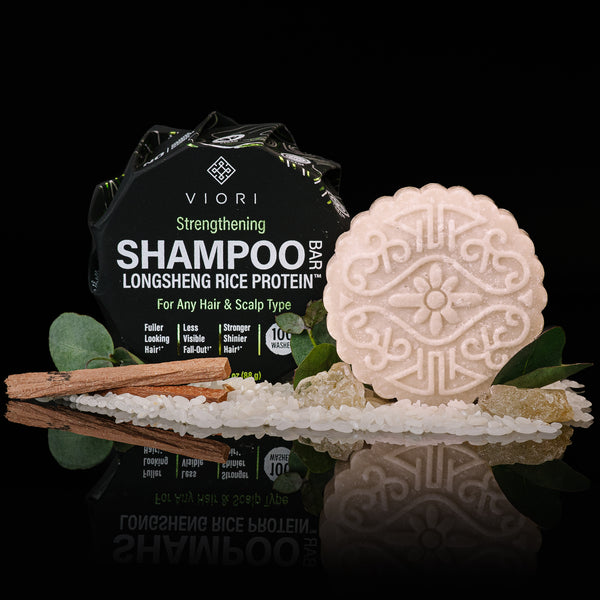
I can only speak to one brand by name, but Viori's approach demonstrates what's possible when you respect both tradition and chemistry.
The use of Longsheng rice-a specific heritage variety from China's mountains-isn't just romantic marketing. Different rice varieties contain vastly different concentrations of beneficial compounds. Longsheng rice is measurably higher in both protein and anthocyanins than commodity rice.
WHAT CUSTOMERS ARE SAYING
Real reviews for Hidden Waterfall Barra de Champú
Their commitment to traditional fermentation methods preserves those time-dependent biochemical transformations. Yes, it takes longer. Yes, it's more complex. But it's also what creates compounds like inositol that actually strengthen hair from within.
The pH-balanced formulation addresses that anthocyanin stability challenge I mentioned earlier. While this might mean slightly lower anthocyanin activity, it ensures consistent, safe use without scalp irritation.
And the bar format itself has technical advantages: solid products require fewer preservatives than liquids, reducing interference with those delicate fermented compounds.
Viori's formulation shows what happens when you start with science and tradition, rather than marketing trends.
What's Coming: The Future of Rice-Based Hair Care
As someone who geeks out over formulation chemistry, I'm excited about emerging innovations:
- Encapsulation technology: Protecting fragile anthocyanins in micro-capsules that release only when they contact your hair
- Controlled fermentation: Using specific probiotic strains to maximize beneficial compounds while minimizing unwanted byproducts
- Microbiome-conscious preservation: Selective antimicrobials that protect the product without destroying beneficial postbiotics
- Personalization: Formulas adjusted for individual protein sensitivity and porosity levels
- Hybrid formulations: Combining fermented rice water with complementary botanicals that enhance both stability and efficacy
The Bottom Line: Education Over Trends
Here's what I want you to take away from twenty years of my professional experience: "contains black rice" doesn't automatically mean "effective formulation."
The form of the rice, the fermentation process, the pH balance, the protein concentration, the emulsifiers used, the packaging, the preservative system-dozens of technical factors determine whether you're getting genuine benefits or just beautifully marketed colored water.
The rice water traditions of the Red Yao women have genuine merit. The results speak for themselves-these women maintain hip-length, incredibly healthy hair well into their elder years. But capturing that traditional wisdom in a modern, shelf-stable product requires sophisticated chemistry that respects both the science and the heritage.
Not every black rice shampoo on the market makes that effort.
As a professional, my job is to help you see past the marketing to understand what's actually in the bottle. Your hair is unique. Your needs are specific. And you deserve products formulated with the same care and precision that traditional methods employed-just with modern science backing it up.
The black rice trend isn't going anywhere. But now you have the knowledge to separate genuine innovation from pretty packaging. And that, ultimately, is what leads to truly beautiful, healthy hair.
Have questions about whether a black rice formulation is right for your specific hair type? The answers lie in understanding your hair's individual moisture-protein balance, porosity, and processing history-not in one-size-fits-all marketing claims.


