
If you've been battling an itchy scalp for months-or years-you've probably tried every ingredient under the sun. Tea tree oil. Salicylic acid. Zinc pyrithione. Maybe you've even gone down the rabbit hole of "scalp detoxes" and apple cider vinegar rinses.
But here's what most people miss, and what I've learned after two decades working with clients struggling with scalp issues: the problem might not be what you're putting on your scalp, but the format you're delivering it in.
Today, I'm going to share something that rarely gets discussed in the beauty industry-how shampoo bars, particularly those from Viori, solve itchy scalp problems through a completely different mechanism than liquid shampoos. And no, this isn't just about "natural ingredients." The science goes much deeper than that.
The Water Problem Nobody Talks About
Let me start with something that might surprise you: traditional liquid shampoos are 70-80% water. And for an itchy, sensitive scalp, that creates a cascade of problems before you even consider the other ingredients.
Problem #1: The Preservative Trap
Water breeds bacteria and mold. It's unavoidable. This means every liquid shampoo-even the "clean" ones-needs an aggressive preservative system to remain shelf-stable. We're talking parabens, methylisothiazolinone, formaldehyde-releasers, or at minimum, phenoxyethanol and potassium sorbate.
Here's the thing: these preservatives are among the most common sensitizers for scalp tissue. And when you have an itchy scalp, you almost always have a compromised scalp-one with a weakened barrier that allows these irritants to penetrate more easily than they should.
Shampoo bars like Viori's are anhydrous (water-free) until you activate them. This makes them self-preserving. Viori uses only sodium lactate-derived from fermented corn and beets-which acts as a humectant and mild preservative without the sensitizing potential of traditional preservatives.
NOT SURE WHICH PRODUCT IS RIGHT FOR YOU?
TAKE THE QUIZTakes 30 seconds · 134,000+ customers matched
If your scalp barrier is already struggling, eliminating these unnecessary irritants is step one.
Problem #2: pH Instability (This Is the Big One)
Here's where it gets technical, but stay with me because this is critical:
Your scalp's natural pH is between 4.5-5.5-that's acidic. This acid mantle protects your scalp from bacteria, yeast, and environmental damage. When you apply an alkaline shampoo (pH 7-9), several things happen:
- Your hair cuticle is forced open
- Your scalp's protective acid mantle is disrupted
- You experience transepidermal water loss (your scalp literally loses moisture)
- Malassezia yeast (a primary cause of seborrheic dermatitis and itching) proliferates
- Your histamine response increases-that's the actual itch sensation you feel
Now here's the problem with liquid shampoos: maintaining stable pH in a water-based system is extremely difficult. Water's pH shifts based on temperature, mineral content, and interaction with other ingredients. Many liquid shampoos that claim to be "pH balanced" actually drift toward alkalinity during use, especially when mixed with hard water.
Shampoo bars are formulated at a specific pH (Viori's range between 3.5-6.5) and maintain that pH more consistently because they don't have water as a variable. When you activate the bar during use, you're controlling the dilution ratio yourself, which gives you more control over the final pH delivered to your scalp.
For someone with chronic scalp itch, this pH stability isn't a minor detail-it's often the difference between relief and ongoing inflammation.
Problem #3: How Sulfates Actually Work (And Why Bars Are Gentler)
In liquid shampoos, sulfates like SLS or SLES are diluted in water. Paradoxically, this makes them more aggressive when they contact your scalp. In an aqueous solution, sulfate molecules are fully dissociated and highly mobile, allowing them to strip lipids indiscriminately from both your hair and scalp.
Viori's bars use Sodium Cocoyl Isethionate (SCI)-a gentler surfactant in a solid matrix. When you lather the bar, you're creating a controlled release system where the surfactant is gradually activated. You get cleansing power without the aggressive stripping action that often triggers the vicious cycle of over-stripping followed by reactive oil production.
The Fermentation Factor: Ancient Wisdom Meets Modern Scalp Science
The Longsheng rice water in Viori's formula isn't just a beautiful origin story-the fermentation process creates specific compounds that are genuinely therapeutic for itchy scalps.
Inositol (Vitamin B8) Production
During rice fermentation, carbohydrates break down into inositol, a compound that:
- Regulates sebum production (addressing both oily-scalp itch and dry-scalp itch)
- Improves cellular signaling in skin cells, helping restore barrier function
- Has been shown in clinical studies to reduce inflammatory markers
Increased Panthenol (Vitamin B5) Bioavailability
Fermentation increases how well panthenol can be absorbed, which is significant because panthenol:
- Penetrates your scalp's outer layer
- Binds water to scalp tissue, reducing the dryness that triggers itch
- Has documented anti-inflammatory properties
Natural Lactic Acid
The fermentation process produces lactic acid, which:
- Gently exfoliates dead skin cells that can trap bacteria and cause itching
- Maintains your scalp's acidic pH, creating an environment inhospitable to problematic yeast and bacteria
- Provides humectant properties without the stickiness of glycerin
These aren't just "nice to have" ingredients-they're addressing the root mechanisms of scalp itch at a cellular level.
The Mechanical Advantage: Why Direct Application Changes Everything
Here's an aspect of shampoo bars that almost never gets discussed: the mechanical action of applying a bar directly to your scalp provides controlled physical exfoliation and massage that liquid shampoos simply cannot replicate.
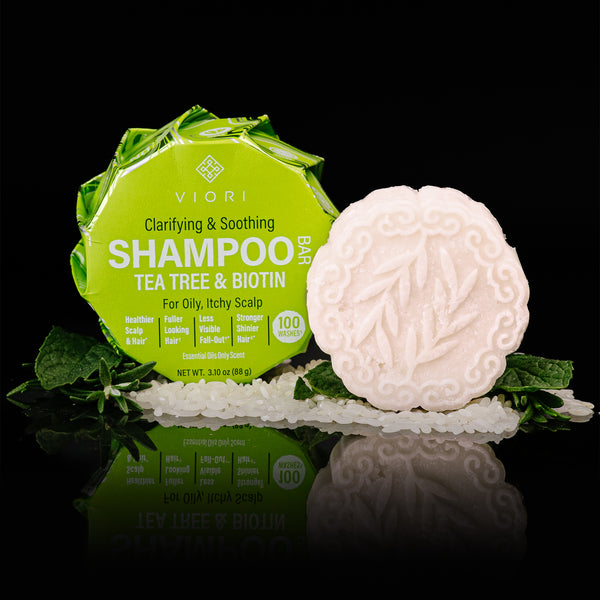
When you use a shampoo bar:
- You're physically lifting dead skin cells and product buildup that trap sweat, sebum, and bacteria-all contributors to scalp itch
- You're stimulating blood flow to the scalp, bringing immune cells and nutrients to the area
- You're creating more thorough, even distribution of active ingredients
This is why Viori's instructions emphasize creating lather in your palm first if you have sensitive conditions-you can control the level of mechanical exfoliation based on your scalp's current state.
Understanding Your Type of Itch
Most discussions treat "itchy scalp" as one condition. Professionally, I categorize it into two distinct types, and this matters for choosing the right formulation:
Oily Scalp Itch (often associated with seborrheic dermatitis or fungal overgrowth):
- Caused by excess sebum production feeding malassezia yeast
- Requires oil-regulating ingredients and antifungal properties
- Benefits from citric acid (found in Viori's Citrus Yao variety)
- Your scalp feels greasy by day two, and you may notice flaking
Dry Scalp Itch (associated with barrier dysfunction, eczema, or over-cleansing):
- Caused by transepidermal water loss and inflammatory response
- Requires emollient ingredients and anti-inflammatory compounds
- Benefits from shea butter and cocoa butter (found in Viori's Terrace Garden and Native Essence varieties)
- Your scalp feels tight, especially after washing, and you may see small, dry flakes
The bar format allows you to choose formulations precisely matched to your itch type, whereas liquid shampoos typically take a one-size-fits-all approach that often works for neither condition.
The Rice Protein Paradox: Getting the Dosage Right
Here's where formulation sophistication really matters:
Hydrolyzed rice protein (present in Viori's formula) is beneficial for itchy scalps because:
- It forms a protective film over the scalp, reducing moisture loss
- It has a low molecular weight, allowing it to penetrate and strengthen the scalp barrier
- It provides amino acids that support scalp cell regeneration
However-and this is critical-protein-sensitive individuals can experience increased itch if they use too much protein too often. This manifests as "protein overload," where hair becomes stiff and the scalp feels tight and itchy.
Viori addresses this by using a low concentration of rice protein that's safe for daily use without triggering protein sensitivity. This is a sophisticated formulation choice-many commercial shampoo bars add high concentrations of protein for marketing claims without considering the scalp sensitivity implications.
If you've tried protein-heavy products in the past and felt like they made things worse, this balanced approach makes all the difference.
The Underrated Power of Bamboo Extract
Bamboo extract appears in Viori's ingredient list, and as someone who's formulated products, I can tell you this is a genuinely underrated ingredient for itchy scalps.
Silica Content: Bamboo is naturally rich in silica, which:
- Strengthens your scalp's connective tissue
- Improves barrier function by supporting collagen formation
- Reduces the inflammatory response that creates the itch sensation
Antioxidant Compounds: Bamboo contains flavonoids and phenolic acids that:
- Neutralize free radicals from UV exposure, pollution, and oxidative stress
- Reduce scalp inflammation at the cellular level
- Support your scalp's microbiome balance
What makes bamboo extract particularly effective in a bar format is that it's present in concentrated form, activated only when you use the product. In liquid shampoos, bamboo extract is often so diluted that it provides minimal benefit beyond marketing appeal.
How Bars Change Your Behavior (And Why That Matters)
This is perhaps the most overlooked aspect: using a shampoo bar forces you to wash your hair differently, and this behavioral change is often more therapeutic than the ingredients themselves.
Reduced Washing Frequency
Bar users typically wash their hair less frequently because:
- Bars don't strip oils as aggressively, reducing the rebound oil production that makes you feel you need to wash daily
- The physical effort of lathering a bar creates more mindful washing behavior
- Bars last longer, creating a psychological shift away from over-cleansing
For itchy scalps, this reduction in washing frequency is genuinely therapeutic. Every wash cycle strips protective lipids and disrupts the scalp microbiome. Washing every 3-4 days instead of daily allows your scalp barrier to regenerate.
WHAT CUSTOMERS ARE SAYING
Real reviews for Tea Tree Shampoo Bar – Oily & Itchy Scalp | VIORI
I've had clients whose scalp issues resolved almost entirely just by washing less frequently-something they were willing to do once they switched to bars but resisted with liquid shampoos.
Scalp Focus vs. Hair Focus
Liquid shampoo users tend to pour product directly onto their hair, creating uneven distribution and often missing the scalp entirely-where the itch actually originates. Bar users must engage with their scalp directly, ensuring that:
- Cleansing ingredients reach the actual source of the problem
- You become more aware of your scalp's condition
- You're more likely to notice improvement or worsening, allowing you to adjust your routine
Water Temperature Awareness
When using a bar, you're more aware of water temperature because you feel the bar's texture changing. This often leads users to choose cooler water, which is better for itchy scalps because hot water:
- Strips protective oils more aggressively
- Increases blood flow, temporarily worsening itch sensation
- Disrupts your scalp's thermal regulation
These behavioral shifts compound with the formula benefits to create results that neither alone could achieve.
Your Scalp Microbiome: The Ecosystem You Didn't Know You Had
Recent research in dermatology emphasizes the scalp microbiome-the community of bacteria, fungi, and other microorganisms that live on your scalp. A healthy microbiome is essential for preventing itch, and this is where the bar format truly shines.
Shampoo bars, particularly those without harsh preservatives and synthetic fragrances, are less disruptive to the scalp microbiome because:
Fewer Antimicrobial Preservatives: Traditional liquid shampoos contain broad-spectrum antimicrobials that kill beneficial bacteria along with problematic ones. Bars like Viori's, being self-preserving, don't require these ingredients.
pH Consistency: A stable, slightly acidic pH supports beneficial bacteria while inhibiting problematic organisms like Staphylococcus aureus and Malassezia species that contribute to itching and flaking.
Gentler Cleansing: SCI is less disruptive to microbial cell membranes than sulfates, allowing some beneficial organisms to survive the washing process and maintain a balanced scalp ecosystem.
Think of it this way: you're not just cleaning your scalp-you're maintaining an environment where the good microorganisms can thrive and keep the problematic ones in check.
The Fragrance Question: Why "Clean Scents" Matter
Viori uses what they call "clean scents"-fragrance oils that are either natural or nature-identical (synthetic molecules that match natural ones exactly). For itchy scalps, this distinction is more than marketing:
Traditional Synthetic Fragrances contain phthalates and musk compounds that:
- Are known allergens and irritants
- Can accumulate in scalp tissue
- Often contain between 50-300 different chemical components, making allergy testing nearly impossible
Nature-Identical Fragrances (as Viori uses):
- Have simpler chemical structures
- Are free from known sensitizers like hydroxycitronellal and lyral
- Don't contain the "fixatives" that traditional fragrances use, which often cause delayed-type hypersensitivity reactions (the kind where your scalp doesn't itch


