
I'll never forget the client who came into my salon nearly in tears. "I'm trying to do the right thing," she said, "but my hair looks terrible." She'd switched to a shampoo bar for environmental reasons, and after three weeks, her normally glossy hair looked dull, felt waxy, and wouldn't hold a style.
In my twenty years behind the chair, I've seen this scenario play out dozens of times. The frustration is real, the residue is real, and the confusion is absolutely understandable. But here's what took me years to figure out: that residue isn't a sign that shampoo bars don't work. It's a sign that they work completely differently than what we've been using our entire lives.
Let me take you behind the scenes of what's actually happening on your hair shaft-because once you understand the chemistry, the solutions become surprisingly simple.
The Thing Nobody Tells You About Switching Products
When you swap liquid shampoo for a bar, you're not just changing packaging. You're fundamentally altering the chemical environment of your hair.
Think about it this way: your hair carries a negative electrical charge, especially if it's been colored, bleached, or heat-styled. For years, you've probably been washing it with sulfate-based shampoos that strip away absolutely everything-the good, the bad, and the essential.
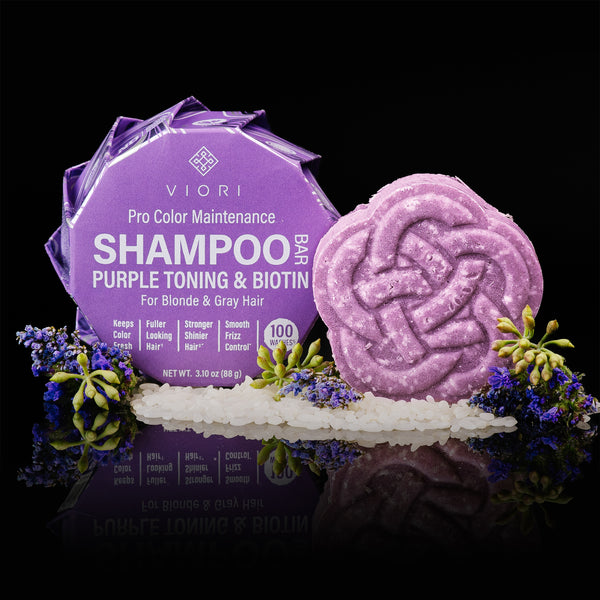
Quality shampoo bars like Viori work on a different principle entirely. They contain positively charged conditioning agents (like Behentrimonium Methosulfate) that are naturally attracted to your negatively charged hair. These molecules smooth down the cuticle and add slip.
Here's the wild part: if your hair has spent years being completely stripped clean with every single wash, it literally doesn't know what to do when something beneficial actually stays on the hair shaft. Your brain, trained by decades of that squeaky-clean sulfate feeling, interprets this nourishment as "dirty" or "coated."
Sometimes what feels like residue is actually just your hair holding onto good ingredients for the first time in years. Your perception needs to catch up to reality.
The Hard Water Problem Everyone Mentions (But Nobody Explains)
You've probably read that hard water causes issues with shampoo bars. What you might not know is why, or what you can actually do about it.
The Chemistry That Creates That Waxy Feeling
When your water is loaded with calcium and magnesium-which describes about 85% of U.S. households-these minerals create molecular bridges between the fatty ingredients in your shampoo bar and the protein structure of your hair.
NOT SURE WHICH PRODUCT IS RIGHT FOR YOU?
TAKE THE QUIZTakes 30 seconds · 134,000+ customers matched
Picture chemical Velcro. These mineral bridges form a network that regular rinsing just can't break down, no matter how long you stand under that shower.
Temperature makes this exponentially worse. Hot water opens your hair cuticle, allowing these mineral-fatty acid complexes to penetrate deep into the hair shaft. When you finish your shower and your cuticle closes back up, you've essentially locked these complexes inside your hair.
The result? That characteristic waxy, heavy feeling that leaves you wondering if you even shampooed at all.
The pH Puzzle Nobody Talks About
Here's something that blew my mind when I finally understood it: the pH of your shampoo bar sitting on your shelf is completely different from the pH of that same product mixed with water on your head.
Viori bars are formulated to match your hair's natural slightly acidic pH (around 4.5-5.5), which is perfect for keeping the cuticle sealed and smooth. But when you create lather, you're diluting that carefully formulated product with whatever comes out of your showerhead.
If your water is neutral (pH 7) or alkaline-which is common in hard water areas-that small amount of shampoo bar might not have enough power to maintain its acidity when it's being mixed with gallons of rinse water.
What happens? Your cuticle opens from the alkaline water exposure, conditioning agents deposit onto your hair, but then the cuticle doesn't fully close because the rinse water isn't acidic enough. Those partially-raised cuticle scales trap product, creating that rough, sticky texture that drives people back to liquid shampoos.
The Rice Water Factor
One of Viori's signature ingredients is fermented Longsheng rice water, used by the Red Yao women for generations. The benefits are real-proteins for strength, B vitamins for health, traditional conditioning properties that have kept these women's hair healthy well into their eighties.
But these powerful benefits come with a learning curve that nobody warned you about.
When Protein Becomes Too Much of a Good Thing
Rice protein can actually penetrate your hair cuticle, which is wonderful for strengthening. Unlike oils or silicones that sit on the surface and wash away, proteins bind to your hair's keratin structure. They accumulate.
If you have low-porosity hair-where the cuticle lies flat and tight-these proteins struggle to penetrate. Instead, they pile up on the surface, creating a stiff, straw-like texture that looks and feels like damage but is actually protein overload.
I had a client who thought her hair was breaking from a shampoo bar. Turns out she just needed to skip a few washes and use a clarifying treatment. Her hair wasn't damaged; it was wearing a protein sweater it didn't need.
The Starch Situation
Fermented rice water contains starches that absorb oil-amazing for skincare, trickier for hair. On fine or thin hair, these starches can create a texture that feels simultaneously dry and coated. Your hair is literally holding onto starch particles that soak up your natural scalp oils before they can travel down the hair shaft.
For thick, coarse, or porous hair, this is usually beneficial. For fine hair? It can feel like you're washing with dry shampoo that won't brush out.
Let's Talk About the "Detox Period" (Sort Of)
First, let's clear something up: your hair doesn't detox. It's dead protein. It has no metabolism, no toxins to flush, no cleansing organs. But something real is happening during those awkward first few weeks.
Your Scalp Is Stuck in the Past
When you've been using harsh sulfate shampoos, your scalp compensates by overproducing oil. It's trying to protect itself from being stripped every day. When you switch to a gentler bar shampoo, your sebaceous glands don't get the memo immediately.
For anywhere from two to eight weeks, your scalp is still pumping out oil at "high-sulfate levels," but you're now washing with a gentle cleanser that isn't designed to strip that volume of sebum. The excess oil mixes with the fatty ingredients in your bar and creates waxy buildup.
This isn't permanent. Your scalp will recalibrate. But it requires patience-and knowing this is normal can help you push through instead of giving up on week two.
Technique Matters More Than Anyone Admits
Bar shampoos require different application than liquids. Most people don't create enough lather or don't distribute it evenly. This leads to concentrated product in some areas and not enough cleansing in others-patchy residue that has nothing to do with the product formula and everything to do with how you're using it.
When Your Conditioner Bar Becomes the Problem
Viori's conditioner bars are rich in occlusives like cocoa butter and shea butter. For dry, porous, or damaged hair, these create a beautiful protective moisture seal. For fine, oily, or low-porosity hair, they can be suffocating.
Here's the thing that makes this worse: occlusives don't just seal in moisture-they seal in everything, including shampoo residue you didn't rinse thoroughly enough.
If you've got hard water and you didn't rinse for as long as you think you should have (and trust me, it's probably longer than you think), and then you apply a butter-rich conditioner, you're basically laminating that residue onto your hair shaft.
The butters create a water-resistant film. Subsequent rinsing becomes even less effective. The buildup compounds with every wash until you're ready to throw the whole bar in the trash.
The Fragrance Factor You Didn't Consider
Viori's beautifully scented bars contain fragrance oils-blends that give you those gorgeous scents like Citrus Yao or Hidden Waterfall. To make these scents last beyond your shower, the formulation includes fixatives that help fragrance molecules stick to your hair.
In the right amounts, this creates a pleasant, lingering scent. With over-application or improper rinsing, these fixatives contribute to that coated feeling.
Some fragrance components are oil-loving, meaning they preferentially bind to the fatty ingredients in the formula, creating micro-complexes that resist water rinsing more stubbornly than any individual ingredient would alone.
Professional Solutions That Actually Work
After helping countless clients navigate this exact issue, here are the strategies that have consistently delivered residue-free results:
1. The Acidic Rinse Protocol
This is the single most effective intervention I know. After conditioning, do a final rinse with acidified water-one tablespoon of apple cider vinegar or citric acid powder in two cups of water.
This serves multiple purposes:
- Lowers pH to fully seal the cuticle
- Breaks apart those calcium bridges from hard water
- Neutralizes any alkalinity from your water
- Helps release fragrance fixatives and other stubborn molecules
Pour it through your hair as a final rinse. Don't rinse it out. Yes, it smells like salad dressing for about thirty seconds. The vinegar smell completely disappears as your hair dries, I promise.
2. The Clarifying Cycle
Every four to seven washes, use a chelating treatment to remove mineral buildup. You can invest in a specialized chelating shampoo, or simply work distilled white vinegar through dry hair before shampooing.
This removes the accumulated minerals that create binding sites for product residue. Think of it as resetting your hair to zero so your shampoo bar can work on a clean slate.
3. The Temperature Gradient Technique
This one changed everything for my hard-water clients:
- Wash with warm water to open the cuticle for cleansing
- Rinse conditioner with cool water to begin closing the cuticle
- Do your final acidic rinse with cold water to fully seal
This progressive temperature reduction prevents residue from being trapped while still allowing beneficial ingredients to be retained where they're needed. Yes, the cold water is uncomfortable. Yes, it's worth it.
4. The Lather Dilution Method
Instead of rubbing the bar directly on your hair-which is what most people do-create rich lather in your hands with plenty of water, then apply the lather to your hair.
This gives you control over product distribution and prevents over-depositing in concentrated areas. You want diluted, even coverage, not thick globs of product in random spots that your rinse water can't effectively remove.
5. Know Your Hair's Actual Needs
If you have low-porosity, fine, or protein-sensitive hair, consider using Viori's shampoo bar but switching to a lighter, liquid conditioner-or skipping conditioner on some washes entirely.
The shampoo bar already contains BTMS, a conditioning agent. For some hair types, this is sufficient conditioning on its own. Adding a rich conditioner bar on top might simply be too much.
6. Add Mechanical Action
Use a scalp massaging brush or silicone scrubber while shampooing. The mechanical action distributes lather more evenly and physically dislodges residue that water pressure alone cannot remove.
This is particularly important with natural bars, which typically have lower surfactant concentrations than conventional shampoos. You need to help the product do its job.
What I've Learned After Twenty Years
After working with hundreds of clients through the bar shampoo transition, I've come to this conclusion: residue is almost never about the product being poorly formulated. It's about the mismatch between the product's chemistry and your specific water, hair type, and technique.
WHAT CUSTOMERS ARE SAYING
Real reviews for Purple Shampoo Bar with Biotin – Blonde & Gray | VIORI
Viori's formulation is genuinely sophisticated. The combination of gentle cleansing surfactants, conditioning agents, and rice-derived ingredients creates a well-balanced product that works beautifully for most users.
But "most" doesn't mean "all."
The key is understanding that bar shampoos require you to become an active participant in your hair care, rather than a passive consumer. You need to know your water hardness. You need to understand your hair's porosity and protein tolerance. You need to modify your technique based on results, not just mindlessly repeat the same routine.
The Bigger Picture
Here's my honest professional perspective: the sustainable beauty industry has sometimes over-promised and under-educated.
Brands like Viori create genuinely excellent products with ethical sourcing and sustainable practices. The quality is there. The intention is there. But bar shampoos have been marketed as simple "drop-in replacements" for liquid shampoos, when the reality is they're fundamentally different products requiring education and adjustment.
The "residue problem" isn't always a flaw. Sometimes it's a feature of products that actually deposit beneficial ingredients instead of stripping everything away.
Our entire perception of "clean hair" has been warped by decades of sulfate shampoos that leave hair squeaky-literally stripped of all protective lipids. When we encounter hair that retains moisture, protein, and natural oils, we've been conditioned to interpret it as "dirty" or "not clean."
Recalibrating What Clean Actually Feels Like
For many people, overcoming the residue issue isn't about changing products. It's about recalibrating expectations and relearning what healthy hair actually feels like.
Truly clean, healthy hair doesn't squeak when it's wet. It has slip. It retains some natural oils. It holds beneficial proteins. If you've spent twenty years washing with sulfate shampoos, properly nourished hair might feel completely foreign at first.
The residue you're experiencing might be genuine buildup requiring the technical interventions I've outlined above. Or it might be your hair being properly nourished for the first time in years, and your sensory expectations haven't caught up yet.
The art-and science-is knowing the difference.
Making It Work for Your Hair
Sustainable beauty shouldn't mean suffering through subpar results. It should mean being educated enough to achieve excellent results through informed technique.
If you're experiencing residue with your shampoo bar, start here:
Start with water hardness. Test your water or check your municipal water report online. If you have hard water (above 120 ppm), implement the acidic rinse protocol immediately. This alone solves the problem for about 60% of people I work with.
Assess your technique honestly. Are you creating enough lather? Distributing it evenly? Rinsing thoroughly-and I mean standing under that water for a full minute, not a quick ten-second rinse? Most people dramatically underestimate how long proper rinsing takes with bar products.
Consider your hair type realistically. Fine, low-porosity, or protein-sensitive hair may need modified routines: less frequent washing, lighter conditioning, periodic clarifying, or even alternating between bar and liquid products.


