
So, you’ve scrolled past the gorgeous, swirling images of homemade shampoo bars. You’ve saved the recipe that promises salon-quality hair with coconut oil, shea butter, and a few drops of essential oil. It looks simple, pure, and utterly satisfying to make. I get it. As a hairstylist for two decades, I love the desire to know exactly what you’re putting on your hair and scalp.
But here’s the raw truth I’ve learned from both my clients and the chemistry behind our craft: making a shampoo bar that actually improves your hair health is a different beast from making one that just looks pretty on a wooden dish. Let's talk about what really goes into it, and why the most profound formulas often come from a place you can't replicate at home.
NOT SURE WHICH PRODUCT IS RIGHT FOR YOU?
TAKE THE QUIZTakes 30 seconds · 134,000+ customers matched
The Biggest Mistake Everyone Makes (It’s All About pH)
Think of your scalp as a finely tuned garden. Its ideal environment is slightly acidic, with a pH between 4.5 and 5.5. This "acid mantle" keeps your hair's cuticle smooth, locks in moisture, and protects against irritation.
Now, most DIY shampoo bars are, chemically speaking, soap. And soap is inherently alkaline, often with a pH of 8 to 10. Using it on your hair is like pouring a mild baking soda solution on that garden every day. The consequences are real:
- The "Waxy" Feeling: Minerals in hard water bind to the soap, leaving a stubborn film.
- Frizz and Breakage: The raised, rough cuticles snag on each other.
- Dryness & Scalp Rebellion: Stripped of its natural balance, your scalp can become either irritated and flaky or over-productive with oil.
A true shampoo bar must be pH-balanced. Achieving that at home isn't just about adding lemon juice; it requires precise measuring with a pH meter and the knowledge to adjust without ruining your batch.
Deconstructing the Bar: It’s Not Just Oils
Let's break down what a functional bar needs, piece by piece. This is where hobby meets cosmetic science.
1. The Cleanser: The Heart of the Lather
Forget saponified oils for a pH-safe bar. The gold standard is a gentle surfactant like Sodium Cocoyl Isethionate (SCI), a coconut-derived powder that creates a rich, non-stripping lather. Working with it is a specific skill-it’s not your grandma’s soap-making.
2. The Conditioner: The Secret to Silky Hair
This prevents the dreaded squeaky-clean feel. Ingredients like Behentrimonium Methosulfate (a plant-based conditioner) and Cetyl Alcohol (a moisturizing fatty alcohol) are essential. They provide slip, help seal the hair cuticle, and actually bind the bar together.
3. The Nutrient Boost: Where Magic Meets Tradition
This is the "why" beyond basic cleaning. You might add a favorite oil. But consider the power of something like fermented rice water. True fermentation isn't just soaking rice; it's a biochemical process that increases levels of nutrients like inositol and panthenol, which are proven to strengthen hair. This isn't a trendy hack-it's the core of ancient hair rituals, like that of the Red Yao tribe, who are celebrated for their lifelong hair health. Replicating that specific, generations-old process in your kitchen? Nearly impossible.
The Ingredient You Can’t Buy: Time-Tested Ritual
This is my stylist's perspective: the best hair care embodies a ritual, not just a recipe. There's an intangible value in a practice refined over centuries.
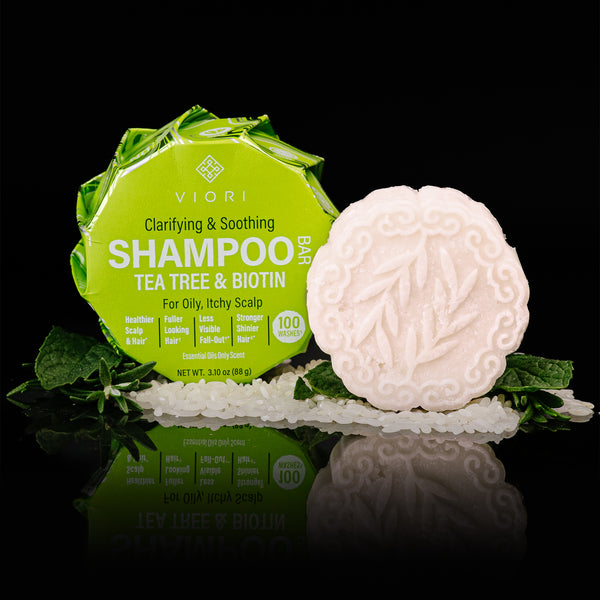
Look at the story behind Viori. Their bars are a direct nod to a 2,000-year-old Red Yao tradition. The beautiful patterns on the bars? They’re inspired by cultural symbols and mooncake designs. This isn't just branding; it signifies that the core ingredient protocol has been validated by time and a whole community known for incredible hair.
WHAT CUSTOMERS ARE SAYING
Real reviews for Tea Tree Shampoo Bar – Oily & Itchy Scalp | VIORI
When you use a bar with that legacy, you're connecting to a holistic wisdom. That’s something no single DIY recipe can truly capture.
The Verdict: Should You DIY Your Shampoo Bar?
Be brutally honest with yourself about your goals.
- For the Science-Loving Hobbyist: If you love experiments, own a pH meter, and are ready for trial and error, go for it! It’s a fantastic learning journey. Source quality SCI, start small, and document everything.
- For the Results-Seeking Realist: If you want guaranteed scalp balance, proven efficacy, and a piece of sustainable, ethical craftsmanship, a professionally formulated bar is a worthy investment. Seek out bars that are transparent about being pH-balanced, sulfate-free, and inspired by real traditions.
At the end of the day, magnificent hair is about conscious choices. Whether you craft it yourself or choose a bar steeped in history, do it with respect for the complex biology of your hair and the wisdom that truly lasts.


