
As a hair professional with two decades of experience, I'm often asked about supplements like biotin and their various forms. It's crucial to understand that while I can discuss the general characteristics of these delivery methods, my expertise lies in topical hair care and scalp health. The foundation of beautiful hair is a healthy scalp and nourished strands, which is why I always emphasize a consistent, high-quality hair care ritual as the first and most critical step. Internal supplements should be considered a secondary support system, and it's essential to consult with a healthcare provider before starting any new regimen.
NOT SURE WHICH PRODUCT IS RIGHT FOR YOU?
TAKE THE QUIZTakes 30 seconds · 134,000+ customers matched
Understanding the Delivery Methods
That said, let's break down the general differences between biotin pills, gummies, and liquids from a formulation and absorption perspective.
Biotin Pills (Capsules/Tablets)
These are the most traditional form. Pills typically offer a precise, high potency of biotin (often 5,000 mcg to 10,000 mcg). They are usually shelf-stable, portable, and contain minimal added ingredients beyond the active vitamin and necessary binders. For individuals seeking a high dose without added sugars or flavors, a pill is a straightforward option. Absorption can be efficient, but it depends on the individual's digestive health and the specific formulation.
Biotin Gummies
Gummies have gained popularity due to their palatability, which can improve consistency for those who dislike swallowing pills. However, this form often comes with trade-offs. To achieve the pleasant taste and texture, gummies frequently contain added sugars, gelatin, artificial colors, and flavors. The actual biotin potency per gummy can be lower than in a pill, meaning you might need to take more to reach an equivalent dose. They can be a good entry point for someone new to supplements, but it's important to scrutinize the ingredient list for unnecessary additives.
Biotin Liquids (Drops or Sprays)
Liquid biotin is often marketed for its potential for faster or more flexible absorption. The theory is that a sublingual (under the tongue) drop can be absorbed directly into the bloodstream, bypassing the digestive system. This can be beneficial for individuals with digestive issues that might hinder pill absorption. Liquids also allow for easy dose adjustment. However, they can sometimes contain alcohol or other solvents as carriers, and the taste may not be pleasant. Stability can also be a concern, as some liquid vitamins may degrade faster than solid forms.
The Core Consideration: Topical Nourishment is Key
Regardless of the internal supplement form you and your doctor choose, remember that hair is a non-essential tissue. The body will prioritize sending nutrients to vital organs first. This is why direct, topical nourishment is so powerful and non-negotiable for visible hair health.
WHAT CUSTOMERS ARE SAYING
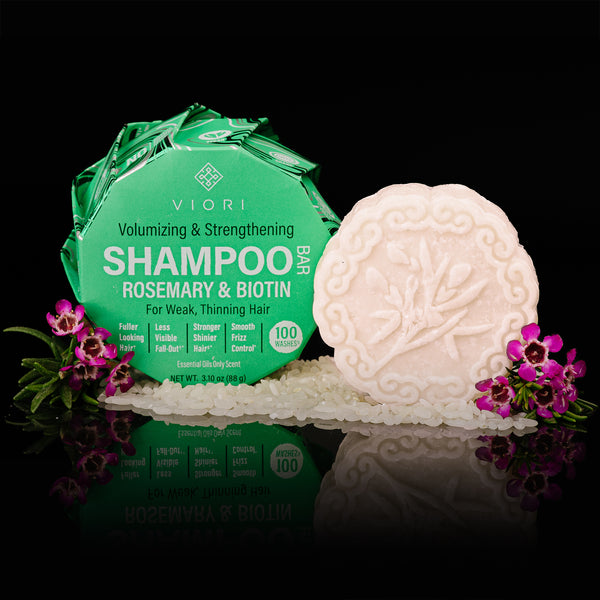
Real reviews for Rosemary Biotin Shampoo Bar – Thinning Hair | VIORI
This is where the wisdom of time-honored rituals becomes relevant. The concept isn't about applying a synthetic vitamin topically; it's about using nutrient-rich, fermented ingredients that the hair and scalp can directly utilize. For example, fermented rice water is a traditional source of inositol and antioxidants that support the hair follicle environment. When you use a product built on such a principle, you are delivering targeted nourishment right where it's needed-to the scalp and hair shaft-complementing any internal efforts.
Final Professional Advice
- Consult Your Doctor: Always before starting biotin or any supplement, especially as high biotin levels can interfere with certain lab tests.
- Prioritize Your Hair Care Ritual: Invest in a gentle, pH-balanced, and nutrient-rich hair care system. A healthy scalp is the most fertile ground for hair growth.
- Look for Complementary Ingredients: Whether considering internal supplements or topical products, look for supporting nutrients. Beyond biotin, things like panthenol, antioxidants, and proteins work synergistically for hair strength and shine.
- Consistency is Everything: The benefits of any regimen-internal or topical-are only realized with consistent, long-term use. Patience is essential, as the hair growth cycle is measured in months.
In essence, the "best" form of biotin is highly individual and should be a decision made with medical guidance. However, as a stylist, I have seen the most transformative results when clients pair a thoughtful internal approach with a dedicated, high-quality topical hair care routine that cleanses, conditions, and nourishes the hair and scalp directly.


