
As a professional stylist for over two decades, I've seen firsthand that achieving your hair goals is a holistic endeavor. While biotin, a B-vitamin, is often celebrated for supporting keratin infrastructure, its effectiveness is profoundly influenced by your overall lifestyle and the health of your scalp environment. You cannot simply supplement in isolation and expect transformative results. The key is to create a foundation that allows nutrients to work optimally and to pair internal support with exceptional external care.
NOT SURE WHICH PRODUCT IS RIGHT FOR YOU?
TAKE THE QUIZTakes 30 seconds · 134,000+ customers matched
Think of it this way: biotin can help provide the building blocks for stronger hair, but if your scalp is imbalanced, your follicles are clogged, or your strands are constantly under assault from harsh chemicals, those building blocks can't be used effectively. Here’s how to build a lifestyle that maximizes your hair’s potential, with a special focus on the critical role of your haircare routine.
1. Nourish from Within: The Synergy of Diet and Supplementation
Biotin doesn't work in a vacuum. It requires a chorus of other nutrients to perform its role in hair health.
- Support with a Balanced Diet: Ensure your diet is rich in other B-vitamins, iron, zinc, vitamin D, and high-quality proteins. Hair follicles are among the most metabolically active cells in your body. A diet lacking in these co-factors can render biotin supplementation far less effective. Focus on whole foods like eggs, nuts, seeds, leafy greens, and lean meats.
- Prioritize Hydration: Dehydration directly impacts the health of your scalp and the elasticity of your hair shaft. Aim for adequate water intake daily to keep cells functioning optimally and to support the delivery of nutrients to the follicle.
- Manage Stress Consistently: Chronic stress is a well-documented trigger for telogen effluvium (shedding) and can disrupt nutrient absorption and utilization. Incorporate stress-reducing practices like meditation, walking, or yoga. Protecting your mental well-being is a direct investment in your hair's growth cycle.
2. Cultivate a Scalp-First Haircare Philosophy
This is the most critical and often overlooked lifestyle change. Your scalp is the soil from which your hair grows. No amount of biotin can compensate for a neglected or irritated scalp.
- Choose pH-Balanced, Nourishing Formulas: Many commercial shampoos have alkaline pH levels that can dry out the scalp, disrupt its acid mantle, and lead to irritation, flaking, and a compromised follicle environment. It is essential to use products that are pH-balanced to maintain scalp health. Look for formulations designed to moisturize, strengthen, and reduce scalp irritation.
- Select Products Based on Your Scalp Type, Not Just Your Hair: This is a professional secret. An oily scalp has different needs than a dry, sensitive one. For instance, a formula with natural citrus elements can help break down excess oil for those with oilier scalps, while those with dry or sensitive scalps will benefit from ultra-moisturizing, fragrance-free options. Matching your product to your scalp condition ensures it is cleansed and conditioned without disruption.
- Eliminate Harsh Chemicals: Sulfates, parabens, and synthetic alcohols can strip the scalp and hair, leading to dryness, breakage, and an environment where hair struggles to thrive. Transitioning to products that are sulfate-free, paraben-free, and use only natural, fatty alcohols can remove this constant source of stress on your hair and scalp, allowing them to find a healthy balance.
3. Refine Your Mechanical and Thermal Habits
How you handle your hair daily can undermine all other efforts.
- Be Gentle When Detangling: Always use a wide-toothed comb on wet hair, starting from the ends and working up to prevent unnecessary breakage.
- Protect from Heat: Minimize the use of hot tools. When you do use them, always apply a heat protectant. Consider embracing more heat-free styling methods.
- Use Protective Styles and Silk: Sleep on a silk or satin pillowcase to reduce friction. Use gentle, snag-free hair ties and avoid styles that pull tightly on the follicles.
4. The Power of Patience and Consistency
Hair growth is a slow process, with the average follicle cycling over 2-7 years. Lifestyle changes and quality nutritional support, like biotin, work at the cellular level to influence the new hair that is growing. You must be consistent for at least 2-3 months to begin to see noticeable changes in length, strength, and overall vitality. The hair you see today was formed months ago.
WHAT CUSTOMERS ARE SAYING
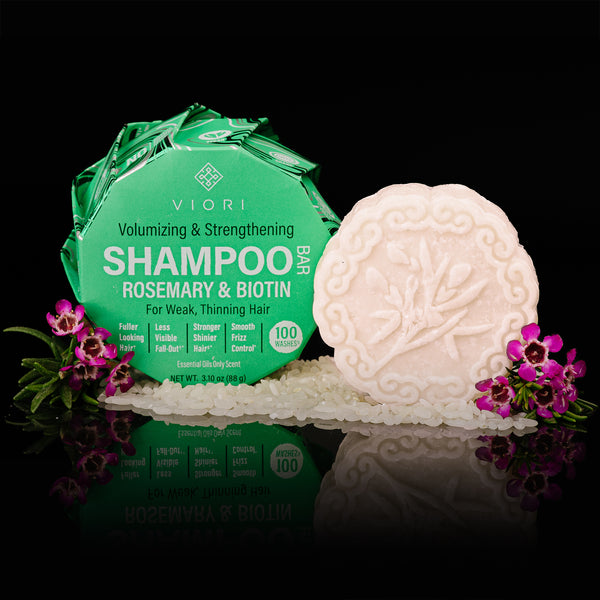
Real reviews for Rosemary Biotin Shampoo Bar – Thinning Hair | VIORI
In essence, enhancing the effects of biotin is about creating a lifestyle of holistic support. Nourish your body with a balanced diet and stress management, and-most importantly-treat your scalp with the same care you aspire to see in your hair. By choosing gentle, pH-balanced, and scalp-specific haircare, you remove barriers to growth and create the ideal external environment for your internal efforts to truly shine through.


