
Search for a shampoo bar on Amazon and you’ll get hit with a wall of options that all sound the same: “natural,” “clarifying,” “for hair growth,” “pH balanced,” “clean ingredients.” Then you read the reviews and it’s chaos-one person says their hair has never looked better, the next says it turned waxy, dull, or knotted.
After two decades of working with real hair (every texture, every color service, every “my scalp is doing something weird” season), I can tell you the problem isn’t you-and it isn’t even “shampoo bars” as a whole. The problem is that not all shampoo bars are the same type of product. Under the hood, there are a few completely different chemistries being sold under the same label, and Amazon listings rarely explain which one you’re buying.
Let’s fix that. Below is the technical truth-made readable-so you can choose wisely, avoid the common pitfalls, and get the results people are actually hoping for when they switch to bars. I’ll also use Viori as a clear example of a modern bar system that’s designed like professional haircare, not like bath soap.
The big secret: “Shampoo bar” isn’t one category
Most shoppers assume a shampoo bar is a shampoo bar. In reality, you’ll typically run into three different “families,” and they can behave so differently that it feels like you’re comparing three unrelated products.
1) Soap-based bars (where a lot of frustration starts)
Some bars are true soap bars made from oils that have been turned into soap. They can cleanse well, but they often run more alkaline than hair loves. When pH is too high, the hair cuticle can lift more than you want, which increases friction and makes hair more prone to roughness and tangles over time.
This is especially noticeable on hair that already struggles with cuticle integrity, like:
NOT SURE WHICH PRODUCT IS RIGHT FOR YOU?
TAKE THE QUIZTakes 30 seconds · 134,000+ customers matched
- bleached or highlighted hair
- color-treated hair
- curly, coily, or highly textured hair
- high-porosity hair
2) Syndet bars (a modern “shampoo in a bar” approach)
A lot of high-performing shampoo bars are what formulators call syndet bars. The name sounds scary, but the concept is simple: instead of being soap, the bar uses gentle cleansing agents that can be formulated to behave more like a liquid shampoo.
One cleanser you’ll often see in well-designed bars is Sodium Cocoyl Isethionate (SCI), a mild cleanser derived from coconut. It’s known for being effective without the harsh, stripped feeling people associate with older-style detergents.
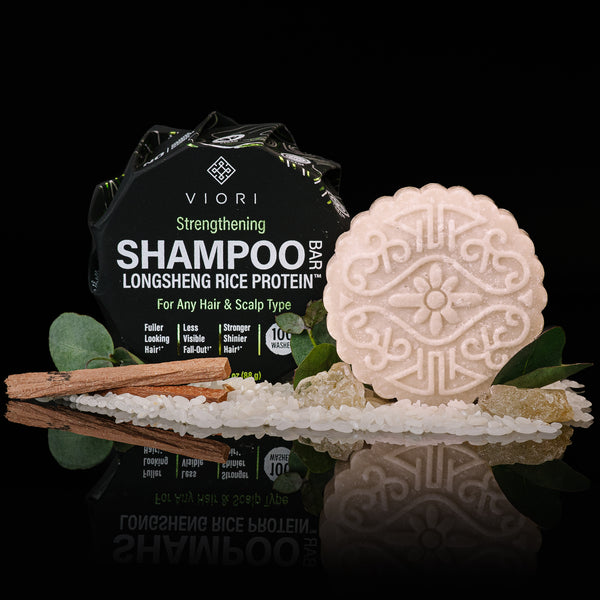
Viori uses SCI as the cleanser in its shampoo bars and formulates them to be pH balanced, which is a big reason many people find the cleanse feels thorough but not aggressive.
3) Combo bars (cleansing + conditioning in one)
Some bars aim to be a “2-in-1.” When they’re balanced, they can be convenient. When they’re not, they can leave hair feeling coated-especially if you have fine hair or low porosity hair that’s prone to product buildup.
The key point is this: two shampoo bars can look identical on Amazon and still perform completely differently because their internal chemistry (and deposition behavior) isn’t the same.
The angle most people miss: bars change the physics of washing
This is the part that almost never gets explained in a product listing: the bar format changes the mechanics of how product gets onto your hair. And mechanics matter-especially when hair is fragile.
When you rub a bar directly on your head, you increase:
- friction against the cuticle (more wear and tear)
- localized concentration of cleanser (stronger “hot spots”)
- tangling risk (especially at the crown and nape)
If you’ve ever thought, “My hair feels worse with bars,” there’s a decent chance the formula was fine and the application method was just too abrasive for your hair type.
A better way to apply a shampoo bar (especially for color-treated hair)
Viori recommends a technique I also teach clients who are switching to bars: keep direct bar friction off the hair as much as possible.
- Soak hair thoroughly (bars perform best with plenty of water).
- Rub the bar between your palms to build a rich lather.
- Apply the lather to your scalp and work it through with your hands.
- Rinse well, then repeat only if you truly need a second cleanse.
This one change can dramatically reduce roughness and help preserve hair that’s already more vulnerable, including many color-treated heads.
Why pH is not just a buzzword
pH impacts how the cuticle behaves. When products run too alkaline, hair can swell and lift at the cuticle, which can show up as:
- more tangling during rinsing
- increased frizz as hair dries
- dullness (light doesn’t reflect as evenly off a rough cuticle)
- more breakage over time due to higher friction
Viori is upfront about keeping their bars pH balanced, and that’s not a small detail. It’s part of why a bar can feel like true haircare instead of “soap that happens to foam.”
The “waxy hair” complaint has two different causes
When someone tells me a shampoo bar left their hair waxy, I don’t assume the same problem every time. There are two common culprits, and they require different fixes.
Cause #1: hard water + soap scum
If a bar is soap-based and you have hard water, minerals can interact with soap and form deposits that cling to hair. People experience this as waxy drag, dullness, and stubborn buildup that doesn’t rinse clean.
Cause #2: over-deposition on low porosity hair
Some bars deposit lots of conditioning materials. If your hair is low porosity, it can be more prone to surface buildup because it absorbs more slowly-so the hair can feel coated and heavy faster.
Here’s a quick way to guess which one you’re dealing with:
- Squeaky in the shower but waxy once dry: often mineral/soap interaction
- Soft in the shower but limp or greasy by day 1-2: often over-deposition
How to “read” a shampoo bar listing like a pro
You don’t need a chemistry degree. You just need to know what you’re looking at.
Look for the cleanser system
If you spot a mild cleanser like Sodium Cocoyl Isethionate (SCI), you’re more likely looking at a bar designed to behave like shampoo, not like hand soap.
Look for real conditioning architecture (slip is protection)
Conditioning isn’t only about softness-it’s about reducing friction so hair doesn’t shred itself when you detangle, towel-dry, or style.
One standout ingredient type is cationic conditioning agents (positively charged). They bind well to hair-especially damaged areas-and improve smoothness and manageability.
Viori uses Behentrimonium Methosulfate in its conditioner bars, which is widely used in haircare for slip and conditioning. Despite the name, it’s not the same thing as harsh cleansing sulfates; it’s a conditioning ingredient used to improve feel and help the cuticle lie flatter.
Look for the “bar builders” (they’re not the enemy)
Ingredients like cetyl alcohol and stearic acid help bind and stabilize bars. These are fatty, plant-derived materials that support the bar structure and can contribute to a smoother feel. They’re not the drying alcohols people worry about in styling products.
Do you really need conditioner with a shampoo bar?
If you want your hair to feel consistently good, yes-conditioner is strongly recommended. Cleansing removes oil and debris, but it also temporarily strips away some of the hair’s protective layer. Conditioner helps replace that “slip” so strands glide past each other instead of catching and breaking.
Viori explains it in a way I love: conditioner is positively charged, so it adheres to the hair strand and helps provide protection until your natural oils replenish.
WHAT CUSTOMERS ARE SAYING
Real reviews for Rice Water Shampoo Bar – All Hair Types | VIORI
Scent isn’t always just scent (and Viori is refreshingly transparent about this)
Most of the time, scent is personal preference. But sometimes, the scent system can slightly influence performance. Viori notes that Citrus Yao contains citric acid, which can help break down oil-one reason it’s commonly recommended for more oily scalps.
If you like a quick, practical framework, here’s an easy way to choose within Viori’s bar families:
- Oily scalp: Citrus Yao
- Normal to dry scalp: Terrace Garden, Hidden Waterfall, or Native Essence
- Sensitive scalp or fragrance sensitivity: Native Essence (unscented)
A quick, real-world checklist before you buy any bar online
If you’re shopping on Amazon and want to avoid the most common disappointments, run through this short checklist first.
1) Identify your scalp type (by how fast oil returns)
- Oily: feels oily 1-2 days after washing
- Normal: feels oily around day 3
- Dry: feels oily 4+ days after washing
2) Check hair porosity (simple strand test)
Brush your hair, then place a clean strand in a glass of water:
- Floats: low porosity (more prone to buildup)
- Hovers in the middle: medium porosity
- Sinks: high porosity (often needs more conditioning support)
3) Commit to gentle application
Build lather in your hands, apply with your fingers, and keep direct bar rubbing off fragile lengths whenever possible.
4) Give your hair time to tell the truth
Hair and scalp can take a little time to settle into a new routine. Viori recommends giving it 2-3 months before you decide whether it’s a match-especially if your goal is less frizz, better scalp comfort, stronger hair, or improved length retention.
Bottom line: Amazon makes shampoo bars look simple, but performance is technical
The bar format can be fantastic. But it’s not foolproof. Your results depend on the cleanser chemistry, the pH behavior, your water, your porosity, and (very often) your technique.
If you want a bar routine that behaves like modern haircare, look for a system that’s designed with those realities in mind: a mild cleanser, pH balance, and a true conditioning step. That’s the lane Viori plays in-pairing gentle cleansing with conditioning architecture and fermented Longsheng rice water in a format that’s meant to be used regularly.
If you want a tailored recommendation, start with two details: how quickly your scalp gets oily and whether your hair is color-treated. From there, choosing the right Viori bar (and using it with the right technique) becomes much more predictable.


