
After twenty years behind the chair, I've learned that the most important question isn't whether a product trend is popular-it's whether it actually works for your hair. And right now, nothing illustrates this better than the shampoo and conditioner bar phenomenon sweeping through the beauty industry.
Let me be upfront: I genuinely love the environmental intentions behind bars. The reduction in plastic waste is meaningful and necessary. But as someone who's been elbow-deep in haircare chemistry for two decades, I need to share what the glossy marketing materials conveniently leave out: solid bar format creates inherent delivery challenges that don't exist with liquid products-and these challenges affect some hair types far more than others.
This isn't about being anti-bar. It's about understanding the science so you can make informed choices for your specific hair needs. Because here's the truth: bars work beautifully for some people and disastrously for others, and understanding why makes all the difference.
The Physics Problem Hidden in Plain Sight
Here's what caught my attention early in the bar product boom: we fundamentally changed how we deliver ingredients to hair, but the marketing focused exclusively on what those ingredients were, not how they were being delivered.
When you use a liquid shampoo, you're working with a pre-diluted system-typically 10-15% active cleansing ingredients suspended in water with conditioners and additives. The product spreads evenly, distributes consistently, and rinses predictably. You know exactly what concentration you're applying every single time.
Bar shampoos are a completely different animal. They contain 60-70% concentrated active ingredients by necessity. When you wet that bar and create lather, you're controlling the dilution manually-and doing it differently every single wash. One pass might deposit highly concentrated product. The next pass might be over-diluted. You're essentially creating an inconsistent concentration gradient across your entire head.
The Friction Factor No One Mentions
Your hair cuticle consists of overlapping scales, like shingles on a roof. When you rub a solid bar across your hair-even when you're lathering in your palms first-you're creating significantly more mechanical friction than liquid products ever could.
For some people, this doesn't matter at all. For others, it's everything.
NOT SURE WHICH PRODUCT IS RIGHT FOR YOU?
TAKE THE QUIZTakes 30 seconds · 134,000+ customers matched
Hair types most affected by friction-based application:
- Color-treated hair, especially with semi-permanent or fashion colors
- High-porosity hair that's already damaged or chemically processed
- Fine, fragile hair prone to breakage
- Tightly coiled textures (3C-4C patterns) that already experience friction during styling
I've watched clients with bleached platinum hair experience faster color fading with bars compared to liquid products-not because bars strip color more aggressively, but because the mechanical application method affects the cuticle differently. That physical rubbing motion, repeated wash after wash, takes a toll that's easy to miss until the damage accumulates.
The Concentration Conundrum
Let me paint you a picture of what's actually happening at the molecular level when you use a bar product.
That first pass of your wet bar might deposit highly concentrated cleansing agents on your crown. The next pass over your ends might be over-diluted because the bar is now wetter and more lathered. You're creating an uneven distribution that simply doesn't happen with pre-mixed liquid products that are chemically balanced before they ever touch your hair.
This creates three specific challenges:
- Potential for over-cleansing where concentrated product makes direct contact
- Uneven pH exposure across different sections of your hair
- Residue potential from incomplete rinsing of concentrated formulations
That last point deserves special attention because it's counterintuitive. Ironically, the concentrated nature of bars means you often need more water and longer rinse time to remove product thoroughly than you do with liquid products. So much for those water conservation claims.
The Conditioner Bar Paradox
If I had to choose one category where the bar format creates the most significant challenges, it would be conditioning. And I say this with no pleasure because I desperately want sustainable conditioning options that actually work.
Here's why this is such a tough problem: Traditional conditioners are emulsions-water-based systems with conditioning oils and ingredients suspended throughout in tiny droplets. They spread easily, coat evenly, and provide slip (that slippery, lubricating feeling) that serves a functional purpose beyond just sensory pleasure.
Bar conditioners are anhydrous systems-waterless or minimal-water compressed formulations. They work by melting slightly from your hair's warmth and the water, being manually distributed through your hair, and hopefully softening and spreading enough during the contact time.
The operative word is "hopefully."
Why Slip Matters More Than You Think
That creamy, slippery texture of liquid conditioner isn't just about luxury or sensory experience. It serves critical functions:
- Detangling: The slip reduces mechanical damage when you comb through wet hair (which is when hair is most vulnerable)
- Even distribution: Ensures all your hair receives conditioning benefits, not just the sections you focused on
- Clean rinsing: Better slip often means cleaner rinse with less residue left behind
When clients tell me their hair feels "coated" or "waxy" after using bar conditioners, this is almost always the culprit. The paste-like texture that bars create simply doesn't distribute or rinse as cleanly as emulsified liquid conditioners. You end up with some sections over-conditioned and others under-conditioned, with a general layer of unrinsed product creating that heavy, gunky feeling.
For hair that needs minimal conditioning-think virgin hair, fine texture, normal porosity-this might work fine. But for damaged, porous, or very curly hair that needs intensive conditioning and detangling? The bar format is fighting against what that hair type requires.
The Porosity Predicament: Why Some Hair Types Struggle
If there's one factor that determines whether you'll love or hate bar products, it's hair porosity-your hair's ability to absorb and retain moisture. This is the single most important variable, and it's rarely discussed in bar product marketing.
Low Porosity Hair
These are the smooth, shiny strands with tightly closed cuticles that resist penetration. Water beads on this hair type. Products sit on the surface. It takes forever to get wet and forever to dry.
The bar product challenge: Concentrated formulations sit on the surface rather than penetrate, leading to buildup, limp hair, and that "coated" feeling that no amount of rinsing seems to fix. I've had low-porosity clients describe their hair as feeling like it's wearing a sweater after using bars-that's product accumulation.
Some bar products address this by including citric acid or other ingredients meant to slightly lift the cuticle. But here's my professional concern: if you need an ingredient to force your hair to accept the product, you're fighting your hair's natural structure rather than working with it.
High Porosity Hair
On the opposite end, we have damaged, raised cuticles that absorb too readily. This hair gets wet instantly, dries quickly, and drinks up product like a sponge-but doesn't retain moisture well.
The bar product challenge: Hair can absorb too much concentrated product in uneven patches, leading to protein overload or hygral fatigue (damage from excessive moisture swelling). The result? Brittle, straw-like texture and paradoxical dryness, even when using products marketed specifically for dry hair.
I've seen this particularly with clients who have bleached or chemically straightened hair. They switch to bars hoping for gentler treatment, but the concentrated protein formulations actually make their hair feel worse-drier, more brittle, more prone to breakage.
Normal/Medium Porosity Hair
This is where bar products genuinely excel. If you have virgin or minimally processed hair with normal porosity, bars can work beautifully. The concentrated formulation isn't fighting your hair structure-it's delivering beneficial ingredients to receptive strands that can absorb what they need and leave the rest.
This is why you'll see such wildly polarized reviews for the same bar product. It's not that people are lying or exaggerating about their experiences-it's that the same product performs radically differently on different porosity levels. The four-star review and the one-star review are both telling the truth about their hair.
The Protein Loading Phenomenon
Let me share something I rarely see discussed in bar product reviews but encounter constantly in my salon chair: protein accumulation.
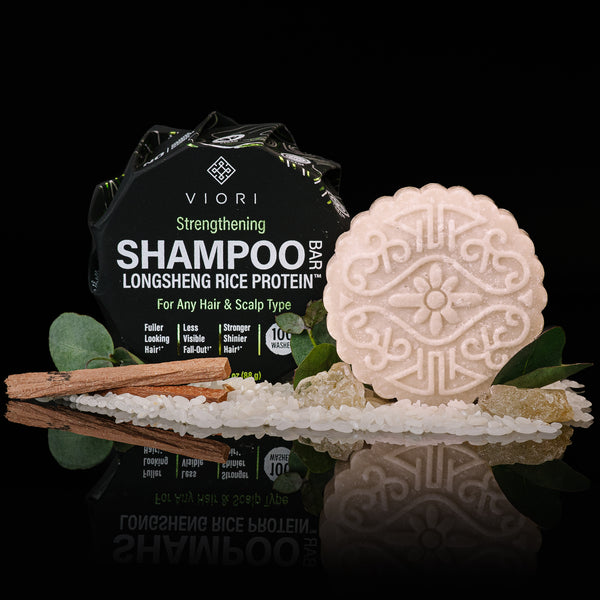
Many bar products-particularly those featuring rice water, quinoa protein, or silk amino acids-contain multiple protein sources in concentrated formulations. Protein is essential for hair health. It temporarily fills gaps in damaged hair shafts, providing reinforcement and structure. In the right amounts, it's miraculous.
But hair can only absorb so much protein before becoming oversaturated. Think of it like fertilizing a plant-the right amount helps it thrive, but too much burns and damages it.
Signs of protein overload I see constantly:
- Stiffness and reduced elasticity (hair snaps rather than stretches)
- Increased brittleness and breakage
- Dry, straw-like texture despite conditioning
- Loss of curl pattern (for naturally curly or coily hair)
- Hair that feels simultaneously dry and coated
Here's the kicker: Because bar products are concentrated and can be harder to rinse completely, protein buildup happens faster than with liquid products. What might take three months to develop with liquid protein treatments can happen in three weeks with protein-rich bars.
My professional recommendation: If you're using protein-rich bar products, you need regular clarifying sessions and protein-free deep conditioning treatments-which somewhat defeats the zero-waste, minimalist appeal that drew you to bars in the first place.
The Hard Water Factor Nobody Addresses
I cannot overstate how much your water quality affects bar product performance. This is the variable that explains why your best friend raves about a bar that made your hair feel like straw.
Hard water (high in minerals like calcium and magnesium) creates several challenges:
- Soap scum formation with cleansing surfactants
- Mineral deposits that cling to hair shafts
- Reduced lather and cleaning efficiency
- Dull, coated appearance no matter what products you use
Bar products, being more concentrated, create more soap scum in hard water than liquid products. The proteins and natural butters in many bars combine with hard water minerals to create particularly stubborn buildup that's nearly impossible to remove without harsh clarifying treatments.
The Professional Test
If you're experiencing issues with bar products, try this experiment that I run with clients all the time: Wash your hair with the bars using distilled water (you can buy it by the gallon at any grocery store for about a dollar).
WHAT CUSTOMERS ARE SAYING
Real reviews for Rice Water Shampoo Bar – All Hair Types | VIORI
If performance dramatically improves, your water hardness is the real problem, not the bars themselves. You'll need a shower filter or water softening system to get good results-an additional investment of $30-300 that significantly changes the cost-benefit equation.
I've had clients invest in bar products for environmental reasons, struggle with terrible results, blame their hair, and give up-when the real issue was $0.50 worth of dissolved minerals in their water.
The Scalp Sensitivity Trade-Off
Let's address something the eco-beauty community doesn't talk about enough: bar products are generally more scalp-challenging than liquid alternatives.
The concentrated nature means:
- Higher potential for surfactant residue on the scalp
- More difficult thorough rinsing (ironically requiring more water and time)
- Greater risk of contact dermatitis from concentrated ingredients
- Increased likelihood of follicle-clogging from butter and oil bases
I've worked with numerous clients who developed scalp issues after switching to bars-flaking, itching, redness, even folliculitis (inflamed hair follicles). When we switched them back to gentle liquid products or found the right bar formulation for their specific scalp, the issues resolved within two weeks.
This doesn't mean bars cause scalp problems for everyone. But if you have seborrheic dermatitis, psoriasis, eczema, or sensitive scalp tendencies, the concentrated format creates additional risk factors that liquid products don't present. You're simply exposing your scalp to higher concentrations of every ingredient, for better or worse.
The "Transition Period" Truth
Bar product advocates often mention a transition period-typically 2-3 months-where your hair "adjusts" to the new products. Let me be professionally honest about what this transition actually represents.
The marketing version: Your hair is detoxing from silicones and harsh chemicals in conventional products.
The chemical reality:
- Your hair doesn't detox-it's dead protein with no metabolic processes
- Your hair is adjusting to a completely different delivery system
- Your scalp's sebum production is recalibrating to different cleansing strength
- You're learning the specific technique needed for bar application
- Potential buildup is accumulating until you adjust the amount of product you're using
Some of this adjustment is legitimate. Learning to use bars effectively takes practice. Your scalp does need time to adjust oil production if you've been stripping it with harsh sulfates.
But here's my professional concern: If a product requires three months of subpar results before working, is it the right product? Or are you simply conditioning yourself to accept a different-and potentially inferior-outcome?
With liquid products, you know within 2-3 washes whether it works for your hair. The extended transition period required by bars is, in itself, evidence of the delivery challenges inherent to the format. I've watched too many clients push through terrible hair days for months, convinced they're doing the right thing, when their hair is actually telling them something important.
When Bar Products Actually Excel
Despite my concerns-and they are genuine concerns based on years of professional observation-there are absolutely situations where bar products work beautifully. Let me be specific about who these ideal candidates are.
You're Likely to Love Bars If:
- You have virgin or minimally processed hair (no color treatments, no chemical processing, minimal heat styling)
- Your hair has medium/normal porosity (neither overly damaged nor resistant)
- You have a normal, healthy scalp (not too oily, not too dry, no dermatological conditions)
- Your water is soft to moderately hard (you might need to test this)
- You have short to medium-length hair (less product needed, easier even application)
- You're willing to experiment with technique and potentially adjust your entire routine
- You're committed to regular clarifying to prevent buil


