
“Beekind shampoo” is usually presented as a simple lifestyle swap: less plastic, gentler formulas, better choices. And yes-those are real wins. But if you want to get serious (and a little nerdy) about what “beekind” actually means, you have to look beyond the label.
Here’s the truth I’ve seen over two decades of working with real hair and real routines: the most eco-friendly shampoo is the one that keeps your scalp calm, your lengths strong, and your wash day from turning into a constant cycle. Because when a product leaves hair stripped, dull, frizzy, or heavy, people compensate by washing more often and piling on extra products. That quiet “overuse” is where a lot of environmental impact hides.
So let’s talk about beekind shampoo from a rarely discussed angle: the chemistry that controls what goes down the drain, the agricultural footprint behind ingredients, and the behavioral ripple effect that determines how much product you’ll use over time.
What “Beekind” Really Measures (It’s Bigger Than a Bottle)
Bees and other pollinators are affected by habitat loss, pesticide exposure, and reduced biodiversity. Haircare doesn’t cause those issues singlehandedly-but it can either add pressure to the system or reduce it.
NOT SURE WHICH PRODUCT IS RIGHT FOR YOU?
TAKE THE QUIZTakes 30 seconds · 134,000+ customers matched
When I evaluate whether a shampoo is genuinely aligned with “beekind” values, I look at two places most people never think about:
- Upstream: how ingredients are grown, sourced, and scaled (agriculture and land use)
- Downstream: what the formula sends into wastewater and how often you need to wash
That second point matters because shampoo is a rinse-off product. Every wash is an environmental “dose.” If a shampoo makes you wash more frequently, it increases total ingredient demand, transport, and waste-no matter how pretty the marketing is.
Upstream Impact: When “Natural” Still Isn’t Pollinator-Friendly
One of the most misunderstood parts of “clean” or “natural” haircare is assuming it automatically supports the environment. It doesn’t always. Certain botanicals can be resource-intensive to produce at scale, and some sourcing methods reduce biodiversity rather than protect it.
A point that rarely gets said out loud: an ingredient that mimics nature can sometimes be more sustainable than extracting it directly from nature. Viori addresses this nuance in how it approaches scent-using clean fragrance blends designed to be safer and more sustainable than harvesting some materials in ways that can damage ecosystems.
If you’re sensitive to fragrance or simply want to keep things as minimal as possible, Viori also offers an unscented option: Native Essence, which is free of added fragrance.
Downstream Impact: The Surfactant System Determines the “Drain Footprint”
If you only remember one technical point from this entire post, make it this: your cleanser (surfactant) is the heart of shampoo. It’s what lifts oil, sweat, pollution, and styling residue so it can rinse away.
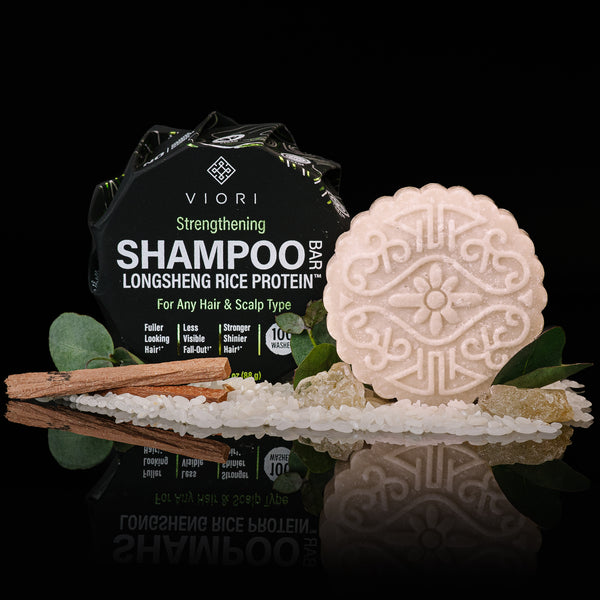
A genuinely beekind-minded shampoo should aim for surfactants that are effective without pushing the scalp into a rebound cycle. In Viori shampoo bars, the main cleanser is Sodium Cocoyl Isethionate (SCI), a mild surfactant often nicknamed “baby foam” because it can cleanse well while feeling gentler than harsher detergent systems for many people.
Why does mild-but-effective cleansing matter for the planet? Because stripping the scalp can trigger a chain reaction:
- Over-cleansing removes too much protective sebum
- The scalp overcompensates by producing more oil (or gets irritated and reactive)
- You feel greasy sooner and wash more often
- More washes mean more product used and more rinsed into wastewater
When you’re choosing “beekind,” you’re not just choosing ingredients-you’re choosing whether your routine becomes low-consumption or high-consumption over time.
pH: The “Hair Feel” Detail That Quietly Affects Sustainability
Most people think pH is just about shine. Technically, it’s about cuticle behavior. When hair is exposed to formulas that run too alkaline, the cuticle can swell and lift. That can translate into roughness, tangling, frizz, and breakage.
Viori emphasizes that hair products should be pH balanced (commonly discussed in the 3.5-6.5 range). And here’s the rarely covered part: when hair feels rough, people don’t just complain-they compensate. They use more conditioner, more leave-ins, more smoothing products, and they often rewash sooner because hair never feels quite “right.”
In other words, pH balance isn’t only cosmetic chemistry. It can be a lever that helps keep your routine simpler and less wasteful.
Conditioner Science: Why “Cationic Slip” Is a Big Deal
Conditioner isn’t supposed to lather like shampoo, and it’s not meant to “clean.” It’s designed to coat and protect the hair fiber-especially after cleansing removes some of the natural lipid layer.
Viori’s conditioner bars use Behentrimonium Methosulfate (BTMS), a conditioning agent that confuses people because of its name. Even though it contains “methosulfate,” it isn’t the same as common sulfate detergents. BTMS is a cationic conditioning ingredient, meaning it carries a positive charge.
That matters because hair-especially damaged hair-often carries more negative charge. The result is that cationic conditioners can deposit efficiently where they’re needed, improving:
- Slip and detangling (less breakage from combing)
- Cuticle alignment (smoother look and feel)
- Frizz control without relying on silicone coatings
And from a beekind standpoint, efficiency matters. If a conditioner performs well with less product, that reduces overall use and reduces what gets rinsed away.
Bee-Associated Ingredients: Why the “Story” Matters Less Than the Function
People often associate “beekind” with bee-related ingredients, but it’s important to stay grounded. What makes a formula environmentally responsible isn’t the theme-it’s the results and the sourcing approach behind it.
Viori includes Honeyquat in its conditioner formula. Functionally, this type of ingredient is often used to support softness, manageability, and a moisturized feel. When hair feels smoother and easier to detangle, you tend to use fewer extras-and that’s where environmental benefits become practical rather than theoretical.
Why Bar Format Is More Than “Plastic-Free”
Shampoo bars get attention for reducing plastic, and that’s valid. But there’s another technical advantage people rarely mention: bars generally have low free water content, which often means they can be more stable over time and don’t rely on the same preservation approach as many liquid formulas.
WHAT CUSTOMERS ARE SAYING
Real reviews for Rice Water Shampoo Bar – All Hair Types | VIORI
Viori also uses paper packaging designed to be recyclable and biodegradable, which supports the broader low-waste goal.
How to Choose a Beekind Shampoo (A Practical Checklist)
If you want to evaluate “beekind shampoo” in a way that’s both eco-aware and hair-smart, here’s the short list I’d use:
- Does it support a healthy wash schedule? If it makes you wash daily, your overall footprint goes up.
- Is it pH balanced? Less cuticle disruption usually means fewer “fix-it” products afterward.
- Is the cleanser effective but not overly stripping? This helps prevent oil rebound and irritation cycles.
- Does the conditioner deposit efficiently? Cationic conditioning can reduce over-application and waste.
- Is the format concentrated and low-waste? Bars and recyclable packaging can lower packaging impact.
- Is there an option for scent sensitivity? An unscented choice like Viori Native Essence can be a great fit for sensitive scalps.
Where Viori Fits Into the Beekind Conversation
Viori’s approach checks several boxes that matter in a truly “beekind” framework: concentrated bar format, pH-balanced positioning, a mild cleanser system (SCI), efficient conditioning chemistry (BTMS), and recyclable paper packaging.
It also offers practical guidance by scalp type. For example:
- Citrus Yao is commonly recommended for normal-to-oily scalps, in part because it includes oil-control characteristics tied to citric-acid-containing scent components.
- Terrace Garden, Hidden Waterfall, and Native Essence are often suggested for normal-to-dry scalps, with Native Essence being the gentlest option for fragrance sensitivity.
If you’re curious about scent profiles, Viori describes Terrace Garden as fresh, green, and floral; Hidden Waterfall as sweet with vanilla and musk; Citrus Yao as a mixed citrus burst; and Native Essence as unscented (with a very subtle grain-like note up close).
The Bottom Line
“Beekind shampoo” shouldn’t just mean “nice packaging” or “nice ingredients.” The most meaningful definition is the one that holds up in real life: a formula that keeps hair and scalp balanced so you naturally use less over time.
Less washing, fewer add-ons, less waste-that’s where hair science and environmental responsibility meet in a way that actually sticks.


