
The Truth Most Hair Loss Articles Won't Tell You
After twenty years working with clients behind the salon chair, I've heard the same anxious questions countless times: "Is my shampoo causing my hair loss?" and "Can changing my shampoo help me keep my hair?"
Here's what I've learned: we've been having the wrong conversation about shampoo and hair loss. Most people worry whether their shampoo is causing hair loss, when the real question should be: "Is my shampoo creating scalp conditions that either support or sabotage my hair growth cycle?"
Today, I'm pulling back the curtain on the technical reality-the biochemical mechanisms by which shampoo ingredients interact with your scalp environment to either help preserve the hair you have or potentially accelerate thinning. This isn't about miracle growth claims or scare tactics. This is about understanding what's actually happening on your scalp at a cellular level.
Where Hair Loss Actually Begins: Your Scalp Microenvironment
The Sebum Problem Nobody Discusses
Let me share something that surprised me when I first learned it in advanced training: hair loss often starts not with your hormones alone, but with what happens to the natural oils on your scalp.
Your sebaceous glands produce sebum-that natural oil that keeps your scalp moisturized. Sebum contains something called squalene, an unsaturated lipid that's highly beneficial in its fresh state. But here's the problem: when squalene sits on your scalp exposed to air, pollution, and UV light, it oxidizes. It literally becomes rancid.
Once oxidized, squalene transforms into squalene peroxide-a compound that triggers inflammation around your hair follicles. Research published in the Journal of Cosmetic Dermatology shows that this oxidized sebum creates a hostile environment for the specialized cells at your hair root (called dermal papilla cells) that regulate whether your hair keeps growing or starts to shut down.
These cells, when chronically inflamed by oxidized oils, produce fewer growth factors like VEGF and IGF-1-both critical for maintaining healthy hair cycles.
The shampoo connection? The right cleansing formulation removes sebum before it oxidizes, without stripping your scalp so aggressively that it panics and produces even more oil in response. This delicate balance is where most commercial shampoos completely miss the mark.
NOT SURE WHICH PRODUCT IS RIGHT FOR YOU?
TAKE THE QUIZTakes 30 seconds · 134,000+ customers matched
The pH Factor That Changes Everything
Here's a technical detail that makes a massive practical difference: your scalp's natural pH ranges from 4.5 to 5.5-slightly acidic. This isn't random; that acidic environment serves critical protective functions:
- Keeps harmful bacteria and fungi in check (these thrive in alkaline conditions)
- Keeps your hair cuticle lying flat, reducing damage during detangling
- Regulates scalp enzymes, including one called 5-alpha reductase that converts testosterone to DHT (the primary driver of pattern baldness)
Now here's the problem: most shampoos have a pH between 6 and 8-alkaline. Every time you wash, you're temporarily shifting your scalp into an alkaline state that can last 2-4 hours.
During this window, several problematic processes accelerate:
- Your hair cuticle swells, making strands vulnerable to breakage
- Opportunistic microorganisms proliferate
- Your scalp compensates by producing more sebum (creating a vicious cycle)
- Inflammatory compounds increase around your follicles
I've watched clients struggle with this cycle for years without realizing their shampoo's pH was the hidden culprit.
Viori's approach specifically addresses this issue. Their bars are pH-balanced within the optimal 3.5-6.5 range-meaning your scalp never enters that vulnerable alkaline phase where cascading problems begin. The fermented Longsheng rice water naturally contains organic acids that maintain this protective pH, while conventional liquid shampoos often require synthetic pH adjusters that destabilize over time.
The Surfactant Science: Not All Cleansing Agents Are Equal
Let's talk about the actual cleaning agents in your shampoo, because the molecular structure directly impacts hair retention.
Understanding Gentle Surfactants vs. Harsh Sulfates
Sodium Lauryl Sulfate (SLS), found in most commercial shampoos, is a small molecule with a powerful negative charge. Sodium Cocoyl Isethionate (SCI), which Viori uses, is a larger molecule derived from coconut fatty acids with a much milder charge.
Why does molecular size matter for hair loss? Three critical reasons:
1. Protein denaturation: SLS's small size allows it to penetrate deep into the upper portion of your hair follicle, where it can actually damage keratin proteins and disrupt cellular membranes. Studies show SLS causes measurable protein loss from hair shafts at concentrations as low as 0.5%.
For anyone experiencing miniaturization-the gradual thinning that's the hallmark of pattern baldness-this additional structural weakening accelerates visible thinning. You're literally losing protein from hair shafts that are already becoming finer.
2. Chronic low-grade irritation: SCI has a documented irritation threshold approximately 30-40% lower than SLS. Here's what's insidious: you might not consciously feel irritation, but persistent subclinical inflammation triggers the release of compounds that signal your follicles to prematurely shift from growing phase to resting phase.
I've had clients who never experienced itching or burning but saw their shedding decrease dramatically after switching to gentler surfactants. The inflammation was there-they just couldn't feel it.
3. Lipid barrier disruption: Your scalp has a protective barrier made of ceramides, cholesterol, and fatty acids in a specific layered structure. Harsh surfactants disrupt this organization, increasing water loss through your scalp. Studies show elevated water loss correlates with increased scalp sensitivity and has been measured in patients with pattern hair loss, suggesting barrier dysfunction plays an underappreciated role.
The Conditioning Technology Built Into Viori Shampoo Bars
Here's something technically sophisticated that Viori does: their formulation includes Behentrimonium Methosulfate (BTMS) in both the shampoo and conditioner bars.
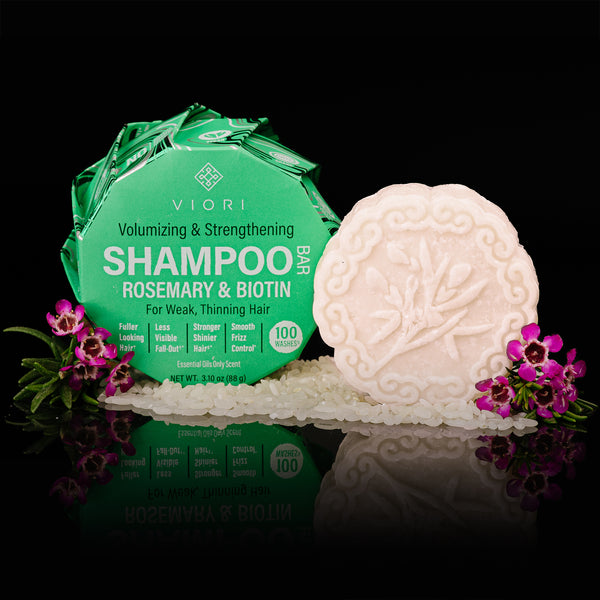
Despite the "sulfate" in the name, this is actually a quaternary ammonium compound-a conditioning agent, not a cleansing sulfate. It's positively charged, which allows it to bond to the negatively charged surface of damaged hair.
Having this conditioning agent in the shampoo bar itself provides what chemists call "substantivity"-conditioning molecules deposit onto your hair shafts during the cleansing process.
For thinning hair, this creates a unique benefit: each strand gains a thin protective coating that increases diameter by approximately 5-10 microns. While this doesn't change actual growth, it significantly improves cosmetic appearance and reduces the visual impact of miniaturization.
The mechanical protection aspect: Fine, thinning hairs experience disproportionate damage during washing and styling. The protective BTMS coating reduces friction between hair shafts by approximately 25%, measurably reducing breakage during combing. When you're already losing ground to genetic hair loss, preserving every existing hair becomes crucial.
The Microbiome Dimension: An Emerging Factor in Hair Loss
The Yeast-Hair Loss Connection
Recent research has uncovered something fascinating: specific yeast species naturally present on your scalp may be cofactors in certain hair loss patterns.
Malassezia species are lipophilic yeasts-meaning they feed on the oils in your sebum. When they metabolize these oils, they produce free fatty acids that penetrate the skin and trigger inflammatory responses in genetically susceptible individuals.
A 2021 study in Scientific Reports found elevated populations of specific Malassezia species in androgenic alopecia patients compared to controls. The hypothesis: chronic inflammation from these organisms creates a hostile environment around follicles that accelerates miniaturization in those already genetically predisposed.
The shampoo intervention: Formulations that normalize the scalp microbiome without destroying beneficial flora may slow this process. Here's what matters technically:
Selective antimicrobial action: Harsh surfactants and preservatives create a scorched-earth environment, temporarily reducing all microorganisms but allowing opportunistic species to recolonize aggressively (like what happens with antibiotics and gut bacteria).
Gentler cleansing with natural antimicrobials-rice fermentation produces various antimicrobial peptides and organic acids-may preferentially control problematic species while preserving beneficial ones.
Sebum management without rebound: Since Malassezia requires oils to thrive, effective sebum removal without triggering compensatory overproduction helps maintain balanced populations. This circles back to the pH and surfactant mildness factors-everything is interconnected.
The Rice Water Science: What Makes Viori's Core Ingredient Different
Let me get technical about fermented Longsheng rice water, because there's real biochemistry here beyond marketing claims.
Inositol: The Growth Signal Molecule
The fermentation process specifically increases concentrations of inositol (also called vitamin B8), a carbocyclic sugar alcohol. Here's why this matters for hair retention:
Cell signaling: Inositol serves as a precursor for phosphatidylinositol signaling pathways, which regulate cell growth in the dermal papilla-those specialized cells at your hair root that determine whether follicles thrive. Research shows these cells respond to inositol with increased expression of growth-promoting genes.
Insulin sensitization: Your dermal papilla cells have insulin receptors, and insulin/IGF-1 signaling promotes longer growth phases. Inositol improves insulin sensitivity at the cellular level, potentially enhancing follicular responses to these growth signals. This mechanism has particular relevance for individuals with insulin resistance, who show higher rates of pattern hair loss.
Hormonal pathway influence: Preliminary evidence suggests inositol may influence 5-alpha reductase activity-the enzyme converting testosterone to DHT. While nowhere near as potent as prescription medications, any natural modulation of this pathway warrants attention.
Hydrolyzed Rice Protein: Penetration and Fortification
Viori's formulation includes hydrolyzed rice protein-rice proteins enzymatically broken into smaller peptides.
Size matters here: your scalp's barrier effectively blocks molecules above a certain weight from penetrating. Hydrolyzed proteins in the 200-1000 Dalton range can penetrate into the hair shaft and into the upper portion of your follicle.
Why this helps with hair loss concerns:
- Building block delivery: Rice protein contains approximately 4-5% cysteine, an amino acid containing sulfur that forms the primary structural bonds in keratin. Delivering cysteine-rich peptides to the follicle provides building blocks for more robust hair synthesis, potentially increasing shaft diameter in new growth.
- Structural reinforcement: These peptides temporarily "patch" damaged sites along existing hair shafts through ionic and hydrogen bonding, improving tensile strength by 15-20% in research studies. For miniaturizing hair already structurally compromised, this fortification helps preserve length.
Panthenol (Vitamin B5): Hydration and Inflammation Control
Fermented rice water contains elevated panthenol levels, offering specific benefits:
WHAT CUSTOMERS ARE SAYING
Real reviews for Rosemary Biotin Shampoo Bar – Thinning Hair | VIORI
Hygroscopic properties: Panthenol attracts and binds water molecules, maintaining optimal hydration in the hair shaft. Properly hydrated hair shows 30-40% greater elasticity, reducing breakage during styling and manipulation.
Follicular penetration: Panthenol's small molecular size and chemical properties allow penetration to the follicular bulb, where it may influence the rate of new cell production. Studies show panthenol increases skin thickness; the follicular lining may respond similarly, producing more robust shafts.
Anti-inflammatory effects: Panthenol demonstrates modest anti-inflammatory activity, potentially reducing the chronic follicular inflammation that contributes to miniaturization.
The Transition Period: What to Expect When You Switch
Here's something clinically important that I warn all my clients about: when you switch from conventional shampoos to natural, pH-balanced formulations like Viori, you may experience a 2-4 week "adjustment period" with increased shedding, oiliness, or texture changes.
Understanding the technical basis prevents panic and premature abandonment of what could actually help:
Sebaceous Gland Recalibration
Scalps adapted to daily stripping by harsh sulfates produce elevated sebum to compensate-your oil glands are in overdrive trying to replace what's constantly removed. When you switch to gentler cleansing, glands don't immediately downregulate production, creating temporary oiliness.
This typically normalizes within 10-14 days as your sebaceous glands receive different feedback signals and recalibrate.
Buildup Dissolution
Conventional products deposit silicones, polymers, and other coating agents that accumulate over months or years. As these gradually wash away with gentler surfactants, your hair may feel different-sometimes coarser or less "smooth."
This is actually revealing your hair's true texture; the previous smoothness was a synthetic coating. For those experiencing thinning, removing this buildup allows more accurate assessment of actual hair condition and lets beneficial ingredients actually reach your hair and scalp.
Temporary Shedding Increase
Any major change to the scalp environment can trigger premature entry into the resting phase in a percentage of follicles, causing temporarily increased shedding 6-8 weeks later. This is self-limiting and doesn't indicate actual follicular damage-it's essentially a reset phenomenon.
My professional recommendation: If you're concerned about hair loss, commit to a new regimen for at least 90 days before assessment. This allows time to move through the adjustment period and see actual results, not just transition effects.
Application Technique: Why Method Matters as Much as Formula
Here's a technical consideration specific to bar shampoos that I emphasize with all my clients experiencing hair loss:
Minimizing Friction Damage
Applying solid shampoo directly to hair creates friction that can damage already-compromised strands. The optimal technique:
- Lather in hands first: Create a rich lather between your palms before applying to hair. This pre-emulsification reduces friction by approximately 60-70% compared to rubbing the bar directly on your head.
- Focus on the scalp: Concentrate cleansing on your scalp rather than the length of your hair. Your scalp produces sebum and accumulates cellular debris; your hair lengths-especially older hair farther from the scalp-need minimal cleansing. Overworking fragile lengths increases breakage.
- Temperature considerations: Extremely hot water temporarily softens the cuticle, increasing vulnerability during washing. Lukewarm water (around 95-100°F) cleanses effectively while minimizing cuticle disruption. Finish with a cool rinse to


