
After two decades behind the salon chair, I've witnessed every hair trend imaginable-from the Brazilian blowout craze to the co-washing revolution. But the conditioner bar movement? That's sparked something entirely different. For the first time in years, I'm having genuine scientific conversations with clients about how the physical form of a product fundamentally changes the way it interacts with their hair.
Here's what bothers me about most bar-versus-liquid comparisons: they focus almost entirely on convenience and eco-friendliness. Don't get me wrong-those factors matter. But they completely miss the most fascinating part of the story, the part that makes me light up when discussing it with fellow stylists: how the molecular structure and delivery mechanism of bar versus liquid conditioners creates completely different interactions with your hair at the microscopic level.
Once you understand this science, I guarantee you'll never look at your shower routine the same way again. Let me show you what I mean.
Why "Concentrated Formula" Misses the Point Entirely
You've probably heard that conditioner bars are basically liquid conditioners with the water removed-just more "concentrated." As someone who's spent years studying formulation chemistry alongside my styling career, I need to tell you: this explanation misses the most interesting part of what's actually happening.
When you pump liquid conditioner into your palm, you're holding what chemists call an emulsion-microscopic oil droplets suspended in water, all held together by emulsifying agents. These tiny particles are already formed, stable, and ready to go. The water acts as a delivery vehicle, helping everything spread evenly across your hair before you rinse, leaving the conditioning oils behind.
Bar conditioners operate through an entirely different mechanism. Take Viori's conditioner bars, for instance. They contain ingredients like Behentrimonium Methosulfate (yes, it sounds scary, but it's actually a gentle conditioning agent), solid butters like cocoa and shea, and cetyl alcohol. When you use these bars, something remarkable happens: you're creating the emulsion in real-time, directly on your hair.
The friction of application combined with the warmth of your scalp and water generates a fresh emulsion at the exact moment of use. This means the conditioning agents are being activated and prepared right when you need them, potentially penetrating the hair shaft in a completely different way than pre-mixed liquid formulas.
Think of it like this: liquid conditioner is like buying bottled salad dressing, while a bar conditioner is like whisking together oil and vinegar fresh when you're ready to eat. The ingredients might look similar on paper, but the final experience? Worlds apart.
The Friction Advantage: When Physics Becomes Part of Your Treatment
Here's something I've observed over literally thousands of conditioning applications in my career: the physical action required to use a bar conditioner may actually smooth your hair cuticle mechanically, independent of what's in the formula.
NOT SURE WHICH PRODUCT IS RIGHT FOR YOU?
TAKE THE QUIZTakes 30 seconds · 134,000+ customers matched
Let me break down the science. Your hair cuticle consists of overlapping scales, similar to shingles on a roof. When these scales get raised or damaged, you end up with frizz, tangles, and that dull appearance nobody wants. Liquid conditioners rely entirely on chemical ingredients-cationic surfactants, oils, silicones, or other conditioning agents-to coax these scales back down.
Bar conditioners add a mechanical element to this equation. When you glide a bar down your hair shaft, following the natural direction of the cuticle, you're physically encouraging those scales to lie flat. It's somewhat similar to how flat irons smooth hair through tension and heat-bars provide smoothing through directed physical contact.
This dual-action approach-chemical conditioning plus mechanical smoothing-could explain why several of my longtime clients report incredible shine from bars, even when the ingredient list looks remarkably similar to their previous liquid products.
But here's the critical caveat, and I can't stress this enough: this mechanical benefit requires proper technique. Rubbing a bar in random circular motions or going against the cuticle direction could potentially cause more damage than a liquid conditioner ever would. This is exactly why I spend time teaching clients proper bar application during their appointments-it's not just about being thorough, it's about protecting hair structure.
With bars, technique isn't optional. It's everything.
The pH Stability Secret: Why Your Bar Works Better Month After Month
Let's talk about something that keeps cosmetic chemists awake at night but rarely makes it into marketing copy: pH stability over time.
Hair health depends significantly on pH. The ideal range for conditioners sits between 3.5-5.5, which helps the cuticle lie flat and maintains your hair's natural acid mantle. Liquid conditioners are carefully formulated to hit this target at manufacture, but here's the problem: they're aqueous systems containing water, and water isn't just a passive carrier-it's actually a reactive medium.
Over time, even in well-preserved formulas, the pH of liquid conditioners can drift. Ingredients slowly interact with each other in that water environment, causing oxidation, hydrolysis, and other chemical reactions. That perfectly calibrated pH at the factory might shift by 0.5-1.0 points after six months of storage and repeated opening. On the logarithmic pH scale, that's significant enough to affect how your cuticle responds.
Bar conditioners exist in a solid, low-water state. Without water acting as a reaction medium, the chemical stability is inherently superior. The ingredients are essentially locked in place, unable to migrate or react significantly until you activate them with water during use.
What does this mean for your hair? The pH you experience on your first use is virtually identical to the pH you'll experience months later. Viori notes their bars maintain stability for 3-5 years-and that's not just about the product not spoiling, it's about the active pH balance remaining constant throughout the product's entire lifespan.
If you've ever felt like a liquid conditioner worked better when you first opened it compared to those last few uses at the bottom of the bottle, pH drift combined with ingredient settling is likely the culprit. Bars eliminate this variable entirely.
Temperature-Activated Release: Your Body Heat Is Part of the Formula
Here's something I've never seen discussed in consumer literature, but it explains so much about why bars work differently for different people: bar conditioners are essentially temperature-activated delivery systems.
The conditioning ingredients in bars-particularly butters and oils-have specific melting points. Cocoa butter melts around 93-101°F, which is right at human body temperature. Shea butter has a similar range. Cetyl alcohol melts at around 120°F but begins softening well below that temperature.
When you apply a bar to warm, wet hair, you're not just mechanically distributing product-you're selectively melting and releasing ingredients based on the thermal environment of your specific hair, scalp, and water temperature.
Someone washing with hot water and a naturally warm scalp will extract a different blend of ingredients than someone using lukewarm water with cool hands. This temperature-dependent release is largely absent in liquid conditioners, where everything is already dissolved or suspended uniformly.
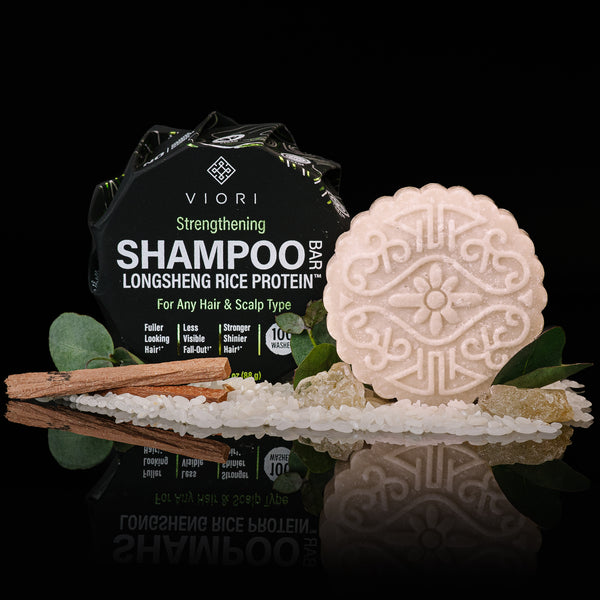
This phenomenon actually explained something I'd been observing for years in my salon: clients who prefer hotter showers consistently report stronger conditioning effects from bars than those who use cooler water. The warmer environment extracts and activates more conditioning agents from the solid matrix.
It's personalized hair care in the most literal sense-your body's own temperature becomes part of the formulation process.
The Charge Distribution Difference: Why Targeted Application Actually Works
Let's dive into some real hair science for a moment. Conditioners work primarily because they contain positively charged (cationic) ingredients that are attracted to your negatively charged hair shaft, especially after shampooing has stripped natural oils and opened the cuticle.
In liquid conditioners, these cationic ingredients are uniformly distributed throughout the water phase. Apply the product anywhere, and you're applying the same concentration of conditioning agents.
Bar conditioners create something entirely different: a concentration gradient. Where you've applied more friction or direct contact, you're depositing more product and more conditioning charge. Where contact was minimal, less product is deposited.
This is an absolute game-changer for customized application. Have dry ends but oily roots? With a liquid, you're applying the same concentration everywhere (even when focusing on ends, product inevitably contacts roots during rinsing). With a bar, you can create genuinely differentiated treatment-heavy concentration on damaged ends, minimal to zero contact with roots.
I've used this principle professionally for years now. Clients with combination hair types-where roots need one thing and ends need something completely different-see transformative results when they learn to apply bars strategically rather than uniformly.
The flip side? Inconsistent technique creates inconsistent conditioning in a way liquid formulas naturally compensate for through their fluidity. You need to be intentional about where and how you apply bars. There's a learning curve, but the payoff is worth it.
The Protein Question: How Molecular Size Affects Delivery
Many conditioning treatments include proteins for strengthening and repair. Viori bars, for instance, contain hydrolyzed rice protein. But here's a technical consideration that affects how well these ingredients actually work: molecular size creates unique challenges in bar versus liquid delivery.
Even when hydrolyzed into smaller peptides, proteins are relatively large molecules compared to conditioning oils. In liquid conditioners, these proteins are kept in solution through careful formulation with solubilizers and emulsifiers. They're already suspended and ready to deposit on your hair.
In bar conditioners, proteins are integrated into the solid matrix alongside everything else. The question becomes: how efficiently are these larger molecules being released during the brief application window?
Smaller molecules like panthenol and lightweight oils migrate easily from solid to emulsion. Larger protein molecules may require more mechanical action, more time, or more water to fully extract from the solid structure.
This suggests a practical adjustment: bar conditioner users might benefit from slightly longer application times-not just leaving product on longer (which helps all conditioners), but spending more time actually working the product into hair to ensure beneficial proteins are fully extracted.
Interestingly, this slower release could actually be advantageous for preventing protein overload, a genuine concern with high-protein treatments. The solid state meters out protein delivery more gradually than liquid suspensions, making it harder to accidentally over-treat your hair. I've seen far fewer cases of protein overload since many of my clients switched to bars.
The Preservation Advantage: When Less Water Means Better Performance
Let's address something that affects every conditioner but rarely gets discussed honestly: microbial contamination and preservative considerations.
Liquid conditioners contain water, which makes them inherently vulnerable to microbial growth. This necessitates preservatives-usually combinations to cover the full spectrum of bacteria, yeast, and mold. While modern preservatives are generally safe and absolutely necessary, they do have trade-offs:
- Some people have sensitivities to common preservatives
- Preservatives gradually degrade, especially with repeated air exposure
- Some preservatives slightly interact with conditioning ingredients, potentially reducing efficacy over time
Bar conditioners sidestep much of this issue. Viori's bars don't use synthetic preservatives-they don't need them. Sodium lactate provides some antimicrobial activity, but primarily, the low water activity of a solid bar makes it inherently self-preserving.
This has a subtle but important quality implication: a bar's performance on day one is virtually identical to day 365. Liquid conditioners, even excellently preserved ones, undergo slow changes-not necessarily spoilage, but gradual degradation of actives, especially antioxidants and sensitive natural extracts.
If you've ever felt a liquid conditioner seems less effective near the bottom of the bottle compared to when freshly opened, this slow degradation combined with ingredient settling is likely why. Bars eliminate this variable completely.
The Hard Water Factor: Why Bars May Work Better in Mineral-Heavy Areas
If you live in an area with hard water (high mineral content), you've probably noticed some conditioners perform better than others. Here's where bars may have an unexpected advantage that's made a huge difference for many of my clients.
Hard water contains calcium and magnesium ions that interact with some conditioning ingredients, particularly negatively charged components, forming insoluble complexes that deposit on hair as dulling buildup.
WHAT CUSTOMERS ARE SAYING
Real reviews for Rice Water Shampoo Bar – All Hair Types | VIORI
Bar conditioners, especially those formulated with primarily cationic conditioning agents and neutral lipids-like Viori's formulation with BTMS, butters, and oils-are inherently less reactive with hard water minerals. The solid delivery system means you're creating concentrated emulsions directly on hair rather than diluting product in the full mineral-laden water stream.
Additionally, the fatty alcohols common in bar conditioners (cetyl alcohol, stearic acid) can actually chelate (bind) some hard water minerals, preventing them from depositing. In liquid conditioners, these ingredients are diluted throughout the water phase; in bars, they're concentrated and potentially more effective at this protective action.
I've seen this play out dramatically in my salon. Clients who struggle with dullness and buildup from their municipal hard water often see immediate improvement when switching to bars, even without changing their shampoo or other products. It's one of those changes that makes people wonder why they didn't switch sooner.
The Oxidation Protection: Why Bars Keep Ingredients Fresher Longer
Let's discuss something that affects ingredient potency but rarely appears on product labels: oxidative degradation of conditioning oils and extracts.
Many valuable conditioning ingredients-plant oils, vitamins, natural extracts-are vulnerable to oxidation when exposed to air. Once you open a bottle of liquid conditioner, air enters with each use, slowly oxidizing sensitive ingredients. Even with antioxidant preservatives, this degradation is inevitable over months of use.
Bar conditioners have a significant structural advantage: minimal ongoing air exposure. A bar sitting on a soap dish only exposes its outer surface to air, while the interior remains protected. As you use the outer layers, you're constantly accessing "fresh" product that hasn't been exposed to oxygen.
This is particularly relevant for bars like Viori's that contain rice bran oil, vitamin E, and botanical extracts. These ingredients maintain their efficacy far longer in bar form than in liquid formulas opened multiple times per week.
For people who use products slowly-maybe you alternate between different conditioners, or you have short hair that doesn't require much product-this could mean the difference between experiencing full ingredient benefits throughout the product's life versus using increasingly degraded actives by the end of a bottle.
The Manufacturing Integrity Factor: Gentler Processing, More Intact Ingredients
Here's a behind-the-scenes consideration that bridges environmental consciousness with practical hair science: the manufacturing process for bars may preserve ingredient integrity better than traditional liquid emulsion-making.
Most liquid conditioners require heating during manufacture to create stable emulsions. This heating occurs in the presence of water and, depending on formulation, may require temporarily alkaline conditions (higher pH) to ensure ingredients mix properly and remain stable.
Some sensitive ingredients-particularly certain plant extracts, vitamins, and proteins-can degrade slightly under these conditions, even briefly. Finished products are then pH-adjusted down to the target range, but some degradation may have already occurred during processing.
Bar conditioner manufacturing typically involves combining ingredients and pressing or molding them, often at lower temperatures and without requiring alkaline processing. This gentler manufacturing approach may keep beneficial ingredients more intact than traditional liquid methods.
While this depends on specific manufacturing processes, it's worth considering: the bar you're using may contain more potent, uncompromised ingredients than a comparable liquid formula simply because of how it was made. The difference might not be dramatic, but over time, it adds up.
Rinse-Out Dynamics: Why Distribution Patterns Matter
Here's a fascinating physical chemistry consideration I've observed professionally over the years: the way you've applied a conditioner dramatically affects what remains on hair after rinsing.
With liquid conditioners, you've applied a relatively thin,


