
Hibiscus tea rinses get marketed as a quick route to faster hair growth. Steep a vibrant red brew, pour it over your head, and supposedly your hair takes off. In practice, hibiscus can be a useful tool-but not because it “turns on” your follicles overnight.
Most of the visible progress people credit to hibiscus is actually about keeping the length you already grow. When hair breaks less, tangles less, and feels smoother, you retain inches. That kind of progress is real, it’s just not the same thing as changing the speed of growth at the root.
Hair growth vs. length retention: the part the internet skips
Hair growth happens inside the follicle during the anagen (growth) phase. That process is largely driven by internal factors-genetics, hormones, nutrition, and overall health. A rinse can’t usually override those big levers.
NOT SURE WHICH PRODUCT IS RIGHT FOR YOU?
TAKE THE QUIZTakes 30 seconds · 134,000+ customers matched
Where a rinse can make a noticeable difference is on the hair you can touch: the cuticle (the outer layer of the strand) and the scalp surface. If hibiscus helps your hair behave better day to day, the “growth” you see is often less breakage, not faster follicles.
- Less snapping at the ends means your length actually accumulates.
- Less tangling means fewer knots you have to rip through.
- Better scalp comfort can reduce scratching and irritation-driven shedding for some people.
The technical reason hibiscus can work: it’s a pH tool
Here’s the under-discussed science: hibiscus tea is naturally on the acidic side. That matters because hair and scalp tend to do best when products and routines stay within a mildly acidic range. When pH is managed well, the cuticle typically lies flatter, which can translate to smoother feel and better shine.
A well-made, mild hibiscus rinse can act like a “finishing step” that supports a sleeker cuticle surface-often meaning less friction when you detangle, brush, or style.
What a mild hibiscus rinse may help with
- Shine (a smoother surface reflects light better)
- Slip (less drag can mean less breakage)
- Reduced roughness after cleansing, depending on your hair type
Why it sometimes backfires
Acidic isn’t automatically better. If your rinse is too strong or you use it too often, hair can start to feel firm in a not-so-great way: stiff, “crisp,” and tangle-prone. That usually isn’t damage happening instantly-it’s the cuticle and surface feel shifting in a direction your hair doesn’t like.
Scalp reality check: a rinse can influence comfort, not rewrite biology
Scalp health matters for hair goals, but it’s easy to overpromise what a rinse can do. Hibiscus can sometimes make the scalp feel fresher or calmer-especially if you struggle with oiliness or residue. For some people, that comfort shift is enough to reduce the urge to scratch, which absolutely helps with breakage around the hairline and crown.
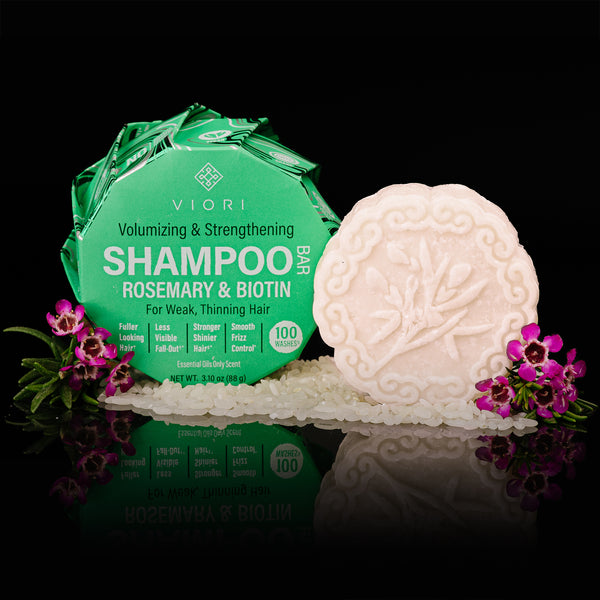
That said, botanicals aren’t automatically gentle. Hibiscus contains natural acids and aromatic compounds, and on a reactive scalp it can sting or leave you feeling tight and dry. If your scalp is sensitive, start cautiously and prioritize a routine that’s already pH balanced and scalp-friendly.
The “protein overload” feel-without hibiscus being a protein treatment
This is a subtle point that doesn’t get talked about enough: hibiscus isn’t a protein mask, but it can still make hair feel more rigid because of its acidic, tightening effect on the surface of the strand. If your hair already runs dry, fragile, or high-porosity, that extra firmness can tip you into more tangling and snapping.
This is also why layering matters. If your routine already includes strengthening and smoothing ingredients-like the fermented rice water and hydrolyzed rice protein used in Viori shampoo and conditioner bars-adding an aggressive hibiscus rinse can sometimes push hair into a “strong but brittle” zone. In those cases, the solution usually isn’t more treatments. It’s better balance: less rigidity, more slip, less friction.
Color-treated hair: proceed like a professional
Hibiscus has natural pigments, and porous hair tends to grab pigment unevenly. If you’re color-treated-especially lightened or high-porosity-hibiscus can sometimes leave a subtle tonal cast or make certain areas look different than others.
Technique matters here, too. If you’re using shampoo and conditioner bars, friction can lift the cuticle and contribute to fading. One simple best practice is to build lather in your hands and apply it through the hair, rather than rubbing a bar directly on the lengths.
How to use a hibiscus tea rinse (so it helps instead of hurts)
If you want to experiment, treat hibiscus like a supporting player, not the whole show. The goal is a gentle pH nudge and smoother feel-not an intense, daily ritual.
Step-by-step: the smartest way to start
- Brew it mild on purpose. Think pale ruby, not dark wine. Stronger isn’t better.
- Let it cool completely. Hot rinses can increase swelling and tangling on vulnerable hair.
- Use it as a quick finisher. Pour through mid-lengths and ends first; touch the scalp only if you tolerate it well.
- Keep contact time short. Around 30-60 seconds is plenty for most people.
- Rinse it out. Then style gently-detangling and handling matter more than people think.
How often?
Start at once every 1-2 weeks. If your hair feels smoother and easier to detangle, great. If it starts feeling stiff, rough, or tangly, scale back or stop. Your hair’s response is the only “rule” that counts.
WHAT CUSTOMERS ARE SAYING
Real reviews for Rosemary Biotin Shampoo Bar – Thinning Hair | VIORI
Who tends to love hibiscus rinses (and who should be cautious)
Often a good fit
- Oily scalp + normal ends, when the rinse improves comfort without tightening the lengths
- Low-porosity hair that’s prone to buildup, when used occasionally
- Anyone whose main obstacle is breakage and tangling, not slow follicles
Use caution
- Very dry, sensitive, or reactive scalps
- High-porosity, bleached, or fragile hair that stiffens easily
- Hair that already feels “strong but snaps” (a classic friction/rigidity warning sign)
Where Viori fits into a growth-focused routine
If your goal is longer hair, your daily routine matters more than any single rinse. A consistent, scalp-friendly cleanse plus good conditioning is what sets you up for length retention over time.
Viori shampoo and conditioner bars are formulated to be pH balanced and supportive of scalp and strand health, with fermented Longsheng rice water and other nutrient-rich ingredients designed for regular use. In that kind of routine, a hibiscus rinse can be an occasional add-on-something you use sparingly if it gives you extra smoothness and shine without stiffness.
The bottom line
A hibiscus tea rinse can absolutely make hair look and feel better, and for some people that translates into noticeable length over time. Just keep the goal realistic: you’re usually improving retention, not changing how fast the follicle manufactures hair.
If you keep it mild, use it occasionally, and prioritize conditioning and low-friction handling, hibiscus can be a smart tool in your routine. If it makes your hair feel crisp, rough, or tangly, it’s not a failure-it’s simply a sign your hair is asking for a different balance.


