
Making your own shampoo sounds like a win on every level: fewer ingredients, less plastic, more control, and the satisfaction of tailoring something to your exact hair needs. I get the appeal. I’ve also watched plenty of well-intentioned DIY routines slowly turn great hair into hair that feels “clean”… but also weirdly rough, frizzy, and harder to detangle.
Most DIY shampoo advice online focuses on the ingredient list-what to add, what to avoid, what’s “natural.” But the real difference between a shampoo that leaves hair glossy and resilient versus one that leaves it squeaky and stressed comes down to a few unglamorous details: pH control, how cleansing actually works, and a factor almost nobody talks about-friction.
Shampoo’s real job: protect the cuticle while it cleans
Hair is a keratin fiber covered in overlapping cuticle “shingles.” When those shingles lay flat, hair reflects light better (shine), tangles less, and generally behaves. When they’re lifted or roughed up, the surface gets grabby-more knots, more frizz, more breakage over time.
NOT SURE WHICH PRODUCT IS RIGHT FOR YOU?
TAKE THE QUIZTakes 30 seconds · 134,000+ customers matched
A well-designed shampoo is doing two things at once:
- Removing oil, sweat, pollution, and styling residue
- Keeping the cuticle from staying lifted and the hair from turning into Velcro
DIY formulas often manage the first part in some way. The second part is where things usually fall apart.
The pH issue (and why “natural” can still be harsh)
If there’s one technical detail I wish every DIY shampoo maker understood, it’s this: pH can make or break your hair over time. Hair and scalp typically do best in a mildly acidic range. When a cleanser runs too alkaline, it can encourage the cuticle to lift and stay lifted, which shows up as roughness and frizz that seems to “appear out of nowhere” after a few weeks.
When pH is off, you may notice:
- More frizz and puffiness, especially in humidity
- Dullness (light scatters on a rough cuticle)
- More tangles and snapping during detangling
- Faster fading on color-treated hair
This is one reason I’m picky about pH-balanced haircare. Viori, for example, is formulated to be pH balanced-because it’s not just about how hair feels on wash day, it’s about how it holds up after months of repeated cleansing.
And here’s the tricky part: you can’t reliably guess pH by smell, texture, or how “gentle” an ingredient sounds. If you’re serious about DIY, measuring matters.
What actually cleans hair: surfactants (not oils, not powders)
To behave like a true shampoo, a formula needs surfactants-ingredients that lift oil and debris into water so they rinse away. Without them, you might absorb some oil, shift it around, or temporarily improve the feel, but consistent cleansing is hard to achieve, especially if you use styling products or live in a city environment.
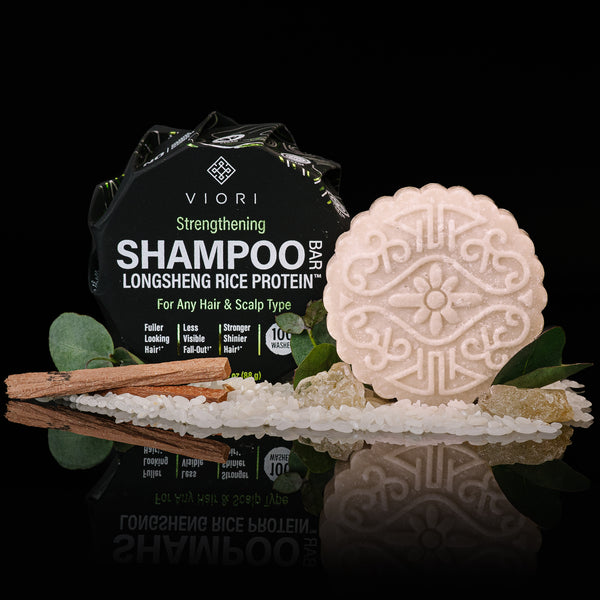
One cleanser often used in solid shampoo formats is Sodium Cocoyl Isethionate (SCI), known for being very mild while still effective. Viori uses SCI in its shampoo bars, which helps explain why a bar can cleanse thoroughly without needing harsher cleansing systems.
The rarely discussed dealbreaker: friction (a.k.a. “clean but crispy” hair)
Here’s the part that doesn’t get enough airtime online: shampoo is not only chemistry-it’s also surface physics. If hair is left too “naked” after cleansing, strands cling to each other. That cling turns into drag, and drag turns into damage.
Wet hair is more fragile. If your wash routine increases friction, you’re more likely to see:
- More knots forming during rinsing
- Rough, squeaky lengths that tangle easily
- Breakage during brushing or combing
- Frizz that gets worse over time, not better
This is why so many DIY shampoo experiments feel like they work at first-then slowly stop working. The hair is getting clean, but the cuticle is taking a beating from repeated high-drag washing and detangling.
Conditioner isn’t “extra”-it’s the friction-control step
Conditioner isn’t just about softness. From a technical standpoint, it’s there to restore slip, reduce static, improve detangling, and help the cuticle behave after cleansing removes some of your natural protective oils.
One of the most common conditioning agents used in bar conditioners is Behentrimonium Methosulfate (BTMS). The name makes people nervous, but in haircare it’s widely used for conditioning and slip-think smoother rinsing, easier comb-through, less snagging.
Viori uses BTMS in its conditioner bars specifically to improve slip and help hair feel smoother. That “glide” is not a luxury; it’s a protective feature.
Rice water: the nuance is fermentation and concentration
Rice water can be a helpful tradition for hair strength and shine, but the conversation is often oversimplified. Concentration and frequency matter, and fermentation at home can be unpredictable-temperature, time, and storage all change what you end up putting on your scalp and hair.
WHAT CUSTOMERS ARE SAYING
Real reviews for Rice Water Shampoo Bar – All Hair Types | VIORI
Viori uses a lower, pH-balanced concentration of fermented Longsheng rice water alongside other supportive ingredients, aiming to capture the benefits without pushing hair and scalp out of balance when used regularly.
Solid vs. liquid: the overlooked “water” problem
Another technical point that gets missed: water changes everything about stability. Liquid products typically need preservative systems because water supports microbial growth. Solid bars have far less available water, which makes them more naturally stable-as long as you store them properly and allow them to dry between uses.
If you’re set on DIY, use this checklist (it’ll save your hair)
If you want to make your own shampoo and get results you can repeat, don’t start with a trendy recipe. Start with the questions that professional formulators build around:
- What pH am I targeting? And how will I measure it?
- What’s my surfactant system? (This is the cleansing engine.)
- How am I controlling friction? (Detangling drag is damage.)
- What’s my buildup plan? Heavy oils and butters can coat hair fast.
- How will this behave in hard water? Minerals can leave hair dull and reduce foam.
- Can I make it consistently? Botanicals and ferments vary batch to batch.
- What’s my scalp-sensitivity strategy? Fragrance and essential oils are common triggers.
A smarter approach for most people: DIY the routine, not the chemistry
If your main goal is healthier hair (not running a mini lab at home), you’ll usually get the best outcome by focusing on a routine that’s already engineered for pH balance, effective cleansing, and slip. A system like Viori-gentle cleansing with a pH-balanced shampoo bar and a conditioning bar designed for slip-covers the technical bases that DIY often misses.
One pro technique tip (especially for color-treated hair)
If you’re using a shampoo bar, reduce friction by building lather in your hands and applying with your fingertips, rather than rubbing the bar directly along the lengths. Less friction means less cuticle disturbance, which helps hair stay smoother and can be gentler on color.
Bottom line
The best “make your own shampoo” plan isn’t the one with the cutest ingredients-it’s the one that respects hair biology and hair physics. Get pH right, cleanse with a proper surfactant system, and always have a strategy to reduce friction. That’s how you end up with hair that’s not just clean, but strong, shiny, and easy to live with.


