
If your hair has suddenly started feeling stiff, rough, overly tangly, and weirdly brittle-especially after you’ve been “doing all the right things” with strengthening treatments-there’s a good chance you’re dealing with protein overload.
I see this all the time in the salon: hair that looks like it should be healthier on paper, yet it behaves like straw in real life. The reason is simple (and a bit unfair): protein can be a fantastic tool, but when it’s layered too often or paired with the wrong routine, it can leave hair rigid instead of resilient.
What makes this topic tricky is that protein overload is rarely just “too much protein.” More often, it’s a mix of protein deposition, moisture imbalance, and the most overlooked culprit of all: cuticle friction that gets worse when pH isn’t on your side.
What protein overload actually is (in plain English, with the science intact)
Your hair is built like a layered material. The outer layer (the cuticle) acts like shingles on a roof, and the inner layer (the cortex) gives hair most of its strength and stretch.
NOT SURE WHICH PRODUCT IS RIGHT FOR YOU?
TAKE THE QUIZTakes 30 seconds · 134,000+ customers matched
Most proteins used in haircare are hydrolyzed proteins-broken into smaller pieces so they can cling to the strand and temporarily reinforce weak spots. That can be amazing when you truly need it. But if those deposits stack up, the surface of the hair can become:
- Too rigid (hair won’t flex the way it should)
- High-friction (more tangles, more snagging)
- Under-plasticized (not enough moisture/lipid “give”)
That’s why protein overload often shows up as hair that feels dry and stiff even when you’re conditioning. It’s not always a lack of product-it’s the strand’s movement and slip that are compromised.
The “hidden lever” most people don’t talk about: pH and cuticle behavior
Here’s the part that doesn’t get enough attention online: the cuticle is responsive. It doesn’t just sit there. One of the biggest influences on how smooth (or rough) your hair feels is pH.
When hair products skew too alkaline, the cuticle tends to lift, creating more friction. More friction means more tangles. More tangles mean more aggressive detangling. And that’s where the breakage spiral begins.
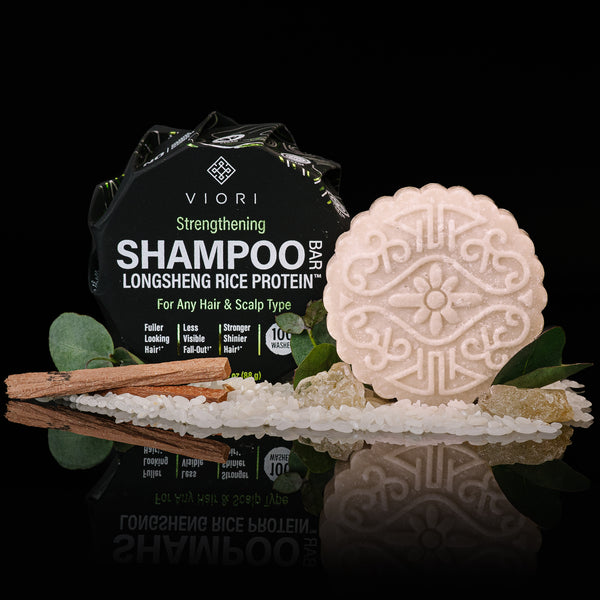
This is one reason Viori’s approach is worth understanding in a protein-overload conversation. Viori uses a lower concentration of Longsheng rice water because rice water at high concentration can disrupt hair and scalp pH when used too often or too much. Their bars are also pH balanced, which is exactly what you want when you’re trying to calm down rough cuticle behavior rather than constantly stirring it up.
How to tell if it’s protein overload (and not something else)
Protein overload gets misdiagnosed constantly. Before you start switching everything, check whether your symptoms match the pattern.
Signs that point strongly to protein overload
- Hair feels stiff and resistant to bending
- Hair tangles in a dry “Velcro” way
- Conditioner doesn’t seem to create the usual softness and slip
- When you gently stretch a strand, it seems like it wants to snap rather than rebound
Common look-alikes
- Hard water/mineral buildup: coated, dull hair; conditioner feels like it sits on top
- Simple dehydration: dry feel improves quickly with moisturizing + reduced heat
- Moisture overload: hair feels overly stretchy, limp, or “mushy” when wet
- Mechanical damage: consistent breakage from brushing, tension, or high heat
If you’re torn between possibilities, don’t panic-cleanse or dump ten new products into your routine. The most successful fix is a controlled reset.
The stylist’s reset: how to treat protein overload without overcorrecting
The goal is to reduce rigid buildup, restore flexibility, and protect the cuticle while the hair rebalances. Here’s how I recommend doing it.
-
Pause extra protein (temporarily).
Put a hold on protein masks, frequent strengthening treatments, and repeated protein/rice rinses for a short window-usually 2 to 4 weeks. This doesn’t mean “never again.” It just gives your hair a break from rigid reinforcement while you rebuild softness and slip.
-
Cleanse strategically-enough to lift film, not enough to strip.
Overloaded hair often feels coated, so gentle cleansing matters. Viori shampoo bars use Sodium Cocoyl Isethionate (SCI), a mild cleanser known for effective cleansing without the harshness many people associate with traditional sulfate cleansers. That can be especially helpful when you’re trying to remove excess buildup without creating that squeaky, brittle rebound.
If your hair is fragile or color-treated, use a technique that protects the cuticle: Viori recommends working up lather in your hands and applying it with your palms instead of rubbing the bar directly on your hair. Less friction now means less breakage later.
-
Re-plasticize the fiber with conditioner (think “slip + flexibility”).
Protein overload improves when you restore lubrication and manageability. Viori conditioner bars include behentrimonium methosulfate (BTMS), a conditioning ingredient valued for detangling slip and smoother feel. This is the kind of support stiff, snag-prone hair needs because it reduces friction-the thing that makes overloaded hair feel so unforgiving.
Use your conditioner with intention:
- Apply from mid-lengths to ends
- Let it sit for at least 5 minutes before rinsing
- Detangle only when hair is saturated and slippery
-
Go on a “friction diet” for 1-2 weeks.
When hair is stiff, friction becomes damage. For a short period, treat your hair like delicate fabric:
- Detangle gently (wide-tooth comb or fingers first)
- Avoid tight styles that stress the ends
- Reduce heat styling and repeated brushing
- Don’t scrub your lengths aggressively in the shower
Choosing the right Viori bars during your reset (based on scalp type)
One of the fastest ways to sabotage a reset is choosing products based only on how your ends feel while ignoring what your scalp needs. Scalp balance influences everything-oil production, comfort, and how often you feel tempted to overwash.
- Oily scalp: Viori often recommends Citrus Yao because its scent contains citric acid, which helps break down oil.
- Dry to normal scalp: Viori commonly recommends Terrace Garden, Hidden Waterfall, or Native Essence for a more moisturizing feel.
- Sensitive scalp or fragrance sensitivity: Native Essence is unscented and typically the gentlest option.
Matching scalp type first keeps you from over-cleansing (which can worsen stiffness) or over-conditioning at the root (which can create buildup and limpness).
WHAT CUSTOMERS ARE SAYING
Real reviews for Rice Water Shampoo Bar – All Hair Types | VIORI
How long will it take to feel normal again?
Protein overload rarely resolves in one wash if you’ve got layered deposits plus dehydration. A realistic timeline looks like this:
- After 1-3 washes: less squeak, easier detangling, slightly softer feel
- After 2-4 weeks: more flexibility, fewer tangles, less snapping
- After 2-3 months: hair often feels stable again (especially if you’re also reducing heat and friction)
Viori also recommends giving a routine time-many people notice changes quickly, but others need consistent use over a couple of months to see their best results.
The biggest mistake to avoid
The most common overcorrection I see is: harsh cleansing + skipping conditioner. Yes, you might remove some surface film-but you’ll also remove lubrication and leave the strand even less flexible. That’s when hair goes from stiff to snapping.
Your goal isn’t “squeaky.” Your goal is low friction, flexibility, and cuticle smoothness-the combination that creates shine, softness, and strength you can actually feel.
Preventing protein overload in the future: match protein to porosity
Protein isn’t bad. It just has to be dosed correctly.
Viori shares a simple porosity test (placing a clean strand in water to see if it floats, stays mid-glass, or sinks). It’s not a perfect lab test, but it can help you make smarter choices at home.
- Lower porosity hair: tends to be more buildup-prone; often does best with protein less frequently and consistent slip-focused conditioning.
- Higher porosity hair: often benefits from more regular reinforcement, but still needs conditioning and moisture balance so it doesn’t turn rigid.
My salon rule for reintroducing protein is simple: don’t bring it back until your hair feels less grabby when wet and has some natural stretch and rebound again. Then reintroduce slowly-think once every week or two, not daily.


