
I'll never forget the day a long-time client sat in my chair, nearly in tears, convinced that "natural hair care" just didn't work for her hair. She'd spent three months battling with a shampoo bar she'd purchased online, and her normally gorgeous hair had turned into a frizzy, tangly mess. The problem? It wasn't natural hair care that failed her-it was the wrong formulation combined with hard water and a complete lack of understanding about what was actually happening to her hair.
After two decades as a beauty professional, I've seen every trend imaginable sweep through my salon doors. But the shift to shampoo bars isn't just another eco-friendly phase-it's fundamentally changing how we think about hair care, and revealing some uncomfortable truths about what we've been putting on our hair all these years.
The Chemistry Behind the Bar: Why Your Friend's Holy Grail Might Be Your Hair's Nightmare
Let me start with something that might surprise you: the biggest challenge in formulating a quality shampoo bar has nothing to do with making it "natural" and everything to do with basic chemistry that most consumers never see.
Traditional liquid shampoos rely on sulfate-based surfactants (that's the technical term for cleansing agents) because they're dirt cheap, readily available, and create that satisfying lather we've all been psychologically conditioned to associate with "clean hair." But when you're creating a solid bar, you face a completely different formulation puzzle-you need surfactants that can be pressed into solid form while staying stable over time, and not all of them are created remotely equal.
Here are the three main options formulators work with:
- Sodium Cocoyl Isethionate (SCI) - Derived from coconut, genuinely gentle on hair, but significantly more expensive to produce
- Sodium Coco Sulfate (SCS) - The solid cousin of those liquid sulfates you're trying to avoid, harsh but cheap to manufacture
- Traditional soap bases - Old-school formulation, but highly alkaline with pH levels of 9-11 that can wreak havoc on your hair
Here's where things get tricky for consumers, and frankly, where I see a lot of misleading marketing: Many brands can technically claim to be "sulfate-free" while using SCS, which most people assume is different from the sodium lauryl sulfate (SLS) they're actively trying to avoid. From a chemistry perspective? They're nearly identical-just in different physical forms. It's like calling ice different from water. Technically true, functionally misleading.
NOT SURE WHICH PRODUCT IS RIGHT FOR YOU?
TAKE THE QUIZTakes 30 seconds · 134,000+ customers matched
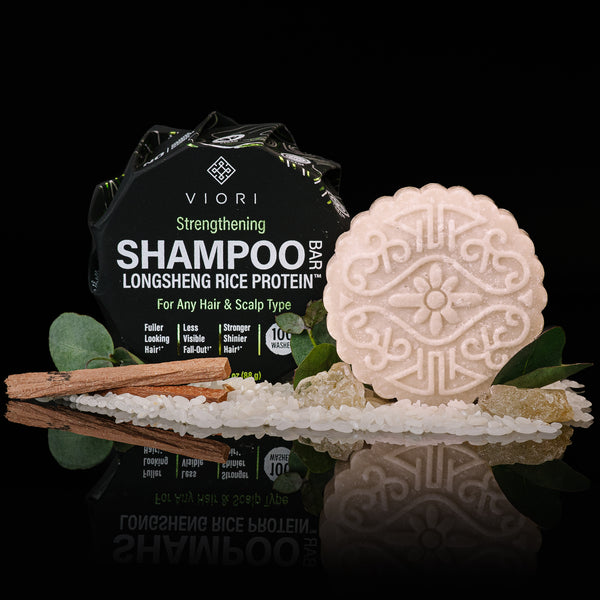
This is where Viori's commitment to using SCI becomes significant from a professional formulation standpoint. It's the more expensive path, but also the genuinely gentle one. As someone who's examined countless formulations over the years while watching the real-world results in my clients' hair, I can tell you this distinction matters enormously for the long-term health of your hair.
The pH Problem That's Silently Destroying Hair (And Nobody's Talking About It)
I see this in my salon at least once a week: a well-intentioned client switches to the wrong type of bar and unknowingly damages their hair's cuticle structure within just a few months. The culprit? pH levels that would make any cosmetic chemist absolutely cringe.
Let me break down the science in a way that actually matters to your hair: Your hair's optimal pH sits between 4.5-5.5 (slightly acidic). Your scalp hovers around 5.5. This acidic environment keeps your hair cuticle lying flat and smooth, locks in moisture, and prevents bacterial overgrowth on your scalp.
Traditional soap bars-which many companies market as "shampoo bars" because they're significantly cheaper to produce-have a pH of 9-11. That's not just slightly alkaline; it's dramatically, destructively alkaline. Every single time you use one, you're forcibly opening the hair cuticle like you're prying open a pinecone, causing:
- Immediate roughness and tangles that feel like straw
- Progressive protein loss from the inner hair cortex (the structural core of your hair)
- Rapid color fade if you have treated hair-I'm talking weeks instead of months
- Increased porosity that can become permanent over time, leaving you with perpetually dry, damaged hair
Here's the critical distinction most people miss: True shampoo bars using syndet (synthetic detergent) formulations can be pH-balanced to match your hair's natural acidity. Soap-based bars cannot-it's chemically impossible. The saponification reaction that creates soap inherently produces an alkaline product. You can't fight chemistry.
When I evaluate any hair care product, pH disclosure is one of my first checkpoints. Viori explicitly mentions being pH-balanced in their formulation-a technical claim that requires actual cosmetic chemistry expertise to achieve and maintain. Most brands make no pH claims at all, which should be an immediate red flag waving frantically in your face.
Why Your Best Friend Loves Her Shampoo Bar and You Absolutely Hate Yours: The Hard Water Factor Nobody Mentions
Here's something rarely discussed in the shampoo bar conversation that I think is absolutely crucial, and it explains so many of the one-star reviews you see online: where you live geographically can dramatically impact your experience with the exact same product.
Hard water (water high in calcium and magnesium minerals) reacts with soap-based bars to create insoluble precipitates-that's the technical term for that waxy, filmy buildup so many people complain about. Even with properly formulated syndet bars, this reaction happens, though to a significantly lesser degree.
The science behind it: Calcium and magnesium ions in hard water bind with the anionic (negatively charged) surfactants in your shampoo, creating salts that deposit directly onto your hair strands. This is why your friend in Seattle (soft water, around 50 ppm hardness) might have a completely different experience than you in Phoenix (very hard water, over 200 ppm hardness) using the identical bar from the identical company.
This geographical chemistry variance creates a bizarre situation where regional water quality determines your experience more than the actual product quality-and most brands never mention this at all.
Professional insight from my experience: If you live in a hard water area (and you can check this easily online for your zip code), you need one of these solutions:
- A chelating agent in your shampoo formula (ingredients like EDTA or citric acid that chemically bind to minerals and prevent them from depositing on your hair)
- An apple cider vinegar rinse after washing to dissolve mineral deposits
- A water softener system for your home (expensive, but genuinely transformative)
The concentration of chelating agents varies dramatically between formulations, and this is another area where quality and formulation sophistication matter. Viori includes ingredients specifically designed to work with varying water conditions-a detail that shows they're thinking beyond just creating a product that works in their testing lab.
The Protein Puzzle: Why More Isn't Always Better
Here's something that bridges my technical knowledge with the real-world results I see in my chair every single day: Shampoo bars contain significantly more concentrated ingredients than liquid formulas by pure physical necessity. A single 3-ounce bar equals roughly three 10-ounce liquid bottles in terms of active ingredients.
Many quality bars, including Viori's formulation, contain hydrolyzed rice protein-an excellent strengthening ingredient that I often recommend to clients with damaged or chemically treated hair. However, in concentrated bar form, the protein exposure per wash is substantially higher than with diluted liquid shampoos.
Here's the nuance most people don't understand: Hair can actually experience "protein overload"-a condition where excessive protein makes hair feel brittle, straw-like, and paradoxically more prone to breakage. This happens because:
- Protein temporarily fills gaps and damage sites in the hair cuticle
- Too much protein creates a hardened, inflexible hair structure
- The hair loses its natural elasticity and becomes fragile-like over-baked bread versus fresh, pliable bread
Low porosity hair (cuticles that are naturally tight and flat) is especially susceptible to protein overload because it doesn't need much external protein support. High porosity hair (damaged hair with lifted cuticles full of gaps) actually craves protein to fill in those holes.
The problem? Most brands don't educate buyers about adjusting usage frequency based on their hair's porosity level. Someone with low porosity hair using a protein-rich bar daily might actually cause damage while thinking they're doing something healthy for their hair. That same bar used twice weekly might be absolutely perfect for them.
Viori's formula includes a well-balanced combination of hydrolyzed rice protein (for strengthening), rice bran oil (for moisture), and cocoa butter and shea butter (for emollient properties). This is actually a thoughtfully balanced protein-moisture ratio from a formulation standpoint, but the key is matching your usage frequency to your individual hair's porosity level-information that requires more technical knowledge than most consumers have access to.
Fermented Rice Water: Separating Marketing Magic from Meaningful Chemistry
As a professional who's seen countless ingredient trends come and go-remember when everyone was obsessed with argan oil? Or that brief moment when beer shampoo was supposedly revolutionary?-let me share what's actually happening chemically with fermented rice water, specifically the Longsheng rice water that's central to Viori's formulation story.
From a cosmetic chemistry perspective, fermented rice water contains several genuinely beneficial compounds:
- Inositol - A carbohydrate compound that can actually penetrate the hair shaft to repair internal damage, not just coat the surface
- Amino acids - The fundamental building blocks of keratin protein that makes up your hair
- Vitamins B and E - Powerful antioxidants that protect hair from environmental damage and oxidative stress
- Trace minerals - Essential elements for maintaining hair health at the cellular level
The fermentation process itself increases the concentration of these beneficial compounds-particularly inositol, which clinical studies have shown can remain in hair even after rinsing, providing ongoing strengthening effects between washes.
But here's the critical question from a formulation standpoint: At what concentration does fermented rice water provide measurable benefits versus simply functioning as compelling marketing storytelling?
This is where Viori's transparency impressed me from a technical perspective. Their documentation mentions using a carefully calibrated concentration specifically because too much fermented rice water can actually disrupt pH balance-and this is scientifically accurate. Pure fermented rice water has a pH around 4-5 (quite acidic), and in excessively high concentrations can potentially cause overcorrection, excessive cuticle tightening, protein overload (rice water is naturally protein-rich), and scalp irritation in sensitive individuals.
The real formulation challenge is incorporating enough fermented rice water to deliver the beneficial compounds while maintaining proper pH balance and not overwhelming the delicate protein-moisture equilibrium your hair needs. This requires genuine cosmetic chemistry expertise, not just dumping an ingredient into a formula because it sounds good on an ingredient list.
What makes Viori's approach particularly notable from a technical quality control standpoint is their direct sourcing from the Red Yao tribe, creating a verifiable supply chain with consistent quality. From a formulation perspective, ingredient sourcing matters significantly for batch-to-batch consistency-something that's crucial when you're formulating with natural extracts that can vary wildly in potency depending on growing conditions, harvest timing, and processing methods.
The Transition Period: The Real Chemistry of What's Happening to Your Hair (And Why You Shouldn't Give Up)
One of the most common frustrations I hear about-and the reason I lost that client I mentioned at the beginning to three months of unnecessary struggle-is the "transition period." That phase where hair feels waxy, greasy, or generally terrible for 2-4 weeks after switching to a shampoo bar. Let me explain the actual chemistry of what's occurring, because understanding this can help you push through to the other side instead of giving up prematurely.
WHAT CUSTOMERS ARE SAYING
Real reviews for Rice Water Shampoo Bar – All Hair Types | VIORI
If you're switching from silicone-heavy products: Conventional shampoos and conditioners often contain dimethicone and related silicones that coat the hair shaft in a synthetic polymer layer. These are not water-soluble and require specific harsh sulfates to remove. When you switch to a gentler bar formula, these silicone layers begin breaking down unevenly, creating that distinctive "waxy" texture. This is actually a detox process-you're seeing your hair's true condition as the synthetic coating gradually dissolves. It's uncomfortable, but it's not permanent.
If you're switching from sulfate-heavy products: Harsh sulfates strip your scalp's natural oils aggressively every single day, which causes your scalp to go into reactive sebum overproduction. Essentially, your scalp has been in overdrive producing oil to compensate for daily stripping. When you switch to a gentler cleanser, your scalp doesn't immediately recalibrate-it continues overproducing oil for several weeks until the hormonal signaling adjusts. This isn't the new product "not working"-it's your scalp normalizing to healthier treatment.
The hard water interaction: Mineral buildup from your previous products combined with your new product and hard water can create temporary residue as the old buildup gradually dissolves and works its way out of your hair.
My professional recommendation: The transition period is real and rooted in chemistry-not marketing fiction designed to make you stick with a bad product. However, you can minimize the discomfort significantly by:
- Using a clarifying wash before your very first bar usage to remove silicone buildup and start with a clean slate
- Incorporating an apple cider vinegar rinse (pH 3-4) once or twice a week to help dissolve mineral deposits
- Being patient while your scalp oil production recalibrates-this typically takes 3-4 weeks, sometimes up to 6 for people who've used harsh sulfates for years
In my experience, clients who understand what's happening chemically during this transition are far more likely to stick with it and ultimately love their results. The ones who don't understand think the product is terrible and go back to their old routine, never experiencing what their hair could actually be.
The Preservative Paradox: Why Bars Are Both Safer and Riskier
Here's something that requires technical knowledge to fully appreciate, and it's a double-edged sword that most brands conveniently ignore: Shampoo bars don't require the synthetic preservatives that liquid formulas do, but they introduce entirely different microbial risks that most people never even consider.
Liquid shampoos require broad-spectrum preservatives (like phenoxyethanol, methylisothiazolinone, or parabens) to prevent bacterial and fungal growth in water-based formulas. Many people experience sensitivity or allergic reactions to these preservatives-those mysterious scalp irritations or contact dermatitis cases I see regularly in the salon.
Shampoo bars theoretically avoid this issue because their low water content creates an inhospitable environment for microbes. Viori uses sodium lactate as a natural preservative, which also functions as a humectant and pH adjuster-that's elegant, efficient formulation that serves multiple purposes.
However, here's the paradox nobody discusses: Shampoo bars stored in humid bathroom environments can develop surface moisture between uses, creating perfect conditions for bacterial and fungal growth. That beautiful bamboo holder that came with your bar? If it stays wet, it can become a mold incubator.
Most brands don't adequately educate buyers about proper bar storage, and I've seen real health consequences from this oversight. Here's what you absolutely need to know:
- Your bar must dry completely between uses-not just surface dry,


