
Rice milk soap sounds like it should be simple: swap water for rice milk, pour, cure, and enjoy a bar that feels extra gentle and creamy. In real life, rice milk can be one of those ingredients that behaves beautifully one day and oddly the next-especially if you’re working with cold process.
Here’s the part that rarely gets said out loud: rice milk isn’t just a liquid. It’s a moving target-part emulsion, part suspension-packed with starch, tiny proteins, trace sugars, minerals, and fine solids. And in a fresh soap batter (where the environment is highly alkaline and heat can spike quickly), those components don’t just “sit there.” They react, swell, thicken, darken, and sometimes destabilize your batch if you don’t plan for them.
Let’s break down what’s actually happening so you can make rice milk soap on purpose-rather than crossing your fingers and hoping it behaves.
What Rice Milk Really Adds (And Why Your Results Can Vary)
Homemade rice milk can range from thin and watery to thick and starchy depending on how you make it. That matters because soap doesn’t respond to “rice milk” as a concept-it responds to the actual composition of the liquid you’re pouring into the lye.
NOT SURE WHICH PRODUCT IS RIGHT FOR YOU?
TAKE THE QUIZTakes 30 seconds · 134,000+ customers matched
Most rice milk contains a mix of the following:
- Starch (often the biggest factor in how the batter behaves)
- Proteins (small, but reactive in high pH)
- Sugars and sugar-like breakdown products (help lather, but also increase heat)
- Trace lipids (tiny amounts, but they can oxidize over time)
- Minerals (can influence lather and soap scum formation)
- Fine solids/particles (change the feel and structure of the final bar)
If two soapmakers use different rice (cooked vs soaked), blend for different lengths of time, or strain differently, they’re essentially working with two different ingredients-so it makes sense their batches behave differently.
The High-pH Reality: What Soap Batter Does to Rice Milk
Fresh soap batter is a high-pH environment during saponification. That’s where rice milk stops acting like a cozy kitchen ingredient and starts acting like a chemistry project.
1) Starch can cause “false trace” (and it’s not always obvious)
Rice starch is present as granules. When you add lye, mix, and build heat, those granules can swell and thicken the batter quickly. The batter looks like it reached trace, but part of what you’re seeing may be starch-driven thickening, not a fully stable emulsion.
This is why rice milk soap can seem perfect while you’re pouring… then misbehave in the mold. Common signs include:
- Separation or weeping
- Uneven texture or “wet” pockets
- Air trapped in thicker batter
- Edges that crumble while the center stays soft
In short: rice milk can make your batter look ready before it truly is.
2) Proteins can break down and contribute to color and odor shifts
Rice proteins can degrade in alkaline conditions, creating smaller fragments that may contribute to a deeper color over time. They can also add a faint “grain” note that doesn’t always show up right away-sometimes it appears weeks into cure, when the bar is dry and the fragrance (if you used one) has mellowed.
3) Sugars boost lather… but they also raise the heat ceiling
Sugars are famous for improving lather feel. The tradeoff is that sugar-rich liquids can run hotter. If your rice milk is thick, made from cooked rice, or not well strained, you may be unknowingly increasing your chances of overheating, gel phase surprises, or discoloration.
Why Rice Milk Soap Turns Tan (Even With No Scent Added)
Discoloration gets blamed on fragrance a lot, but rice milk soap can darken even when it’s completely unscented. What’s usually happening is a combination of carbohydrate material (sugars and starch breakdown products), amino acids (from proteins), and heat (especially if the soap gels or gets hot spots).
If you’ve ever unmolded a loaf and noticed the center is darker than the edges, that’s your clue: the center held more heat, and the rice components “cooked” a bit inside the bar.
How to keep the color lighter
If you want a pale, creamy look, treat heat control as non-negotiable:
- Use frozen rice milk (ice cubes work beautifully)
- Keep your temps on the lower side and avoid heavy insulation
- Strain thoroughly if you want fewer solids and less browning potential
The Rarely Discussed Part: Rice Solids Change the Bar’s Structure
Soap doesn’t just “dry.” It cures into a solid as water evaporates and the internal structure continues to organize. Rice milk introduces micro-solids that behave like tiny fillers dispersed through the bar. Depending on how much you use (and how fine they are), those solids can change:
- How quickly the bar firms up
- How evenly it cures (soft center vs crisp edges)
- The glide on skin (some people read it as silky; others as draggy)
- How long the bar needs before it feels “finished”
This is why rice milk soap can feel amazing in one batch and a bit stubborn in another-your solids load and particle size quietly steer the final texture.
Heat Management: Rice Milk Soap Has a Narrower Sweet Spot
Compared to water-based batches, rice milk formulas usually tolerate less heat and less rushing. If you want a steadier process, start here.
- Freeze the rice milk before adding lye to reduce scorching and overheating.
- Mix with intention-if the batter thickens quickly, pause and make sure you’re not seeing starch-thickening masquerading as trace.
- Be cautious with insulation. Unless you’re intentionally chasing gel and a deeper color, keep the loaf cooler.
Water discounting is also more delicate with rice milk. Too much discount can make a solids-heavy batter set up too quickly. Too little discount can extend cure time because starch holds onto moisture differently than plain water.
The Long Game: Why Some Bars Smell Fine… Then Develop a “Stale Grain” Note
Rice milk contains trace lipids and other components that can oxidize. It’s not always dramatic, but it can show up later as a faint “old pantry” smell or as oxidative spots in the bar-especially if you’re pairing rice milk with a high superfat and storing soap in warm, bright conditions.
WHAT CUSTOMERS ARE SAYING
Real reviews for Rice Water Shampoo Bar – All Hair Types | VIORI
If a rice milk soap changes character at week six or week ten, it isn’t automatically a lye issue. Sometimes it’s oxidation plus the natural grain profile becoming more noticeable as the bar dries down.
A Quick Word About pH (Because This Is Where Expectations Get Messy)
Traditional soap is inherently alkaline. Adding rice milk doesn’t make it pH balanced. What rice milk can do is shift the feel-creamier lather, different glide, a softer wash experience-because of its starches, sugars, and fine solids.
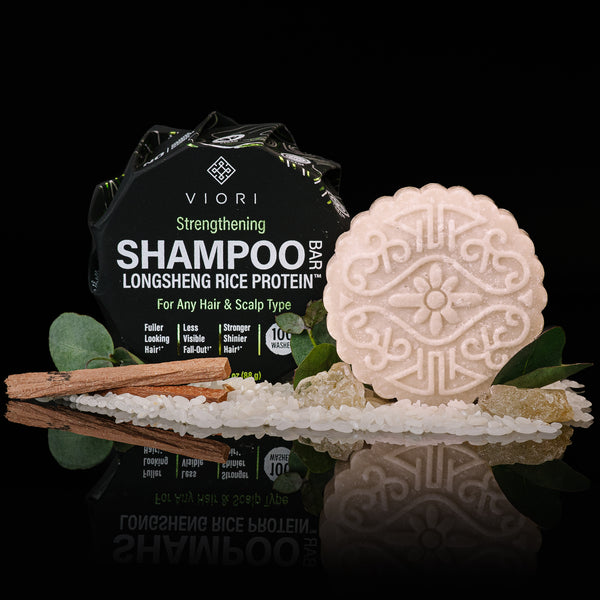
If you’re looking specifically for a pH-balanced cleansing bar (especially for hair and scalp), that’s a different category of formulation-more aligned with gentle cleanser systems designed to sit in a hair-friendly pH range. As an example, Viori hair bars are formulated to be pH balanced and use mild cleansing technology rather than relying on the alkalinity of true soap. It’s a different approach, and the distinction matters when you’re choosing products for skin versus hair.
Make Rice Milk Soap on Purpose: Choose Your Goal First
Instead of starting with “I want rice milk in my soap,” start with what you want the bar to do. Your method should match your outcome.
If you want a light, creamy-looking bar
- Strain the rice milk thoroughly
- Use frozen rice milk for the lye solution
- Avoid heavy heat and full gel if you’re chasing a pale color
If you want a silky slip bar
- Allow a moderate amount of solids (don’t over-strain)
- Balance cleansing and conditioning in your base oils
- Keep superfat moderate to avoid drag and oxidation issues
If you want a rustic “grain bar” with character
- Keep more solids and embrace natural color variation
- Plan on a longer cure for the best texture
- Expect each batch to have a little individuality
Final Takeaway: Rice Milk Is Not a Water Swap-It’s a Formulation Decision
Rice milk soap gets easier the moment you stop treating rice milk like a trendy liquid and start treating it like what it is: a starch-and-protein colloid inside a curing alkaline system. Starch can thicken before emulsification is stable. Sugars can drive heat and discoloration. Solids can change cure structure and the way the bar feels on skin.
Once you account for those realities, rice milk stops being unpredictable-and starts being a genuinely useful tool for crafting a bar with a very specific sensory signature.


