
Saw palmetto gets talked about like it’s the headline act in the “hair loss” world-usually with one simple claim: “It blocks DHT.” While that idea has a basis in biology, it’s also where most online discussions stop. And that’s a problem, because shampoo isn’t a supplement, and it’s not a leave-on scalp treatment either. It’s a rinse-off formula that has to work in minutes, under running water, while it’s actively trying to remove oils.
So if you’ve ever wondered why one person swears a saw palmetto shampoo “changed everything,” while someone else feels absolutely nothing, here’s the real answer: outcomes are usually decided by formulation physics-how the ingredient is delivered, whether it actually deposits onto the scalp, and whether the overall formula protects the scalp barrier instead of irritating it.
What saw palmetto is (chemically) and why shampoo makes it complicated
Saw palmetto typically refers to extracts from the fruit of Serenoa repens. The most-discussed components tend to be lipophilic (oil-loving), which is exactly where the shampoo problem begins. Shampoos are built around surfactants-cleansers designed to lift and emulsify oils so they can be rinsed away.
NOT SURE WHICH PRODUCT IS RIGHT FOR YOU?
TAKE THE QUIZTakes 30 seconds · 134,000+ customers matched
In practical terms, that means a formula can contain saw palmetto and still fail to deliver much benefit if the active components simply get caught inside cleansing micelles and go right down the drain during rinsing.
- Saw palmetto’s “interesting” fractions are often oil-soluble.
- Shampoo’s job is to remove oil efficiently.
- The result is a tug-of-war between stability, cleansing performance, and real deposition.
The DHT story: plausible, but rinse-off products have real limits
The common rationale is that saw palmetto may influence the activity of 5α-reductase, an enzyme involved in converting testosterone to DHT-a hormone linked with androgen-related thinning. That’s the part that makes for catchy marketing.
But shampoo has built-in limitations that rarely get discussed in a meaningful way:
- Short contact time (often 60-180 seconds)
- Barrier function of scalp skin that restricts penetration
- High variability in sebum, which can change how evenly anything spreads
- Extract inconsistency (not all saw palmetto extracts are standardized or equally potent)
Here’s the nuance: when people report “less shedding” with a saw palmetto shampoo, the benefit may be less about hormones and more about calming an angry scalp, improving cleansing balance, and reducing breakage that gets mistaken for shedding.
The rarely covered angle: scalp microinflammation, barrier disruption, and “false hair loss”
In the salon, a big chunk of “my hair is falling out” cases are complicated by scalp stress. I see patterns tied to irritation, buildup cycles, dandruff, aggressive scrubbing, and formulas that cleanse too hard. And once the scalp barrier is disrupted, you can get a cascade of issues-itch, flaking, sensitivity, and increased shedding perception.
Saw palmetto is sometimes discussed as having soothing properties. That can be helpful in theory, but it won’t matter if the overall product is pushing the scalp in the wrong direction. Which is why one of the most important technical details in any shampoo is also the least sexy:
pH balance is the quiet dealbreaker
A well-designed hair cleanser should be pH balanced. When products lean too alkaline, the hair cuticle can lift more easily, leaving hair rougher and more prone to tangling and friction. Scalp-wise, an unbalanced pH can also contribute to discomfort for sensitive users.
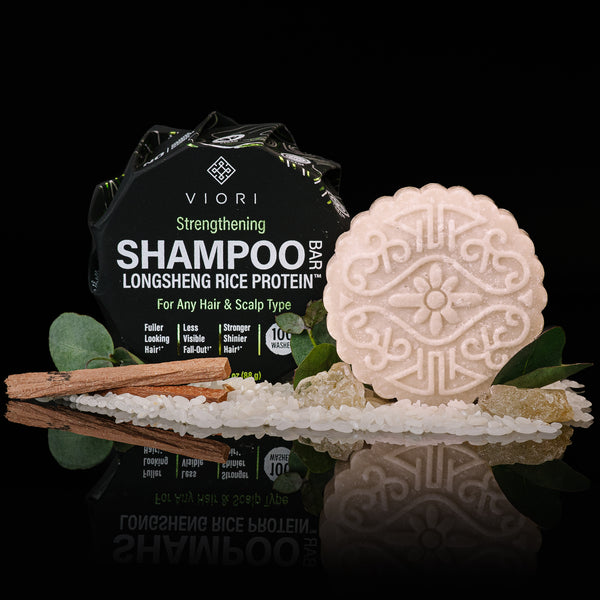
Viori emphasizes pH balance for a reason: hair products generally perform best when kept in a range that supports both scalp comfort and long-term fiber integrity (often discussed around pH 3.5-6.5). When that foundation is right, the scalp tends to behave better-and the hair tends to break less.
Deposition science: the part that decides whether saw palmetto stays on your scalp
If there’s one piece of this topic that almost never gets explained clearly online, it’s this: a rinse-off product only delivers results when ingredients deposit-meaning they remain on the scalp or hair after you rinse.
Formulators can encourage deposition using strategies like:
- Substantivity (ingredients that naturally cling to hair/scalp surfaces)
- Controlled deposition during rinsing (certain systems deposit as water dilutes the formula)
- Encapsulation (delivery vehicles that can adhere and release)
With saw palmetto, deposition is especially tricky because the most discussed fractions are lipophilic. If the formula isn’t engineered carefully, the shampoo can do what it’s supposed to do-cleanse-while unintentionally escorting the “active” right off the scalp.
Oily scalp + shedding: why cleansing balance often matters more than a hero ingredient
Many people drawn to saw palmetto shampoos are also dealing with greasy roots, scalp odor, and flakes that worsen when oil builds up. The temptation is to use a stronger and stronger cleanser. Unfortunately, that can backfire: stripping the scalp often leads to irritation and rebound oil production, which creates a cycle that feels impossible to escape.
This is where formula architecture matters. Viori uses Sodium Cocoyl Isethionate (SCI), a cleanser often considered mild, and focuses on a pH-balanced approach. For many scalps, that combination-clean enough to reset the roots but gentle enough to avoid stripping-does more to stabilize shedding patterns than chasing a single botanical claim.
Shedding vs breakage: the most common misunderstanding
One reason saw palmetto shampoo gets so much credit (or blame) is that many people lump all “hair in the drain” into one category. In reality, there’s a huge difference between shedding and breakage.
WHAT CUSTOMERS ARE SAYING
Real reviews for Rice Water Shampoo Bar – All Hair Types | VIORI
- Shedding tends to be full-length strands (often with a tiny bulb at the end) and relates to the follicle cycle.
- Breakage tends to be shorter snapped pieces and relates to the hair fiber-heat, friction, chemical services, UV, and dryness.
A routine that improves slip, reduces tangling, and supports the hair’s feel and resilience can significantly reduce breakage. Viori’s use of fermented Longsheng rice water and hydrolyzed rice protein is more relevant here than most people realize, because stronger-feeling hair and less friction can mean fewer broken strands-and less panic.
How to tell if a saw palmetto shampoo is actually helping
If you’re trying a saw palmetto shampoo, judge it like a scalp-care product first. You’re looking for signs of stability, not overnight miracles.
- Positive signs: less itch, less tightness, fewer flakes, calmer scalp between washes, easier detangling, less snapping
- Red flags: burning, redness, tenderness, squeaky dryness, sudden tangling, flakes getting worse quickly
Also give it time. Hair and scalp changes often need consistency to become obvious. Viori recommends allowing 2-3 months before giving up, which aligns with how slowly hair cycles and scalp patterns tend to shift when you’re truly repairing the foundation.
Bottom line: saw palmetto isn’t the main character-your formula is
Saw palmetto in shampoo isn’t automatically useless, but it’s also not automatically powerful. In a rinse-off product, the factors that matter most are usually:
- pH balance
- low irritation potential (barrier support matters)
- cleansing strength without stripping
- deposition strategy (does anything actually stay behind?)
- breakage reduction through slip and conditioning
If you’re serious about improving shedding concerns, start by stabilizing your scalp environment and reducing mechanical damage. From there, ingredients like saw palmetto become a “maybe helpful” addition instead of a make-or-break promise. And if you want a solid foundation to build on, a pH-balanced routine like Viori’s can be a smart place to begin.


