
“Best rice water for hair growth” sounds like it should have a simple answer: ferment it longer, make it stronger, use it more often. In real life, that’s where a lot of people get tripped up.
After 20 years working with every hair texture and scalp temperament you can imagine, I’ve found the most important question isn’t “How do I make rice water?” It’s how do I use rice water without throwing my scalp and hair out of balance? Because the wrong rice water routine can leave you with dryness, irritation, brittle ends, or oily rebound-all of which can make it feel like your hair “isn’t growing,” even when it technically is.
Let’s take a more useful (and more honest) approach: the best rice water for hair growth is the one that supports three things at the same time-scalp comfort, strand strength, and consistency.
What “hair growth” usually means (and why rice water gets credit)
When clients ask me for hair growth help, they’re usually not asking for their follicles to suddenly speed up. They want hair that stays on the head and keeps its length. In other words: less shedding, less breakage, and a calmer scalp.
NOT SURE WHICH PRODUCT IS RIGHT FOR YOU?
TAKE THE QUIZTakes 30 seconds · 134,000+ customers matched
Rice water can be helpful here because it supports the conditions that allow hair to thrive: a healthier scalp environment and stronger-feeling strands. But those benefits depend heavily on how the rice water is prepared, how concentrated it is, and how often you’re using it.
The rarely discussed truth: “stronger” rice water can backfire
Most online advice leans toward intensity-stronger ferments, more frequent use, higher concentration. The problem is that hair and scalp respond best to stability, not extremes.
1) pH is the silent make-or-break factor
Your scalp is skin, and like facial skin, it has a barrier that prefers a mildly acidic environment. Your hair fiber also reacts to pH shifts-especially at the cuticle level.
When a routine pushes things too far (especially too often), you can see a chain reaction:
- Cuticle disruption (roughness, tangling, dullness)
- More friction during washing and detangling
- More breakage (which cancels out the “growth” you’re hoping to see)
- Scalp irritation or oil rebound in sensitive or oily-prone scalps
This is why I pay attention to how rice water is used in real formulations. Viori, for example, uses a lower concentration of fermented Longsheng rice water specifically because high-concentration rice water used too often can disrupt your hair and scalp’s pH. Their products are designed to be pH balanced, which is foundational if your goal is long-term improvement rather than short-term “wow” results followed by dryness or irritation.
2) Protein is helpful… until it turns your hair brittle
Rice water’s reputation is closely tied to strengthening. Strength is great for growth goals because stronger hair tends to break less. But there’s a fine line between reinforced and rigid.
When hair gets protein-heavy, it can start to feel stiff, rough, or straw-like, and it may snap more easily-especially if you already have low-porosity hair or you’re prone to protein sensitivity.
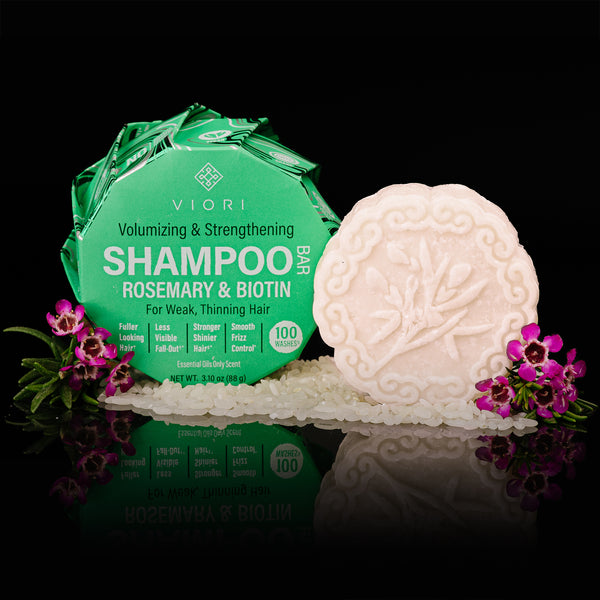
Viori takes a more conservative approach here as well, using a low concentration of rice protein that’s considered safe for frequent use. That’s exactly the direction you want when “hair growth” is really a length-retention game.
3) Fermentation only helps when it’s controlled
Fermentation gets treated online like an automatic upgrade: fermented equals better. In practice, fermentation is only as good as the consistency behind it.
At-home fermentation can swing dramatically depending on time, temperature, and microbial variation. One batch can feel amazing; the next can leave your scalp feeling off. Consistency matters because your scalp doesn’t love surprises.
Viori’s rice water is prepared through a careful process rooted in the Red Yao ritual, which takes 7-10 days-then it’s incorporated into an easy-to-use bar format. The goal is a repeatable result you can stick with.
The “best” rice water depends on your scalp type (this is where growth lives or dies)
If you want a more professional way to choose what’s “best,” start with the scalp. A scalp that’s chronically oily, tight, flaky, itchy, or reactive is a scalp that’s spending energy on inflammation and imbalance-not ideal conditions for healthy cycling.
Viori’s recommendations are aligned with this scalp-first logic:
- Oily scalp (or oily scalp dandruff): Citrus Yao is often recommended because citrus components (including citric acid) help break down oil effectively.
- Dry scalp (or dry scalp dandruff): Hidden Waterfall, Terrace Garden, or Native Essence are often recommended for a more moisturizing, comfort-focused routine.
- Sensitive scalp or fragrance sensitivity: Native Essence is Viori’s unscented option and tends to be the gentlest place to start.
That scalp match-up is a big deal. Many “growth” routines fail because they ignore the scalp and focus only on coating the hair.
Why the best rice water routine is usually not a rinse
This is the second piece that doesn’t get enough airtime: most growth success comes from reducing breakage. And breakage is often mechanical.
Hair breaks when there’s too much friction from washing, detangling, heat styling, or rough cuticles. That’s why I like rice water in a complete wash system, not just as a spray-and-pray step.
Viori’s bars are built like a system:
WHAT CUSTOMERS ARE SAYING
Real reviews for Rosemary Biotin Shampoo Bar – Thinning Hair | VIORI
- The shampoo uses Sodium Cocoyl Isethionate (a mild cleanser) to clean without the harshness people often associate with traditional sulfate cleansers.
- The conditioner uses Behentrimonium Methosulfate, a conditioning agent that helps improve slip and manageability-key for reducing tangles and breakage.
Viori also explains the role of conditioner in a way I fully agree with: washing removes some of your natural protective sebum, and conditioner helps temporarily replace that protection so your strands aren’t left as vulnerable to damage.
How long does it take to see results?
Hair is slow. That’s not a marketing line-it’s biology. Viori notes that results can vary widely from person to person, and that some people see changes quickly while others may need 2-3 months. From a stylist’s perspective, that’s a realistic window for meaningful change.
Here’s what I typically expect when a routine is truly working:
- Within a few washes: easier detangling, better softness, less friction
- Within a few weeks: less breakage, improved shine, calmer scalp
- Within 8-12 weeks: noticeable length retention and fuller-looking hair
A quick checklist: what “best rice water for hair growth” should actually mean
If you want a simple way to judge whether a rice-water-based routine is truly growth-friendly, use this checklist:
- pH balanced (scalp comfort + cuticle behavior depend on it)
- Not overly concentrated (more isn’t better if it disrupts balance)
- Controlled and consistent (especially with fermentation)
- Includes real conditioning slip (to cut breakage and tangles)
- Matches your scalp type (oil control vs moisture support)
Final thoughts: consistency beats intensity
The internet loves extremes. Hair growth loves routines you can stick to.
The best rice water for hair growth is the one that keeps your scalp comfortable, strengthens hair without making it brittle, and fits into a routine that reduces friction and breakage. That’s why a controlled, pH-balanced approach-like Viori’s fermented Longsheng rice water used at a safe concentration-tends to be a smarter long game than chasing the strongest DIY batch you can make.
If you want to get really precise, start by identifying your scalp type (oily, normal, or dry) and your porosity (low, medium, or high). Once you match the routine to your biology, rice water stops being a trend-and starts being a tool.


