
“Best” is a loaded word in haircare-especially for Black women. After 20 years behind the chair, I can tell you the most common reason a shampoo or conditioner “fails” has nothing to do with your hair being “difficult.” It’s almost always a mismatch between your scalp’s needs, your hair’s porosity, and the mechanical reality of curly and coily strands.
Here’s the angle I don’t see discussed often enough: the best shampoo and conditioner combo isn’t about chasing a trendy label like “moisturizing” or “clarifying.” It’s about controlling friction, managing electrical charge on the hair, and keeping your cuticle behavior predictable-so wash day doesn’t turn into a detangling marathon.
Start with the truth: your scalp is skin, your hair is a fiber
Your scalp produces oil, holds sweat, sheds skin cells, and reacts to irritation just like the rest of your body. Your hair, on the other hand, is a non-living fiber that can only be maintained-not “healed.” That distinction matters because a routine that makes your scalp feel fresh can still leave your ends dry, and a routine that makes your ends feel soft can still leave your roots itchy or coated.
For many Black women-especially anyone wearing protective styles, stretched styles, or heat-shaped looks-wash frequency is often reduced. That changes the job description of your products.
NOT SURE WHICH PRODUCT IS RIGHT FOR YOU?
TAKE THE QUIZTakes 30 seconds · 134,000+ customers matched
- Shampoo needs to remove sweat salts, oils, and product films without roughing up the cuticle.
- Conditioner needs to reduce friction, improve detangling, and help the hair lie smoother after cleansing.
So when someone asks for “the best shampoo and conditioner,” what they really need is the best system for their scalp type, porosity, and styling cadence.
The overlooked engineering problem: coils create more friction
Curly and coily hair isn’t fragile by default-but it does experience more mechanical stress. Every bend in the strand is a point where hair is more likely to snag, knot, and tangle. When the cuticle is lifted or the surface is rough, that snagging gets worse fast.
That’s why the best routine for Black women tends to prioritize three technical goals:
- Low-friction cleansing (so you’re not creating tangles while you clean)
- High-slip conditioning (so detangling doesn’t become a breakage event)
- pH balance (to help keep the cuticle behaving more smoothly over time)
Viori emphasizes pH balance and notes that hair products generally perform best in a pH range of 3.5-6.5; overly alkaline products can contribute to dryness and long-term damage.
Porosity is the real “hair type” that decides what works
Curl pattern tells you shape. Porosity tells you how your hair behaves-how it absorbs and retains moisture, how easily it builds up, and how it responds to protein and conditioning agents.
How to check porosity (quick and simple)
Viori shares a classic porosity test you can do at home:
- Start with clean, dry hair (a shed strand works well).
- Fill a clear glass with water.
- Drop the strand into the water and watch what it does.
- If it floats, you likely have low porosity.
- If it stays in the middle, you’re likely medium porosity.
- If it sinks, you likely have high porosity.
Low porosity hair: when “more moisture” backfires
Low porosity hair often struggles to absorb product and can be prone to buildup. It’s the classic situation where hair feels coated but still doesn’t feel hydrated.
- Products can sit on the surface instead of sinking in.
- Layering too many rich products can dull the hair and make it feel heavy.
- You usually do better with a routine that stays clean and light.
Viori recommends leaning toward lighter, more cleansing options for low porosity hair-often pointing to Citrus Yao as a good direction.
High porosity hair: absorbs fast, loses fast
High porosity hair tends to take in water and product quickly, but it can’t hold onto it well-often because the cuticle is more lifted from wear, heat, color, or mechanical damage.
- Hair may wet fast and dry fast.
- Frizz and tangles show up easily.
- Ends can feel rough no matter how often you “moisturize.”
Viori commonly recommends more moisturizing options like Terrace Garden, Hidden Waterfall, or Native Essence for hair that needs more support with softness and retention.
The conditioner detail most people skip: it’s about charge
Here’s a behind-the-scenes truth from salon life: conditioner isn’t magic-it's chemistry. Hair (especially when it’s weathered or damaged) tends to carry more negative charge on the surface. Many conditioners work because they deposit positively charged conditioning agents that cling to the strand, helping reduce static and friction.
Viori explains this in simple terms: conditioner is positively charged, so it “sticks” to strands after washing and helps replace the protective feel of natural oils until your scalp replenishes them.
Viori’s conditioner bars use behentrimonium methosulfate, a conditioning ingredient widely used for slip and detangling. Viori also clarifies that this ingredient is commonly regarded as sulfate-free in the way most people mean it, and it’s not the same as the harsh cleansing sulfates many try to avoid.
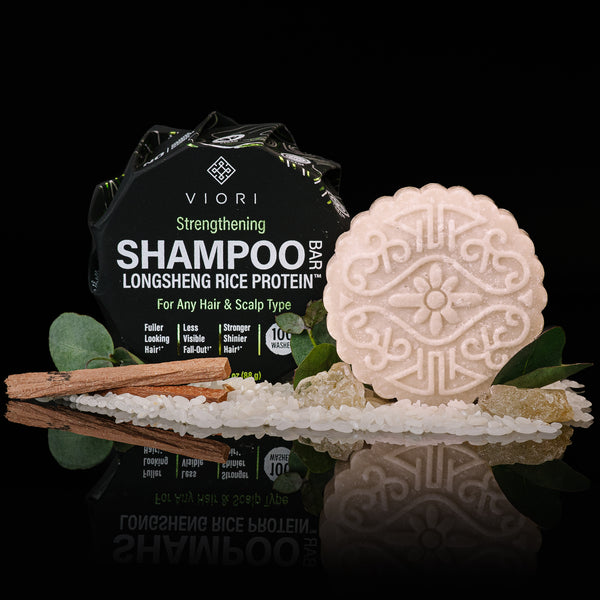
Shampoo bars can be amazing-if you use the right technique
One of the fastest ways to turn wash day into a tangle-fest is rubbing a shampoo bar directly onto the hair. It’s convenient, yes-but it can also create unnecessary friction on hair that already tangles easily.
Viori recommends a technique I also use in the salon whenever friction is a concern: lather in your hands first, then apply with your hands. You still get the cleanse, but you cut down the mechanical stress dramatically.
The “split routine” is often the best answer for Black women
One of the most common patterns I see is an oily or itchy scalp paired with dry ends. That’s not contradictory-your scalp is living skin, and your ends are the oldest part of your hair. They don’t behave the same way, so they shouldn’t be treated the same way.
Viori even supports this approach in their guidance:
WHAT CUSTOMERS ARE SAYING
Real reviews for Rice Water Shampoo Bar – All Hair Types | VIORI
- Use Citrus Yao shampoo for oilier scalps.
- Use a more moisturizing conditioner option like Hidden Waterfall, Terrace Garden, or Native Essence on the mid-lengths and ends.
This is the routine that helps many people escape the cycle of over-cleansing roots, overloading stylers, and still feeling like nothing stays balanced.
Sensitive scalp or fragrance concerns? Simplify, don’t suffer
If your scalp is reactive, flaky from dryness, or you know fragrance sets you off, removing variables is often the smartest move. Viori recommends Native Essence as their unscented option, and notes it has no added fragrance (though you may notice a very subtle natural base scent if you smell it closely).
What “best” should look like after a few washes
Hair changes with repeated cycles, not just one wash. Viori notes some people notice results quickly, while others need 2-3 months to fully judge performance. That’s realistic-especially when you’re improving slip, reducing friction, and stabilizing scalp comfort.
Signs you’ve found a truly good match:
- Your scalp feels clean without tightness or squeakiness.
- Detangling takes less time and causes less shedding or snapping.
- Your hair feels smoother while wet (that’s where slip tells the truth).
- You see fewer knots, especially at the ends.
- Your styling results are more consistent-whether you wear curls, braids, or a blowout.
Final thought: “best” is a system you can repeat
The best shampoo and conditioner for Black women is the one that respects scalp health, matches porosity, and reduces friction-because friction is where so much breakage begins. When you choose with those fundamentals in mind, you stop experimenting endlessly and start building a routine that stays reliable.
If you want to get very specific, the fastest way to narrow it down is to identify your scalp type (how quickly oil returns), confirm porosity, and then choose a Viori pairing that supports both your roots and your ends.


