
Most shampoo and conditioner advice online is stuck in the shallow end: “avoid this,” “add more moisture,” “use less product.” In the salon, I’ve learned that the routines that truly transform hair aren’t built on buzzwords-they’re built on understanding what’s actually happening on your scalp and along the hair fiber.
Here’s the uncommon (and surprisingly practical) truth: a wash day routine is a two-step electrochemical system. First you remove a complex mix of oils and residue without throwing your scalp off balance. Then you re-coat the hair with ingredients that cling by charge, reduce friction, and protect the cuticle so hair stays softer between washes.
Step One: Shampoo Is “Soil Removal” and Cuticle Control
Shampoo isn’t just about getting rid of oil. What most people call “greasy” or “buildup” is usually a layered blend of scalp oils, environmental debris, and leftover styling films. A good cleanser has to lift all of that without turning your hair into a squeaky, tangly mess.
NOT SURE WHICH PRODUCT IS RIGHT FOR YOU?
TAKE THE QUIZTakes 30 seconds · 134,000+ customers matched
What you’re really washing out
On a typical head of hair, the “dirt” is rarely just dirt. It’s more like a sticky, invisible cocktail that clings to the scalp and lengths.
- Sebum (fresh oil from the scalp)
- Oxidized sebum (heavier, stickier oil that builds over time)
- Pollution and particles (dust, smoke, city grime)
- Styling residue (films that can make hair feel coated)
- Hard water minerals (can make hair feel rough or dull)
The pH factor that quietly makes or breaks hair
One of the fastest ways to create ongoing frizz and roughness is to use hair products that are too alkaline. Hair behaves best in a mildly acidic range-think a product pH that supports a smoother cuticle rather than prying it open.
Viori puts a big emphasis on being pH balanced, and that matters more than most people realize. When pH is in the right zone, hair tends to feel softer, look shinier, and detangle with less stress-especially over months of consistent use.
The “over-cleansing boomerang” (why some people get oilier faster)
If you’ve ever washed your hair and felt incredibly clean… only to look oily again sooner than expected, you might be stuck in a rebound cycle. When cleansing is too aggressive, the scalp barrier can feel “challenged,” and some scalps respond by producing oil faster or feeling more reactive.
That’s why I’m always aiming for balanced cleansing: clean enough to lift grime and oils, but gentle enough that your scalp doesn’t feel like it has to overcompensate.
Step Two: Conditioner Is Charge Science and Friction Management
Conditioner is less about “adding moisture” and more about reducing friction and smoothing the surface of the hair. Once hair is wet and freshly cleansed, it can become more prone to tangling and mechanical damage. Conditioner is the protective finish that helps hair behave.
Why conditioner “sticks” to hair
Hair-especially when it’s porous or damaged-tends to carry more negative charge. Many effective conditioner ingredients are positively charged, so they naturally gravitate toward the hair shaft and deposit where the surface needs support.
Viori’s conditioner bars use Behentrimonium Methosulfate (BTMS), a conditioning agent valued in haircare because it improves slip, reduces static, and helps hair detangle with less breakage. It’s worth noting that while the name contains “methosulfate,” it’s used for conditioning performance rather than harsh cleansing.
Support ingredients that influence feel and manageability
Beyond the main conditioning agent, Viori’s bars include a mix of butters, oils, and hair-supporting components that can improve the way hair feels and handles.
- Fatty alcohols like cetyl alcohol and stearic acid (these help with glide and softness; they’re not the drying alcohols people worry about)
- Cocoa butter and shea butter for conditioning comfort
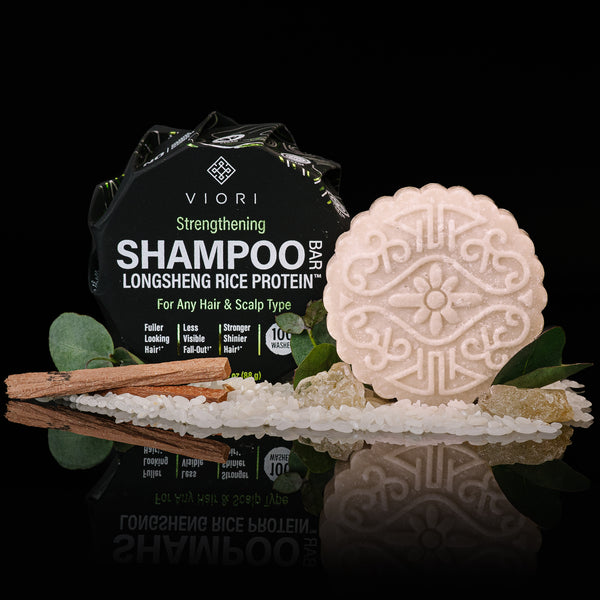
- Hydrolyzed rice protein for a lightweight strengthening feel
- Longsheng rice water™ plus nutrients like vitamin B8 (inositol) and vitamin B5 (panthenol), as discussed in Viori’s educational materials
- Aloe vera and bamboo extract, often appreciated in routines focused on scalp comfort and smoother hair
The Real “Buildup” Conversation: Porosity + Dose + Rinse
When hair feels heavy, dull, or coated, it’s tempting to blame a single ingredient. In practice, buildup is usually a mismatch between hair porosity, how much product you apply, and how thoroughly you rinse-especially if you have hard water.
Porosity changes how your hair holds onto product
- Low porosity hair can resist absorption and feel coated more easily. It often does best with lighter application and a cleaner rinse.
- High porosity hair absorbs quickly but struggles to retain softness, so it often benefits from richer conditioning and gentler handling.
Viori also shares a simple porosity test in their FAQs (the water-glass strand test), which is a helpful starting point if you’re unsure where you fall.
Why Bars Are Different: Technique Matters More Than Most People Think
Bar products can be incredible, but they’re less forgiving if your technique is rough. With liquids, the formula is pre-diluted and your “dose” is more controlled. With bars, you control the dose and friction with your hands.
Friction is the hidden variable (especially for color-treated hair)
Rubbing a bar directly on the hair can create extra friction, which can lift the cuticle and make hair feel rougher over time-particularly if your hair is porous or color-treated. Viori recommends a smarter, gentler approach: build lather in your palms and apply with your hands rather than scrubbing the bar directly on your head.
Choosing a Viori Bar: Match Your Scalp First
If you want a routine that works long-term, think like a stylist: choose shampoo for the scalp and conditioner for the lengths. Your scalp is living skin. Your ends are older fiber that needs protection.
A simple way to choose
- Citrus Yao is commonly recommended for normal-to-oily scalps. Viori notes it contains citric acid, which helps break down oil effectively.
- Terrace Garden, Hidden Waterfall, and Native Essence are often recommended for normal-to-dry scalps and hair that needs more softness.
- Native Essence is unscented, and is typically the most comfortable option for people who are sensitive to fragrance.
If your roots are oily but your ends are dry
Viori’s FAQ guidance supports a mix-and-match approach that I also use in the salon: treat the scalp and ends as different zones.
WHAT CUSTOMERS ARE SAYING
Real reviews for Rice Water Shampoo Bar – All Hair Types | VIORI
- Use Citrus Yao shampoo on the scalp for a cleaner feel.
- Use a more moisturizing conditioner option (like Hidden Waterfall, Terrace Garden, or Native Essence) on mid-lengths and ends.
How Long Until You Notice Results?
Some changes can show up immediately: smoother feel, less tangling, better shine. But deeper improvements-like fewer breakage patterns and a happier scalp-often take time because your routine is affecting both hair fiber behavior and scalp balance.
Viori recommends giving the bars 2-3 months before you decide they’re not for you, which is a realistic window if you’re aiming for consistent, long-term changes rather than a one-wash illusion.
How to Use Viori Bars for the Best Possible Outcome
If you want the bar format to really shine, use it with intention. These small technique shifts make a big difference in softness, volume, and how long you can go between washes.
- Soak hair thoroughly. Bars need enough water to emulsify evenly.
- Create shampoo lather in your hands. Apply that lather to the scalp and massage for 60-90 seconds.
- Rinse longer than you think. This is especially important in hard water.
- Condition mid-lengths to ends. Focus where hair is driest and oldest.
- Let conditioner sit 3-5 minutes. This gives conditioning agents time to deposit and smooth.
- Rinse well, then finish cooler if frizz-prone. Cooler water can help the cuticle feel more sealed and sleek.
- Store bars dry between uses. A holder that allows airflow helps prevent disintegration and extends bar life.
Final Takeaway
Great hair days aren’t luck-they’re chemistry, technique, and consistency. Once you start treating shampoo as controlled cleansing (not stripping) and conditioner as charge-driven protection (not just “moisture”), your results become far more predictable.
Viori’s bars fit beautifully into that approach: they’re designed to be pH balanced, built with a gentle cleanser system, and supported by strong conditioning ingredients that help hair feel smoother, stronger, and easier to manage-without relying on plastic packaging.


