
After two decades in the beauty industry, I've seen countless trends sweep through salons and bathrooms. But the rise of hair care bars? This isn't just another fleeting fad-it's a revolution in cosmetic chemistry that most people completely misunderstand.
Let me pull back the curtain on what makes these solid products work (or sometimes fail), because there's genuine science here that deserves your attention.
Why Creating a Great Hair Care Bar Is Harder Than You Think
Here's something that might surprise you: formulating an effective hair care bar with natural ingredients is exponentially more difficult than creating traditional liquid products.
Think about it. You're essentially asking incompatible materials to coexist peacefully. Water-loving ingredients like proteins and humectants must sit alongside oil-based ingredients like butters and fatty alcohols-without separating. In liquid formulations, water and emulsifiers make this relatively simple. In a solid bar? You're working against the fundamental laws of chemistry.
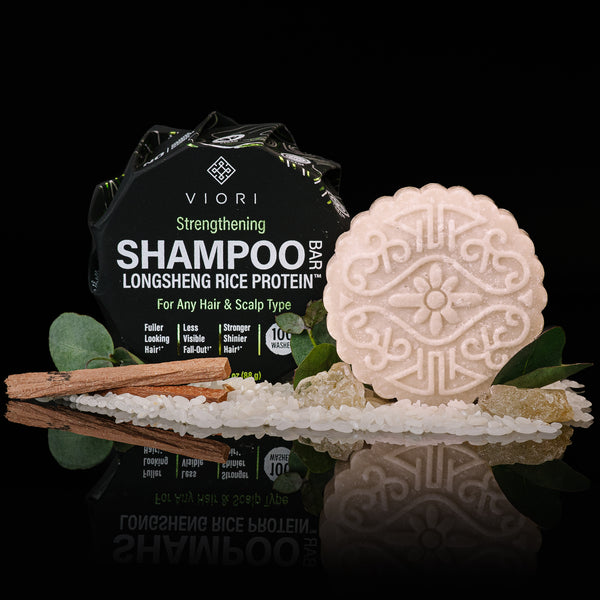
The brilliance of properly formulated bars-like those from Viori-lies in what I call "controlled dissolution architecture." The bar must stay rock-solid when dry, yet release ingredients in precisely the right sequence when water hits it. Imagine creating a time-release capsule, but one governed by water contact rather than digestion. That's the engineering feat happening in your shower.
The pH Balancing Act
Now let's talk pH, because this is where things get truly technical.
Your hair's optimal pH sits between 4.5-5.5-slightly acidic. Your scalp likes the same range. But creating a solid bar in this pH zone while maintaining structural integrity? That's remarkably challenging.
Traditional soap bars are alkaline, with a pH around 9-10. This is why they feel so drying-they literally swell and lift your hair cuticle, leading to damage and moisture loss. Great for cleaning dishes. Disastrous for your hair.
The sophisticated approach involves using gentle surfactants that work at lower pH levels while still providing serious cleansing power. Sodium Cocoyl Isethionate (SCI), derived from coconut, is the gold standard here. Despite its intimidating chemical name, SCI allows formulators to achieve that crucial pH balance while keeping the bar from crumbling in your shower.
NOT SURE WHICH PRODUCT IS RIGHT FOR YOU?
TAKE THE QUIZTakes 30 seconds · 134,000+ customers matched
Here's the technical achievement: Creating a bar that cleans effectively without damaging the cuticle, maintains pH balance, releases conditioning agents at the right time, AND doesn't turn to mush-all simultaneously-is genuinely impressive chemistry.
The Fermentation Factor: Ancient Wisdom Meets Modern Science
Let's talk about fermented rice water, since it's at the heart of Viori's heritage-inspired formulations. The Red Yao tribe's traditional methods weren't just cultural practice-they were inadvertent biotechnology.
What Actually Happens During Fermentation
When rice ferments, several fascinating processes occur:
- Starches break down into simpler sugars
- Proteins partially hydrolyze, becoming smaller molecules
- B vitamins (particularly inositol and panthenol) concentrate
- pH naturally drops to the acidic range
From a professional standpoint, here's what matters most: molecular size determines penetration ability.
Hydrolyzed rice protein-protein broken into smaller peptides through fermentation-can actually penetrate your hair shaft rather than simply coating the surface. This is the difference between temporary cosmetic improvement and actual structural reinforcement. The fermentation process naturally creates these smaller molecular chains that your hair can absorb and utilize.
Inositol, which becomes heavily concentrated during fermentation, is particularly fascinating to me as a stylist. Research shows it remains in hair even after rinsing, continuing to strengthen and protect. It's one of the few ingredients with true substantivity-meaning it stays put and keeps working long after you've stepped out of the shower.
The Conditioner Bar Puzzle: Chemistry's Greatest Challenge
If formulating cleansing bars is difficult, conditioner bars are the stuff of cosmetic chemistry nightmares.
Traditional conditioners are oil-in-water emulsions-they're mostly water with conditioning agents suspended within. Remove the water, and you're left with what should essentially be a stick of butter. How do you make that spreadable, rinseable, and actually effective?
The Cationic Solution
The secret lies in quaternary ammonium compounds (quats), specifically Behentrimonium Methosulfate (BTMS). Despite having "sulfate" in its name, BTMS is categorically different from harsh sulfate cleansers-more on that confusion later.
Here's the chemistry: BTMS carries a positive charge (it's cationic). Your hair, especially when damaged, carries a negative charge. Opposite charges attract, which is why conditioner "sticks" to your hair, particularly at damaged sites that need it most.
In a bar format, BTMS serves triple duty:
- Structural binder - Helps the bar maintain its form
- Conditioning agent - Provides slip and detangling
- Delivery mechanism - Ensures other ingredients (proteins, vitamins, plant oils) deposit onto your hair
What's rarely discussed: the percentage of BTMS must be precisely calibrated. Too little, and the bar crumbles. Too much, and your hair feels coated or greasy. This is where formulation expertise separates mediocre bars from exceptional ones.
The Water Hardness Variable Nobody Warns You About
Here's something most companies won't tell you: water quality dramatically affects bar performance in ways that don't impact liquid products as severely.
Understanding Mineral Interaction
Hard water contains calcium and magnesium ions. When these encounter surfactants, they can form insoluble compounds-that's the "soap scum" on your shower door. On your hair, this manifests as dullness, tangles, or a frustratingly sticky feeling.
Bars are more vulnerable to this effect because they typically lack the chelating agents (like EDTA) commonly used in liquid formulations to bind these minerals. Natural formulations intentionally avoid these synthetic chelators, which means water hardness becomes crucial to your results.
Professional insight: When someone tells me "bars don't work for my hair," my first question is always about their water quality. The same bar that creates silky, gorgeous results in soft water areas might leave residue in hard water regions.
Solutions That Actually Work:
- Install a shower filter to remove chlorine and reduce mineral content
- Finish with a diluted apple cider vinegar rinse-the acetic acid dissolves mineral buildup
- Use distilled water for your final rinse if you're in an area with very hard water
The Application Technique That Changes Everything
Here's a nuanced point that requires professional experience to appreciate: the application method for bars introduces variables that don't exist with liquids.
Why Friction Matters
When you rub a bar directly on your hair, you're introducing friction. For healthy hair, this is perfectly fine. For compromised hair-color-treated, chemically processed, or mechanically damaged-this friction can exacerbate cuticle lifting and cause damage.
The professional technique I teach my clients:
- Create lather in your palms first
- Apply the lather to your hair using your hands
- Minimize direct bar-to-hair contact
This is particularly crucial for conditioner bars. The paste-like consistency requires patient working through the hair. Rushing this step is the number one reason people tell me "conditioner bars don't work."
Take your time. Work in sections. Let the product do what it's formulated to do.
Understanding Protein-Moisture Balance
Every experienced stylist knows hair needs both protein and moisture in proper balance. Too much protein creates brittle, straw-like texture. Too much moisture without protein creates limp, mushy hair that stretches excessively.
Bar Formulations and Protein Loading
Rice-based bars like Viori's inherently deliver protein-rice protein, specifically. Combined with hydrolyzed proteins from fermentation, you're getting consistent protein with every wash.
For some hair types (fine, thin, low porosity), this is perfect. For others (coarse, high porosity, or extensively color-treated), it can tip toward protein overload over time.
Professional assessment you can do at home:
- If your hair becomes increasingly stiff or "crunchy," you may be experiencing protein accumulation
- If your hair becomes stretchy when wet or loses curl definition, you need more protein
- Most people need to alternate between protein and moisture rather than using the same product every wash
With liquid products, consumers might use a protein treatment occasionally. With bars used daily, you're getting consistent protein delivery. This isn't good or bad-it's just different, and requires awareness.
The Economics: Why One Bar Outlasts Three Bottles
Let's talk about the efficiency factor that deserves deeper analysis.
A typical shampoo bar contains 60-90 grams of product with virtually no water. A standard liquid shampoo (250ml) is approximately 60-70% water.
The mathematics of efficiency:
- Liquid shampoo: ~75ml of active ingredients per bottle
- Bar shampoo: ~90g of active ingredients, zero water weight
- One bar ≈ roughly 3 liquid bottles by active ingredient volume
But there's a psychological adjustment period. Consumers accustomed to squirting large amounts of liquid shampoo often feel they're not using "enough" with a bar because there's no visual bulk. This leads to over-application, causing faster depletion or product buildup.
Professional dosing advice: You need surprisingly little. For shoulder-length hair, 10-15 seconds of bar application creates sufficient lather. More isn't better-it's just wasteful and harder to rinse completely.
Clearing Up the "Sulfate-Free" Confusion
Let's address something the industry glosses over: the term "sulfate-free" in bar formulation is more nuanced than in liquid products.
The BTMS Misunderstanding
Behentrimonium Methosulfate contains "methosulfate" in its name, leading to widespread confusion. Chemically, it's categorically different from cleansing sulfates like Sodium Lauryl Sulfate (SLS) or Sodium Laureth Sulfate (SLES).
BTMS is a conditioning quaternary ammonium compound. The sulfate group is part of a completely different molecular structure that serves as a conditioning agent, not a cleanser. It's sulfate-free in the way that actually matters-it doesn't strip or irritate your hair.
Why this matters: Consumers seeing "methosulfate" on ingredient lists sometimes panic, thinking they've been deceived about sulfate-free products. Understanding the chemistry prevents this unnecessary worry.
The Real Sulfate Conversation
True cleansing sulfates (SLS, SLES) create abundant foam and clean aggressively by stripping everything from your hair-including the natural oils you actually need. They're effective but harsh.
SCI (Sodium Cocoyl Isethionate), used in quality bars, cleanses through a different, gentler mechanism. It works at lower pH and doesn't strip as aggressively. However, it's still a surfactant-it must remove some oil to clean.
The professional perspective: There's no such thing as cleansing without some oil removal. The question isn't "sulfate or not"-it's "how aggressive is the cleanser, and can the formula restore what it removes?" Quality bars balance cleansing with immediate conditioning ingredient delivery.
WHAT CUSTOMERS ARE SAYING
Real reviews for Rice Water Shampoo Bar – All Hair Types | VIORI
The Storage Secret That Extends Bar Life
Here's something that profoundly affects performance but gets minimal attention: how you store your bar between uses matters as much as the formulation itself.
Why Moisture Management Matters
Bars sitting in water or in constantly humid environments undergo continuous dissolution at the surface. This creates several problems:
- Bacterial growth potential - While bars have natural antimicrobial properties from pH and low water activity, constant moisture exposure changes this
- Ingredient separation - Water-soluble ingredients leach out first, altering the formula over time
- Premature degradation - The bar becomes mushy and breaks apart
Professional storage protocol:
- Use a well-draining holder (bamboo, wire, anything allowing air circulation on all sides)
- Keep it away from direct water spray
- Allow it to fully dry between uses
- Store in an area with good air circulation, not sealed in humid containers
This seems obvious, yet I've consulted with dozens of clients who kept bars in closed containers or directly under the shower spray, then complained about poor performance and longevity. Storage matters!
Matching Formulation to Your Scalp Type
Most bar companies offer different scents but don't adequately explain the functional differences. Let me provide the professional breakdown:
Citrus-Based Formulations
Citric acid (naturally present in citrus oils) provides:
- Additional pH adjustment capability
- Gentle astringent action that reduces excess oil
- Light clarifying effect that helps remove product buildup
Best for: Normal to oily scalps, those using styling products regularly, or living in humid environments where scalp oil production increases
Not ideal for: Dry, sensitive, or compromised scalps where the astringent action might cause irritation
Unscented/Fragrance-Free Formulations
Eliminating fragrance compounds creates a product focused purely on function.
Best for: Sensitive skin, eczema or psoriasis sufferers, those with fragrance sensitivities, children, or anyone seeking minimal additive exposure
The trade-off: Some people find the natural scent of unfragranced bars (the smell of the base ingredients) less pleasant than scented versions
Floral/Moisturizing Formulations
These often include additional humectants or are formulated with higher percentages of conditioning oils.
Best for: Dry to normal scalps, mature hair, chemically treated hair, or those in dry climates
Professional note: These formulations work beautifully for the right hair type but can overwhelm fine or oily hair, leading to lank, greasy results
The Porosity Principle: The Most Overlooked Factor
In 20 years of professional practice, I've found that understanding hair porosity explains 90% of why products "work" for some people and "don't work" for others.
Defining Porosity
Hair porosity refers to how readily your hair absorbs and retains moisture. It's determined by the condition of your cuticle layer-the protective outer sheath of each strand


