
As a beauty professional with two decades of experience, I've witnessed countless hair care trends come and go. But recently, I've become fascinated by something most people literally wash down the drain without a second thought: rice rinse water. Not the fermented rice water that's gained popularity, but rather the starchy liquid from that initial rinse-the stuff you're supposed to discard.
Here's the angle nobody's talking about: the chemistry of rice rinse water fundamentally changes based on how, when, and why you rinse-and these variations create wildly different effects on hair that most DIY enthusiasts completely miss.
The Uncomfortable Truth Nobody Mentions
Let's address what the internet conveniently glosses over: rice, particularly rice grown in certain regions, can contain concerning levels of inorganic arsenic. This heavy metal accumulates in rice more than other grains because of how rice plants uptake nutrients from flooded paddies.
Here's where it gets technical: the first rice rinse removes approximately 25-30% of surface arsenic, according to food science research. But here's the paradox-this same rinse water that people are applying to their scalps can contain those very contaminants they're trying to remove from their food.
From a professional standpoint, this is where properly formulated products have a significant advantage. Viori's formulation process includes multiple rinsing stages and fermentation protocols specifically designed to minimize any trace contaminants while maximizing the beneficial compounds. The fermentation process they use (learned from the Red Yao women of Longsheng) actually helps break down and neutralize potential irritants that might remain in hastily prepared DIY rice water.
The Starch Paradox: Why Temperature Changes Everything
Here's something that even experienced natural hair enthusiasts often misunderstand: not all rice starches behave the same way on hair.
Rice contains two types of starch: amylose and amylopectin. The ratio between these two determines how the starch will interact with your hair cuticle:
Amylose (20-30% of rice starch):
NOT SURE WHICH PRODUCT IS RIGHT FOR YOU?
TAKE THE QUIZTakes 30 seconds · 134,000+ customers matched
- Linear molecular structure
- Forms a tighter film on hair strands
- Can create stiffness if over-applied
- More resistant to water once dried
Amylopectin (70-80% of rice starch):
- Branched molecular structure
- Creates a more flexible coating
- Provides slip and smoothness
- More easily rinsed away
When you do that initial rice rinse, you're releasing a specific concentration of these starches into the water. But here's the critical detail most tutorials skip: the temperature of your rinse water dramatically alters which starches are released and in what proportions.
Cold water rinse (below 60°F/15°C): Releases primarily surface starches and dust, minimal amylose activation
Lukewarm water (60-80°F/15-27°C): Begins gelatinizing starches, releasing both types more evenly
Hot water (above 140°F/60°C): Causes rapid starch gelatinization, releasing more amylose, creating a stickier, more protein-like residue
Most people preparing rice water rinses use whatever temperature comes from their tap, leading to wildly inconsistent results. One week their hair feels silky; the next, it's coated and stiff. They blame their hair rather than understanding the chemistry.
The pH Time Bomb Nobody Discusses
Here's a genuinely overlooked technical aspect: fresh rice rinse water has a pH of approximately 6.0-6.5, but this changes dramatically over time.
Within 24 hours of sitting at room temperature:
- pH can drop to 4.5-5.0 (as fermentation begins)
- Bacterial activity increases exponentially
- The chemical composition shifts from primarily starch-based to acid-based
Within 48-72 hours:
- pH may drop further to 3.5-4.0
- This is now fermented rice water, not rice rinse water
- The protein structure has partially broken down
- Inositol and other B vitamins become more bio-available
Most tutorials conflate "rice water" with "rice rinse water" with "fermented rice water"-but from a hair science perspective, these are three distinctly different products with different pH levels, different active compounds, and different effects on hair structure.
The professional concern: Hair's optimal pH range is 4.5-5.5. Fresh rice rinse water at 6.0-6.5 actually sits slightly above this range, meaning it can cause the cuticle to swell slightly-which might create temporary volume but can lead to increased porosity over time if used repeatedly.
This is precisely why Viori's formulation is pH balanced. They've taken the beneficial compounds from the Longsheng rice water but adjusted the pH to the optimal range for hair health. You're getting the benefits without the hidden cuticle-damaging effects of improperly balanced DIY rinses.
Not All Rice Is Created Equal
Here's something that blows my mind as a professional: different rice varieties have fundamentally different starch compositions, protein contents, and mineral profiles-yet DIY rice water tutorials treat all rice as if it's identical.
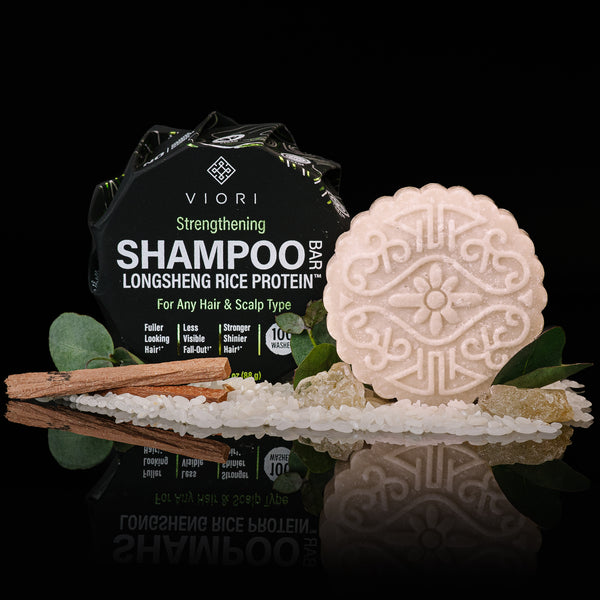
Short-grain rice (like the Longsheng rice used by the Red Yao):
- Higher amylopectin content (80-85%)
- Stickier, more cohesive starch
- Higher protein content (7-8%)
- More intensive conditioning properties
Medium-grain rice (common in grocery stores):
- Moderate amylopectin (70-75%)
- Balanced starch profile
- Moderate protein (6-7%)
- More versatile but less dramatic results
Long-grain rice (like basmati or jasmine):
- Lower amylopectin (70-75%)
- Less sticky starch
- Lower protein content (6-7%)
- Lighter effect, less coating
The kicker: Most people grab whatever rice is in their pantry-enriched, parboiled, instant, or even pre-seasoned varieties-and wonder why their results don't match the glossy hair they see in tutorials featuring specific traditional rice varieties.
The Longsheng rice that Viori sources is a high-starch, short-grain variety that's been cultivated specifically in that mountain region for centuries. It's not interchangeable with the jasmine rice from your local supermarket, any more than using tap water would replicate the mineral composition of a specific mountain spring.
The Hidden Protein Problem
Here's a critical detail that intersects with something I see in my salon constantly: rice rinse water contains protein-and protein overload is one of the most misdiagnosed hair problems in the natural hair community.
Rice protein (oryzenin) is present even in that first rinse water. For someone with:
Low porosity hair:
- Already resistant to moisture penetration
- Can become coated and stiff with excess protein
- May appear dull and feel brittle
- Could actually worsen their hair condition with frequent rice rinses
High porosity hair:
- Readily absorbs protein
- Typically benefits from protein treatments
- Can handle more frequent rice water applications
- May see dramatic positive results
The professional reality: I'd estimate that 60% of the clients who come to me wanting to "go natural" and use DIY treatments like rice water rinses don't actually know their hair's porosity. They're blindly applying protein-rich treatments to hair that may already be protein-saturated, then wondering why their hair feels like straw.
This is where a formulated product has a distinct advantage. Viori uses hydrolyzed rice protein-meaning the protein molecules have been broken down into smaller peptides that can penetrate the hair shaft more effectively without causing surface buildup. The concentration is also carefully controlled. You're getting consistent protein benefits without the risk of overload that comes with variable-concentration DIY rinses.
Your Water Quality Is Sabotaging Your Results
This might be the most overlooked aspect of rice rinse water: the mineral content of your water source dramatically affects the final product's composition and how it interacts with hair.
If you're rinsing rice with hard water (high in calcium and magnesium):
- Minerals bind with rice starches
- Creates a more occlusive coating on hair
- Can lead to buildup over time
- May cause dullness and reduced elasticity
If you're rinsing rice with soft water:
- Starches remain more soluble
- Creates a lighter, more penetrating treatment
- Less risk of buildup
- More consistent results
If you're rinsing rice with treated/chlorinated municipal water:
- Chlorine can oxidize some beneficial compounds
- May alter pH more rapidly
- Can introduce unwanted chemical interactions
The geographical reality: Someone making rice rinse water in Los Angeles (notoriously hard water, 200-300 ppm) is creating a fundamentally different product than someone in Seattle (soft water, 20-50 ppm)-yet they're following the same tutorial and expecting the same results.
The Red Yao women use water from the Longsheng mountains-naturally soft, mineral-rich in beneficial trace elements, unchlorinated. This specific water chemistry is part of the equation that most DIY approaches can't replicate.
The Microbial Risk Nobody Wants to Discuss
Let me be blunt about something from a professional health and safety perspective: improperly stored rice rinse water is a bacterial playground.
Rice water at neutral pH, room temperature, and high in carbohydrates creates ideal conditions for:
WHAT CUSTOMERS ARE SAYING
Real reviews for Rice Water Shampoo Bar – All Hair Types | VIORI
- Bacillus cereus (causes food poisoning, can irritate scalp)
- Various mold species (can cause allergic reactions)
- Staphylococcus species (can exacerbate scalp conditions)
I've seen clients with mysterious scalp issues-redness, itching, small bumps-who were using week-old rice water stored in a bathroom cabinet. The warm, humid bathroom environment was essentially culturing bacteria that they were then massaging into their scalps.
Professional recommendation: If you're going to use rice rinse water, it should be:
- Prepared fresh and used within 24 hours, OR
- Properly fermented following specific protocols, OR
- Refrigerated immediately and used within 3-4 days maximum
The alternative? Use a properly formulated, preserved product like Viori's shampoo bars. The fermentation process they employ actually creates an environment where beneficial compounds flourish while harmful bacteria cannot. The pH is controlled, the product is stable, and there's no risk of accidentally coating your hair with spoiled grain water.
The Application Technique Nobody's Perfecting
Even if you prepare perfect rice rinse water with the ideal starch concentration, correct pH, and proper sanitation-how you apply it determines whether it helps or harms your hair.
Common mistakes I see:
- Applying to dry hair: The starch sits on the surface rather than penetrating, creating buildup
- Not clarifying first: Applying rice water over silicones or heavy oils just traps everything together
- Using too much: More is not better with protein-starch treatments
- Incorrect rinsing: Not thoroughly rinsing out rice water leaves residue that attracts dirt and dulls shine
- Wrong frequency: Using rice rinses too often causes protein overload; too infrequently, you see no results
The professional method (when using rice treatments):
- Start with freshly cleansed hair (cuticle open, receptive)
- Apply to damp (not soaking) hair for better absorption
- Use minimal product-focus on even distribution
- Allow appropriate processing time based on porosity
- Rinse thoroughly with cool water to close cuticle
- Follow with a proper pH-balanced conditioner
This is exactly how Viori products are designed to be used-the shampoo bar cleanses and prepares the hair, the pH-balanced formula ensures optimal cuticle behavior, and the concentrated rice water compounds deliver benefits without the guesswork of DIY preparation.
Rice Rinse vs. Fermented Rice Water: They're Not the Same Thing
Here's where we need to get precise about terminology, because rice rinse water and fermented rice water are not the same thing-chemically, nutritionally, or in terms of hair benefits.
Rice rinse water (first rinse, unfermented):
- pH: 6.0-6.5
- Primary component: Starch
- Secondary components: Surface proteins, some minerals
- Minimal inositol or B-vitamin content
- Short shelf life (hours to 1 day)
Fermented rice water (intentionally cultured):
- pH: 3.5-4.5
- Primary components: Organic acids, enhanced proteins
- Dramatically increased inositol (Vitamin B8)
- Enhanced panthenol (Vitamin B5)
- Pitera (a beneficial byproduct of yeast fermentation)
- Longer shelf life (7-10 days refrigerated)
The fermentation process doesn't just preserve the rice water-it fundamentally transforms its chemical composition. The starches partially break down, proteins become more bioavailable, and new compounds with antioxidant and strengthening properties develop.
The Red Yao women don't just rinse rice and use the water-they follow a specific fermentation ritual that's been refined over centuries. This process maximizes the beneficial compounds while minimizing potential irritants.
When you see the dramatic results attributed to "rice water"-the floor-length hair of the Red Yao women, the shine, the strength-that's primarily from properly fermented rice water, not the first rinse water that most casual


