
You know that feeling when you leave the salon and your hair has this incredible life to it? It swings when you turn your head, settles back into place with a little lift, and just moves differently than it does on a regular day. That's not just volume or shine-that's bounce. And after twenty years behind the chair, I can tell you it's one of the most misunderstood qualities in all of hair care.
Most people think bounce is about how fluffy or voluminous their hair looks. But what you're actually seeing when hair has true bounce is something much more specific: elastic recoil. It's the ability of your hair to stretch during movement and spring back to its original position, like a tiny rubber band attached to every strand.
Today, I'm pulling back the curtain on the actual science of what creates that coveted bounce-and why most shampoos fail to deliver it.
What Bounce Actually Is (Hint: It's Physics)
Real talk: bounce is a mechanical property, not just a feeling. When hair has proper bounce, each strand can:
- Stretch up to 40-50% of its length when wet
- Return to its original length without breaking
- Rebound quickly when it moves
- Maintain this elasticity through multiple movement cycles
Think of your hair like a spring. A good spring compresses when you press it, then bounces back to shape. A broken spring either snaps (too brittle) or stays compressed (too limp). Your hair is literally thousands of tiny springs, and bounce is what happens when they're all working correctly.
This spring-like quality depends on three interconnected factors working in harmony:
- Internal protein structure (your hair's skeleton)
- Moisture-protein balance (flexibility without weakness)
- Cuticle smoothness (how easily strands slide past each other)
Get even one of these wrong, and your bounce disappears-or never shows up in the first place.
The Protein-Moisture Tightrope (And Why Most People Fall Off)
Here's where it gets interesting, and where most formulations completely miss the mark.
Your hair needs protein to maintain structure and create that elastic quality. But too much protein makes hair stiff and brittle-it actually reduces bounce because the hair can't flex properly. On the flip side, hair that's over-moisturized becomes limp and saggy, collapsing under its own weight without any rebound.
The sweet spot? That narrow zone where you have enough structural integrity to create elasticity, plus enough moisture to allow flexibility. It's like a tightrope walk, and most products send you tumbling to one side or the other.
NOT SURE WHICH PRODUCT IS RIGHT FOR YOU?
TAKE THE QUIZTakes 30 seconds · 134,000+ customers matched
Heavy protein treatments might make your hair feel stronger temporarily, but they create rigidity. Meanwhile, ultra-moisturizing formulas might make your hair feel soft, but that softness comes at the cost of structure. You end up with hair that moves like a wet noodle instead of springing back with life.
Why Rice Protein Changes the Game
This is where I get genuinely excited about rice-based formulations, particularly what Viori has done with fermented Longsheng rice water.
Rice protein has something unique going for it: molecular size. Rice protein molecules are significantly smaller than wheat or soy proteins, which means they can actually penetrate into the hair cortex (the inner structure) rather than just sitting on the surface.
When Viori's formulation uses fermented rice water, something remarkable happens. The fermentation process increases levels of inositol (also called Vitamin B8), which has a property that hair scientists love: it stays inside your hair fiber even after you rinse. This creates what researchers call "residual protein retention"-ongoing structural support that doesn't wash away.
But here's the genius part: that fermented rice water also produces panthenol (Vitamin B5), which is a humectant. It attracts just enough moisture to keep hair flexible without adding weight. So you're getting internal structure and balanced hydration in one naturally-derived ingredient system.
This is the mechanical foundation of real bounce: protein for the spring, moisture for the flex.
The Cuticle Factor Nobody Talks About
Let me share something that doesn't get nearly enough attention in bounce discussions: cuticle friction.
When your hair moves-when you turn your head, when wind blows through it, when you run your fingers through it-individual strands are constantly sliding past each other. If your cuticles are rough, raised, or damaged, they create microscopic resistance. Each strand catches on its neighbors, dampening the oscillation and killing that spring-back effect.
It's like trying to bounce on a trampoline covered in Velcro. The bounce is there mechanically, but the friction absorbs all the energy before you can see or feel it.
Smooth, properly sealed cuticles allow strands to move independently with minimal friction. This is why two critical factors matter enormously:
pH balance: Your hair's natural pH is between 3.5 and 6.5, which keeps the cuticle layers lying flat. Alkaline products (most conventional shampoos clock in at pH 7-10) raise the cuticle like opening roof shingles, creating massive inter-strand friction. Viori maintains that optimal acidic pH range, keeping cuticles sealed.
Conditioning without buildup: You need something to smooth those cuticles, but heavy silicones create weight and prevent moisture-protein balance. Natural conditioners like the cocoa butter and shea butter in Viori's formula seal the cuticle without buildup, maintaining slip without killing your hair's natural elasticity.
Why Citrus Yao Creates a Different Kind of Bounce
Here's a nuance that fascinates me: not all bounce is created equal, and the citric acid in Citrus Yao formulations creates a specifically different type of movement than other varieties.
Citric acid acts as what's called a chelating agent-it grabs onto and removes mineral deposits that accumulate on your hair from hard water, styling products, and environmental exposure. These deposits create uneven density along each strand, which means different sections have different elastic properties. The result? Unpredictable, inconsistent bounce.
When Citrus Yao removes that buildup, you get uniform density from root to tip. Each strand now has consistent elastic properties along its entire length, creating more visible, predictable bounce.
There's another effect specific to oily hair types: Citrus Yao's light clarifying action removes just enough natural sebum to reduce weight at the root (where you want maximum lift) without stripping the mid-lengths and ends (which need some natural oils for smooth movement). I call this "graduated bounce"-more lift at the crown, natural weight at the ends-which creates particularly dynamic, eye-catching movement.
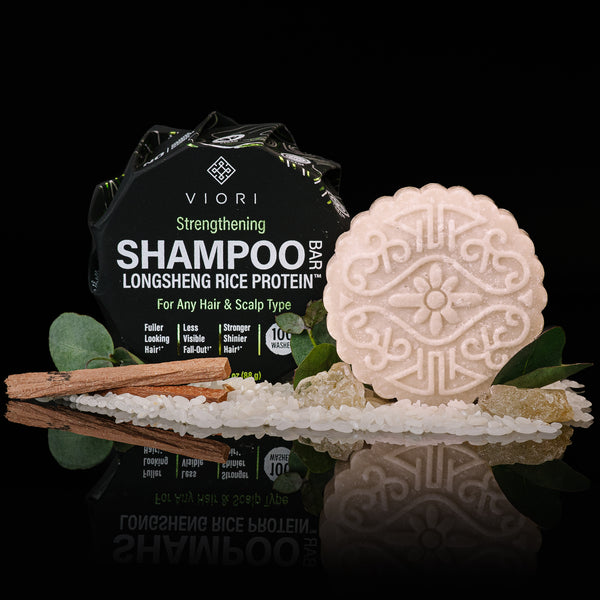
Compare that to Terrace Garden or Hidden Waterfall, which maintain more natural oils. These create bounce through moisture balance rather than clarification. The visual result is subtly different: less vertical lift, more lateral swing. It's perfect for dry hair that needs some weight to create smooth, swinging movement rather than volume and lift.
Different bounce profiles for different hair needs-and it all comes down to chemistry.
The Elasticity Test Your Hair Might Be Failing
In professional cosmetology training, we learned about the wet elasticity test: take a single strand of healthy hair, wet it, and stretch it. It should extend 40-50% of its length and then return to its original length without breaking.
This elastic recovery is the literal mechanical basis of bounce. If your hair can't pass this test, it won't bounce-period.
Most conventional shampoos compromise your hair's elasticity in two specific ways:
Sulfates (sodium lauryl sulfate and sodium laureth sulfate) are aggressive detergents that strip the lipid layer surrounding and within your hair. This lipid layer is essential for maintaining cortical cohesion-the structural integrity of your hair's protein core. Every wash with sulfates permanently reduces elasticity a little bit more. The damage accumulates.
Heavy silicones create artificial slip and shine by coating the hair in a plastic-like film. That might feel smooth initially, but it adds weight and prevents the moisture-protein balance necessary for true elastic recovery. You're essentially wrapping your springs in duct tape and wondering why they don't bounce anymore.
Viori's sulfate-free cleansing uses sodium cocoyl isethionate, a coconut-derived surfactant that cleanses effectively without compromising your hair's natural elastic properties. And the complete absence of silicones means any bounce you get comes from genuine hair health, not synthetic coating.
Your hair isn't faking it-it's actually healthy.
The Conditioner Application Mistake Killing Your Bounce
Let me share a professional technique that almost nobody outside salon training learns: where you apply conditioner matters just as much as what conditioner you use.
Bounce dies with root heaviness and thrives with length flexibility. If you're applying conditioner all over your head, including your roots and scalp, you're weighing down the exact area where you need maximum lift and rebound.
Here's the proper technique:
Apply conditioner from mid-shaft to ends only. Never on your scalp or the first few inches near your roots. This maintains your hair's natural volume and lightness at the crown while ensuring your lengths have enough slip and moisture for free movement.
With Viori's conditioner bars, the technique looks like this:
- Lather the bar in your palms first rather than applying directly to hair (this prevents excessive product application)
- Apply to lengths only, avoiding the first 2-3 inches from your scalp
- Let it sit for 2-3 minutes to allow the behentrimonium methosulfate (a conditioning agent) to smooth cuticles properly
- Rinse with cool water to seal cuticles flat, reducing friction during movement
The result is what I call "cantilever bounce"-hair that has structure and lift at the root but fluid, flexible movement through the lengths. Maximum dynamic rebound.
Why Bounce Improves Over Months (Not Days)
Here's something that confuses a lot of people switching to rice-based formulations: why does bounce often improve progressively over 2-3 months rather than appearing immediately?
The answer lies in cumulative protein retention.
Unlike surface coatings that wash away completely with each shampoo, the hydrolyzed rice protein and inositol in Viori products gradually fill in microscopic gaps in damaged areas of your hair cortex. Think of damaged hair as having tiny hollow spaces where protein structure has eroded-weaknesses in the spring mechanism.
Over multiple washes, these small proteins accumulate specifically in those damaged areas. Interestingly, healthy areas of your hair don't absorb excess protein-they're already at capacity. So you're not creating that stiff, over-proteinated feel. Instead, you're selectively repairing weak spots.
This creates progressively more uniform elasticity along each strand over time. You're literally rebuilding the elastic infrastructure of damaged hair, protein molecule by protein molecule.
This is why results can take 2-3 months. You're not waiting for marketing magic-you're waiting for structural repair at the molecular level. Real change, not temporary coating.
The Hidden Bounce Killer: Hard Water
Let me share something that doesn't get nearly enough attention: mineral deposits from hard water can completely sabotage your bounce.
If you have hard water (and about 85% of homes in the US do), calcium and magnesium minerals bind to the negative charges in damaged areas of your hair. Over time, these create what I call "calcification points"-tiny rigid spots along the hair shaft.
Now your hair can't function as a uniform spring anymore. You've got elastic segments interrupted by rigid segments. The result? Hair that moves stiffly or unevenly, without that smooth rebound quality.
WHAT CUSTOMERS ARE SAYING
Real reviews for Rice Water Shampoo Bar – All Hair Types | VIORI
The rice bran oil in Viori formulations contains ferulic acid, which has mild chelating properties. Regular use gradually reduces these calcification points. For faster results in hard water areas, I recommend alternating between Citrus Yao (which has stronger chelating action from citric acid) and your preferred moisturizing scent.
You're essentially descaling your hair the way you'd descale a coffee maker-and the bounce improvement can be dramatic.
The Final Rinse Technique That Changes Everything
Here's a professional secret I share with every client: thermal cuticle management through water temperature.
Wash and condition with warm water-this opens the cuticle so products can penetrate and cleansing can occur effectively. But always finish with a final 30-second cold water rinse. I know it's uncomfortable. Do it anyway.
Cold water causes the cuticle layers to contract and seal flat against the hair shaft. This reduces inter-strand friction dramatically and creates maximum smoothness for dynamic movement.
Hair with sealed cuticles literally rebounds faster because strands slide past each other with minimal resistance. It's basic physics applied to hair mechanics, but it's rarely taught outside professional training.
That 30 seconds of cold water might be the difference between hair that moves okay and hair that truly bounces.
Bounce vs. Volume: Not the Same Thing
Let me clear up a critical distinction that trips people up constantly: bounce is not the same as volume.
Volume is geometric-it's about space between strands at the root, creating visual fullness. Bounce is mechanical-it's about elastic recovery during movement, creating dynamic motion.
You can absolutely have volume without bounce. Think of teased, heavily sprayed hair from the 1980s-tons of volume, zero movement or rebound.
You can also have bounce without excessive volume. Think of a sleek, chin-length bob that swings beautifully when you turn your head but doesn't have "big" hair at all.
The ideal, of course, is both: root lift that creates space for movement, combined with elastic hair that rebounds after that movement. Achieving this requires:
- Clean roots (Citrus Yao for normal to oily types)
- Protein-moisture balance (rice water formulation)
- Smooth cuticles (pH-balanced conditioning)
- No heavy buildup (sulfate-free, silicone-free formulation)
When all these factors align, you get hair that has lift and movement-the commercial-quality bounce we all want.
Engineering Bounce, Not Hoping for It
After twenty years in this industry, I've learned something important: true shampoo bounce isn't a marketing illusion or lucky genetics. It's a measurable physical property based on your hair's elastic recovery capacity.
The difference between hair that bounces and hair that doesn't comes down to formulations that:
- Strengthen protein structure without creating rigidity
- Maintain adequate moisture without adding weight
- Smooth cuticles without creating buildup
- Preserve your hair's natural spring mechanism
Rice-based formulations like Viori's offer a unique advantage because fermented rice naturally produces the exact ratio of structural proteins (for elasticity) and hum


