
I'll never forget the client who came to me in tears. She'd spent hundreds of dollars on "moisturizing" shampoos, each one promising to finally solve her dry scalp nightmare. Her bathroom looked like a product graveyard-half-empty bottles lined up like defeated soldiers. "Nothing works," she told me. "What's wrong with me?"
Here's what I told her, and what I'm about to tell you: There's nothing wrong with you. The problem isn't your scalp-it's the entire concept of "moisturizing shampoo" as we've been sold it.
After two decades as a professional stylist, I've seen this story play out hundreds of times. And today, I'm going to share some uncomfortable truths about what's really happening on your scalp-truths that might completely change how you think about hair care.
The Cleansing Paradox Nobody Talks About
Let's start with something basic that the beauty industry conveniently glosses over: shampoo's entire purpose is to remove things from your hair and scalp, not add them.
I know that sounds obvious, but think about the implications for a moment. You're using a product specifically engineered to strip away oils, dirt, and buildup-and expecting that same product to deliver lasting moisture. It's like trying to fill a bucket while someone's punching holes in the bottom.
What's Really Happening When You Lather Up
Every shampoo relies on surfactants-specialized molecules with a split personality. One end loves water (hydrophilic), the other end loves oil (lipophilic). When you massage shampoo into your scalp, those oil-loving tails grab onto your natural sebum like tiny grappling hooks. The water-loving ends stay pointed outward. When you rinse, everything gets swept away together-the dirt you wanted gone, and yes, the oils your scalp actually needs.
This is the fundamental contradiction: the very mechanism that makes shampoo work as a cleanser makes it terrible at moisturizing.
NOT SURE WHICH PRODUCT IS RIGHT FOR YOU?
TAKE THE QUIZTakes 30 seconds · 134,000+ customers matched
Sure, manufacturers add "moisturizing" ingredients-plant oils, conditioning agents, humectants. But these are fighting a losing battle against the surfactants that dominate the formula. During those 30 to 90 seconds you're shampooing, there simply isn't enough time for beneficial ingredients to penetrate your scalp before they're rinsed down the drain along with everything else.
Are You Even Sure It's Dryness?
Here's where things get interesting. Most people who come to me complaining about "dry scalp" don't actually have a dry scalp at all.
Let me explain the difference that changed how I approach scalp issues:
True dry scalp (lipid-deficient): Your sebaceous glands aren't producing enough natural oil. This is usually genetic, hormonal, or the result of damage to the glands themselves. It's actually less common than people think.
Dehydrated scalp (water-deficient): Your scalp lacks water content in the skin cells, regardless of how much oil you're producing. Here's the kicker-you can have an oily yet dehydrated scalp. Mind-blowing, right?
Those flakes, that tightness, the constant itching-these symptoms could mean dehydration, sensitivity, product buildup, or something else entirely. Treating them all as simple "dryness" is like using the same key for every lock and wondering why most doors won't open.
The Rebound Effect That's Making Everything Worse
Want to know what I see constantly in my chair but rarely discussed in hair care ads? Scalp oil rebound.
Watch this vicious cycle:
- You wash with shampoo (even a "gentle" or "moisturizing" one)
- The surfactants strip away your scalp's natural protective barrier
- Your sebaceous glands detect this emergency situation
- They panic and go into overdrive, pumping out extra sebum to restore protection
- Within a day or two, you feel greasy and uncomfortable
- You wash again, restarting the whole nightmare
The cruel irony? Many people with genuinely dry scalps are actually experiencing the aftermath of over-cleansing. Your scalp isn't broken-it's responding exactly as designed to what it perceives as an attack, desperately trying to protect itself.
I've watched clients break this cycle by washing less frequently, and the transformation is remarkable. But first, they have to get past the marketing messages telling them they need to shampoo every single day.
What's Actually Inside That "Moisturizing" Bottle
Let me pull back the curtain on what you're really getting when you buy moisturizing shampoo.
The Cleansing Foundation
Every shampoo-regardless of what the label promises-must contain surfactants. The most common ones you'll see:
- Sodium Lauryl Sulfate (SLS) or Sodium Laureth Sulfate (SLES): Extremely effective at cleansing, notorious for being harsh and stripping. These are the heavy hitters that create mountains of lather but can wreak havoc on sensitive scalps.
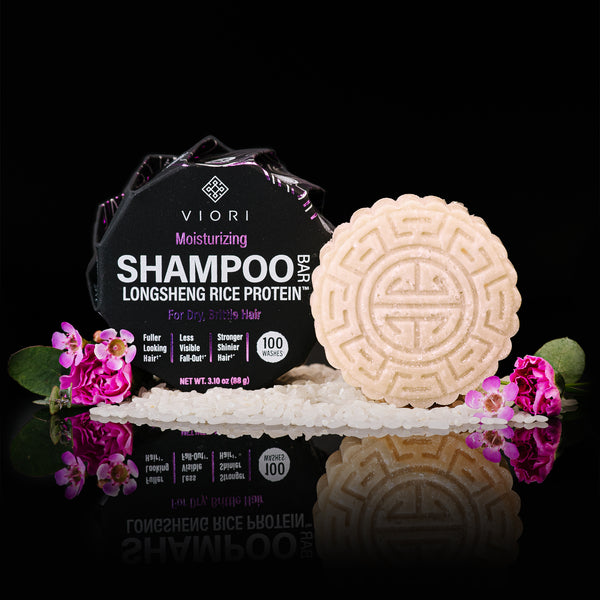
- Sodium Cocoyl Isethionate (SCI): A gentler, coconut-derived cleanser. This is what you'll find in Viori's shampoo bars-it cleans effectively without the aggressive stripping action.
- Decyl Glucoside: An ultra-mild, sugar-derived surfactant that's about as gentle as cleansing gets.
- Cocamidopropyl Betaine: A mild secondary cleanser that helps reduce irritation from stronger surfactants.
Even the gentlest options perform the same basic function: they emulsify and remove oils from your scalp. That's literally their job.
The "Moisturizing" Add-Ins
To counteract the drying effects, formulators layer in conditioning agents, humectants like glycerin and aloe, plant oils and butters, proteins, and sometimes silicones. These create the "moisturizing" claim on the label.
But here's the technical problem that nobody wants to admit: these ingredients are in direct competition with the surfactants during the entire shampooing process. It's chemical warfare in that bottle.
The surfactants almost always win because:
- Contact time is ridiculously brief. You're probably shampooing for under two minutes-nowhere near enough time for conditioning ingredients to actually penetrate your scalp tissue.
- Rinsing removes everything indiscriminately. The water flow, combined with those surfactants still doing their job, washes away both the dirt and the beneficial ingredients you wanted to keep.
- pH chemistry works against deposition. Shampoos function at specific pH levels (typically 5-7) for effective cleansing, but many conditioning ingredients need different pH levels to actually deposit onto your hair and scalp.
The whole thing is fundamentally flawed by design.
Why Plant Oils Can't Replace What You've Lost
One of the most persistent myths in hair care is that we can "replace" natural sebum with plant oils or synthetic moisturizers. I hear this constantly: "I'll just use coconut oil" or "This shampoo has argan oil, so it won't dry me out."
Here's what nobody's telling you: human sebum is chemically unique. Nothing else on the planet replicates it.
Your sebum contains a specific blend of triglycerides, wax esters, squalene, free fatty acids, and cholesterol compounds. This precise cocktail creates a protective barrier perfectly calibrated to your skin's pH and microbiome. Plant oils like coconut, argan, or jojoba might share some structural similarities, but they cannot duplicate sebum's complex protective function. It's like comparing a photo of a meal to actual food-looks similar, but it won't nourish you.
Even more critical: slathering oil on the surface of your scalp is not the same as moisturizing the skin cells underneath.
Real hydration happens when water content is maintained within your scalp's skin cells. This requires three things working in harmony:
- Water delivery to the cells
- Humectants to attract and hold that water
- Occlusive agents to prevent water from evaporating
Most "moisturizing" shampoos focus heavily on step three (occlusion through oils) while completely neglecting the first two steps. Worse, the cleansing process actively undermines water retention, washing away humectants before they have a chance to do anything meaningful.
You're not moisturizing-you're just temporarily coating the surface while the underlying dehydration continues.
The pH Factor Everyone Ignores
Let me introduce you to something that dramatically impacts your scalp health but gets almost zero attention in consumer marketing: pH and your scalp's acid mantle.
Your healthy scalp sits at a pH of approximately 4.5 to 5.5-slightly acidic. This isn't random. That acidity serves critical functions:
- Inhibits harmful bacteria and fungi from colonizing
- Maintains your scalp's protective barrier integrity
- Regulates enzyme activity for healthy skin turnover
- Controls sebum production and composition
Many shampoos-even ones marketed as "pH balanced"-clock in at pH 6 to 7 or higher. Every time you wash with an alkaline product, you temporarily disrupt your scalp's defenses. This causes:
- Cuticle swelling: Your hair becomes vulnerable to mechanical damage
- Microbiome disruption: Problematic organisms move in when pH shifts
- Increased sebum production: Your scalp tries desperately to restore its protective acid barrier
- Increased water loss: Making any dehydration dramatically worse
Here's what shocked me when I first learned this: your scalp needs four to six hours to recover its natural pH after washing with an alkaline shampoo. If you're washing daily with a pH-imbalanced product, your scalp never fully recovers. You're keeping it in a constant state of disruption and stress.
This is particularly relevant when comparing different shampoo formats. Traditional soap bars (made with lye) have a pH of 9 to 10-far too alkaline for healthy hair and scalp. However, modern syndet bars, like those formulated by Viori, can be pH-balanced around 5 to 6, respecting your scalp's natural acidity instead of fighting against it.
The Protein and Moisture Balance Nobody Explains
Professional stylists think about hair care as a constant balancing act between protein and moisture. This concept is absolutely critical for scalp health, but you'll almost never see it discussed in mainstream hair care marketing because it's too complex to fit on a pretty bottle.
Understanding the Protein Side
Your hair is roughly 90% keratin protein. Damage from heat styling, chemical processing, and environmental stressors creates gaps in this protein structure. Products with hydrolyzed proteins (like the hydrolyzed rice protein in Viori's formulas) can temporarily fill these gaps, strengthening your hair.
WHAT CUSTOMERS ARE SAYING
Real reviews for Moisturizing Rice Water Shampoo Bar – Dry Scalp | VIORI
But here's what's fascinating for scalp health: your scalp tissue also requires protein maintenance.
The outer layer of your scalp is held together by protein structures that gradually break down through normal wear and tear. Healthy skin continually produces new proteins to maintain barrier integrity. When this process gets disrupted-by harsh cleansing, poor nutrition, or inflammatory conditions-your scalp barrier weakens. This leads to:
- Increased water loss (dehydration that no oil can fix)
- Enhanced sensitivity to irritants and allergens
- Impaired ability to maintain healthy pH
- Vulnerability to infection and inflammation
The Moisture Side of the Equation
True moisture in hair care refers to water content-not oil content. Let that sink in for a moment, because it's the opposite of what most marketing would have you believe.
Your hair can be:
- Protein-rich but moisture-deficient: Strong but brittle, dry-feeling, prone to snapping
- Moisture-rich but protein-deficient: Soft but weak, stretchy, prone to breakage
- Balanced: Strong, supple, healthy, and resilient
The same principle applies to your scalp tissue. A scalp can be:
- Oil-rich but water-deficient: Greasy scalp with flaking (often mistaken for dandruff)
- Oil-deficient but adequately hydrated: Rare, but feels comfortable despite low sebum production
- Both oil and water deficient: Tight, itchy, flaking, uncomfortable-the classic "dry scalp" experience
Most "moisturizing shampoos" only address potential oil deficiency-and often ineffectively during that brief shampooing window-while completely ignoring water content. They're solving the wrong problem.
The Microbiome Revolution Changes Everything
The cutting edge of scalp science has revealed something that fundamentally changes everything we thought we knew about dry scalp: scalp health is primarily about microbial health.
Your scalp hosts a complex ecosystem of bacteria, fungi, and other microorganisms-collectively called the scalp microbiome. When this ecosystem is balanced and thriving, it:
- Produces antimicrobial compounds that prevent pathogenic overgrowth
- Helps maintain optimal pH levels
- Supports your skin's barrier function
- Regulates inflammation responses
- May even influence sebum composition and distribution
Here's the insight that changes everything: many cases of "dry scalp" are actually microbiome disruptions in disguise.
When you use harsh surfactants, you don't just remove dirt and excess oil-you indiscriminately eliminate beneficial microorganisms that your scalp needs to function properly. This creates an opportunity for problematic species to take over, particularly:
- Malassezia species: Yeasts that feed on sebum and trigger inflammatory responses, causing flaking that looks exactly like dryness but isn't
- Staphylococcus aureus: Can overgrow when beneficial bacteria are depleted, causing irritation and discomfort that mimics dry scalp
- Corynebacterium species: Imbalances can affect scalp odor, comfort, and overall health
Here's what makes this even more complex and frustrating: the "moisturizing" ingredients in many shampoos-particularly certain oils and humectants-can actually feed problematic microorganisms, making the very symptoms they claim to address worse over time. You're literally funding the enemy.
This is where fermented ingredients become genuinely interesting from a scientific perspective. Viori's use of fermented Longsheng rice water stands out because fermentation produces:
- Organic acids that naturally support healthy pH levels
- Post


