
I need to be honest with you about something that might surprise you: there's no such thing as shampoo without chemicals.
After two decades working with hair-consulting with clients, studying formulations, and watching beauty trends come and go-I've seen the "chemical-free" movement explode into something massive. And while I absolutely support the intention behind it, we need to have a more sophisticated conversation about what we're actually putting on our hair and scalp.
Here's what I mean: water is a chemical. The rice you eat for dinner? Made of chemicals. Your hair itself? Completely chemical. Everything in the physical world is composed of chemical compounds. So when we say we want "chemical-free" products, what we're really asking for is something entirely different-and far more interesting.
What You Actually Mean When You Say "Chemical-Free"
Let me decode what most of my clients really mean when they ask for products "without chemicals":
- "I want ingredients I can understand and trust"
- "I don't want harsh synthetic compounds that damage my hair"
- "I want something that works with my body, not against it"
- "I'm tired of products with 40-ingredient lists full of things I can't pronounce"
These are completely valid concerns. But to address them properly, we need to understand some basic chemistry-and I promise to make this interesting, not intimidating.
The Chemistry Your Hairstylist Wishes Everyone Understood
Why "Natural" vs. "Synthetic" Is More Complex Than You Think
Let's start with an example that might surprise you: traditional rice water fermentation, a practice that dates back over 1,000 years with the Red Yao tribe in China.
When you ferment rice in water, you're not avoiding chemistry-you're creating an incredibly sophisticated chemical reaction. This process produces:
- Inositol (vitamin B8)
- Panthenol (vitamin B5)
- Amino acids (the building blocks of proteins)
- Lactic acid (an alpha-hydroxy acid)
- Acetic acid (similar to what's in vinegar)
Every single one of these is a chemical compound. The difference? They're created through natural biological processes that have evolved over thousands of years to work harmoniously with human hair and skin.
So the real distinction isn't "chemicals" versus "no chemicals"-it's synthetically derived compounds versus naturally occurring or naturally derived compounds.
NOT SURE WHICH PRODUCT IS RIGHT FOR YOU?
TAKE THE QUIZTakes 30 seconds · 134,000+ customers matched
The Molecular Weight Secret Nobody Talks About
Here's something I wish more people understood about hair care ingredients: size matters.
I'm talking about molecular weight-how big or small a molecule is-and this single factor dramatically affects how ingredients interact with your hair.
The Problem With Tiny Molecules
Many conventional shampoos use small-molecule synthetic compounds that penetrate your hair cuticle very quickly. This might sound great, but here's what often happens:
- These molecules accumulate inside your hair shaft over time
- They can disrupt your natural pH balance more aggressively
- Your hair becomes dependent on them (ever notice how your hair feels terrible when you switch products?)
- They strip away your natural scalp oils faster than your body can replace them
Why Bigger Can Be Better
Natural ingredients often have larger, more complex molecular structures. Take hydrolyzed rice protein as an example.
This ingredient typically has a molecular weight between 150-1000 Daltons (a unit of molecular mass). This is what I call the "Goldilocks zone" for hair care:
- Large enough that it doesn't just wash away immediately
- Small enough to penetrate the cuticle layer where it can actually help
- Complex enough to form genuine bonds with the keratin in your hair
- Natural enough that it breaks down in the environment without persisting
Compare this to some synthetic silicones that can weigh 1,000-10,000+ Daltons. These create a coating effect-they sit on top of your hair making it feel smooth-but they're not actually repairing anything. They're more like a temporary bandage than actual healing.
The pH Factor That Changes Everything
Here's a technical point that deserves way more attention: pH balance matters more than ingredient origin.
Your scalp naturally sits at a pH between 4.5 and 5.5-slightly acidic. Your hair shaft's optimal pH is between 3.67 and 5.5. When you use any cleanser, you temporarily disrupt this balance.
Why Fermentation Is Biochemical Genius
Traditional rice water fermentation creates a naturally acidic solution. The fermentation process-powered by beneficial bacteria and yeast-produces organic acids that naturally buffer the pH to levels that are ideal for hair and scalp health.
This isn't about avoiding chemistry. This is chemistry at its absolute finest-using biological processes to create compounds that work in harmony with human physiology.
Think about it: these fermentation methods have been refined over literally thousands of years of human use. That's clinical testing on a timescale no modern lab can match.
The Sulfate Confusion: What You Really Need to Know
If you've shopped for "clean" shampoo recently, you've definitely seen "sulfate-free" labels. But this conversation needs more nuance.
Not All Sulfates Are Created Equal
Sodium Lauryl Sulfate (SLS) and Sodium Laureth Sulfate (SLES) are the sulfates most people worry about. They're surfactants (cleaning agents) that can be irritating, but here's what's rarely explained: the problem isn't that they're "toxic"-it's that they're too good at their job.
These compounds reduce surface tension so dramatically that they can disrupt the lipid (oil) barrier of your scalp. They strip away everything-dirt, oils, protective barriers-indiscriminately.
The Charge Makes All the Difference
Here's where it gets interesting: compounds like Behentrimonium Methosulfate (yes, it has "sulfate" in the name) behave completely differently because of their electrical charge.
SLS and SLES are anionic (negatively charged). Behentrimonium Methosulfate is cationic (positively charged). This isn't a minor detail-it fundamentally changes how these molecules interact with your hair:
- Anionic surfactants strip and cleanse aggressively
- Cationic compounds are attracted to damaged (negatively charged) areas of hair
- Instead of stripping, they coat and condition
- Many are derived from plant sources like rapeseed
- Their behavior is conditioning, not harsh cleansing
This is why the "sulfate-free" label can be misleading. It's not about whether something contains a sulfate chemical group-it's about the entire molecular structure and how it behaves.
The "Alcohol-Free" Confusion
This is one of my biggest pet peeves in beauty marketing. When products claim to be "alcohol-free," they're (usually unintentionally) spreading confusion about chemistry.
Two Completely Different Substances Get the Same Name
Drying alcohols (like ethanol and isopropyl alcohol):
- Very small molecules
- Evaporate quickly
- Strip away oils aggressively
- Can disrupt your moisture barrier
- These are the ones you want to avoid in leave-in products
Fatty alcohols (like cetyl alcohol and stearyl alcohol):
- Much larger molecules
- Derived from plant oils
- Act as emollients (moisturizers)
- Actually help your hair retain moisture
- These are beneficial ingredients
These two categories share only a single chemical functional group. Their behavior is completely opposite. It's like calling both diamonds and pencil lead "carbon"-technically true, but meaningless in terms of how they actually function.
When a moisturizing hair product claims to be "alcohol-free" but contains cetyl alcohol, there's nothing wrong with that. But the labeling implies that cetyl alcohol is something to avoid, when it's actually beneficial.
The Fermentation Advantage Nobody Talks About
This might be the most underappreciated aspect of traditional, naturally processed ingredients: fermentation multiplies beneficial compounds.
What Happens During Fermentation
When rice is properly fermented:
- Vitamin B content increases by 40-60%
- Amino acids become more bioavailable (easier for your hair to use)
- Antioxidant compounds like ferulic acid become more concentrated
- Natural preservative compounds develop
You're not just using plain rice water-you're using a biochemically enhanced solution created through controlled microbial activity. The beneficial bacteria and yeast involved are essentially tiny factories, producing compounds far more sophisticated than many synthetic laboratories.
This is ancient biotechnology at work.
The Preservation Question: An Honest Discussion
Here's something that deserves transparency: products need preservation systems, or they become breeding grounds for harmful bacteria.
The Water Problem
Liquid shampoos contain a lot of water. Water plus nutrients equals the perfect environment for bacterial growth. That's why liquid formulations typically require preservatives like:
- Parabens (methylparaben, propylparaben)
- Phenoxyethanol
- Synthetic chelating agents (like EDTA)
Why Bar Shampoos Are Different
Bar formulations with low water content are naturally less hospitable to microbial growth. It's basic microbiology-bacteria need water to thrive.
When you add ingredients like sodium lactate (derived from fermented corn or beet sugars), you create a pH environment where harmful bacteria can't survive, while the bar itself remains completely biodegradable.
This is preservation through chemistry (pH manipulation), not through chemical additives (synthetic preservatives). It's a more elegant solution-and it's still chemistry.
The Scalp Microbiome: The Future of Clean Beauty
Here's the frontier that I believe will define the next generation of hair care: microbiome compatibility.
Your Scalp Is an Ecosystem
Your scalp hosts billions of microorganisms-mostly beneficial bacteria that:
- Regulate sebum (oil) production
- Protect against harmful bacteria
- Influence inflammation responses
- Potentially affect hair growth cycles
Most shampoos-conventional and "natural" alike-are indiscriminate antimicrobials. They don't just clean; they wipe out your entire scalp ecosystem, good bacteria and bad.
The Question We Should Be Asking
It's not "Does this shampoo have chemicals?"
It's "Do these chemicals preserve or destroy my scalp microbiome?"
Why Traditional Methods May Have an Edge
Fermented rice water, used successfully for over 1,000 years, likely works so well because:
- It contains prebiotics (food for beneficial bacteria)
- The organic acids create pH environments that favor healthy bacteria
- It lacks the broad-spectrum antimicrobial action of modern harsh surfactants
- The proteins and vitamins nourish both hair and beneficial microbes
This is a symbiotic approach to hair care-working with your body's natural systems rather than against them.
What "Clean" Should Actually Mean
After 20 years in this industry-working with thousands of heads of hair and seeing countless trends-here's my professional opinion on what we should actually mean by "clean" or "chemical-free" shampoo.
The Real Standards Should Be:
1. Biocompatible: Works with your body's chemistry, not against it
WHAT CUSTOMERS ARE SAYING
Real reviews for Rice Water Shampoo Bar – All Hair Types | VIORI
2. pH-balanced: Respects the natural acid mantle of your scalp and hair
3. Molecularly appropriate: The right-sized molecules for their intended purpose
4. Microbiome-friendly: Doesn't destroy your beneficial scalp bacteria
5. Environmentally biodegradable: Breaks down naturally without persisting in waterways
6. Ethically sourced: Doesn't deplete ecosystems or exploit communities
7. Transparent: Full disclosure of not just ingredients, but processing methods
Notice that "chemical-free" isn't on this list. That's because it's impossible-and not actually what we should want.
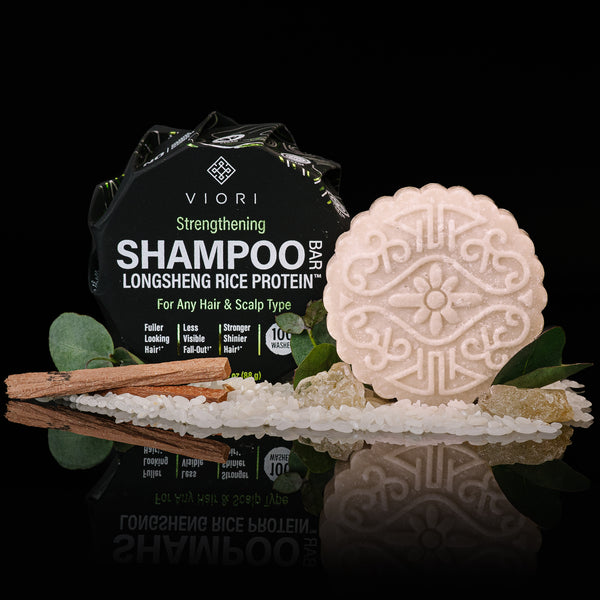
How Viori Gets It Right
I want to talk about Viori because their approach demonstrates a genuine understanding of these deeper principles.
Rather than making impossible claims about being "chemical-free," Viori's formulation shows respect for chemistry:
Fermented Longsheng rice water: This is their hero ingredient, and it's a perfect example of biochemical enhancement through natural processes. The fermentation creates a complex solution of vitamins, amino acids, and organic acids that are immediately beneficial to hair.
Plant-derived surfactants: They use ingredients like Sodium Cocoyl Isethionate-derived from coconut-which cleanses effectively but gently. It's strong enough to remove dirt and buildup, but not so harsh that it strips your scalp bare.
Appropriate pH levels: The formulation is balanced to match your scalp and hair's natural pH, which means less disruption and faster recovery after washing.
Fatty alcohol emollients: Yes, these contain that scary word "alcohol," but they're actually moisturizing compounds that help your hair retain hydration.
Bar format: This reduces the need for synthetic preservatives because harmful bacteria need water to grow. Less water in the product means fewer preservation chemicals needed.
Natural conditioning approach: Instead of coating your hair with silicones, the formulation uses a cationic (positively charged) approach that targets damaged areas of hair specifically.
This


