
“Non‑toxic” is one of the most-used phrases in haircare-and one of the least-defined. After 20 years behind the chair, I’ve seen it all: people switching products hoping for healthier hair, only to end up with dryness, tangles, dullness, or a scalp that feels touchy and reactive.
Here’s the honest truth: truly “non‑toxic” haircare isn’t just a list of ingredients you avoid. It’s a full system-your formula, your technique, your water, your hair type, and even how you store your bars between washes.
In this post, I’m going to break down shampoo and conditioner bars in a way most articles don’t: with real hair-science detail, but still practical enough to use the next time you’re in the shower.
What “Non‑Toxic” Should Mean (If We’re Being Precise)
In professional terms, “toxic” isn’t a feeling-it’s a risk calculation. That risk depends on what an ingredient can do, but also on how much you’re exposed to, how often, and through what route (skin vs inhalation vs ingestion).
NOT SURE WHICH PRODUCT IS RIGHT FOR YOU?
TAKE THE QUIZTakes 30 seconds · 134,000+ customers matched
When clients ask me whether something is “non‑toxic,” I mentally run through a short checklist:
- Hazard: Could an ingredient cause harm under certain conditions?
- Dose: How much of it actually ends up on the scalp and hair?
- Route: Is it sitting on skin, being rinsed off quickly, or aerosolized?
- Frequency: Daily use for years hits differently than occasional use.
- Individual factors: Allergies, sensitivity, eczema/psoriasis tendencies, pregnancy considerations, etc.
That’s why shampoo and conditioner bars deserve their own “non‑toxic” conversation. Bars change the way product is delivered, the way it’s used, and how it behaves over time.
Bars Aren’t Bottles: Why Format Changes Everything
Most people judge a bar like it’s just a solid version of a liquid shampoo. It’s not. Bars are concentrated and used in a more hands-on way, which changes three big variables:
- Dosage: How much product you apply is easier to overdo.
- Hair physics: The bar format can add friction and mechanical stress.
- Storage and hygiene: Wet environments can impact longevity and performance.
If your goal is truly low-tox, low-irritation, high-performance haircare, you need to think about all three.
The Most Overlooked “Non‑Toxic” Factor: pH Balance
If there’s one technical detail that separates “good hair days” from chronic frizz and breakage, it’s pH. Hair products ideally sit in a hair-friendly range because pH impacts how the cuticle behaves-how much it swells, lifts, and how easily it gets roughened up over time.
When a cleanser skews too alkaline, the cuticle can lift more than necessary, which tends to show up as:
- more tangling and friction during washing
- roughness and dullness instead of shine
- frizz and static that feels “impossible” to tame
- faster fading on color-treated hair
- more breakage over time, especially on fine or porous hair
Viori specifically emphasizes that their bars are pH balanced and notes that hair products generally perform best around 3.5-6.5. That detail matters more than most people realize-especially if you’ve ever tried a “natural” product that left your hair feeling like straw.
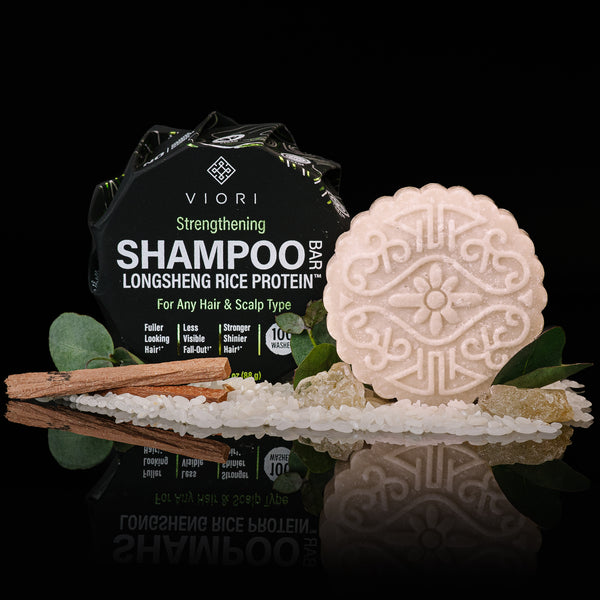
Shampoo Bars: Gentle Cleansers Still Need Smart Dosing
One of the sneaky differences between liquids and bars is dose consistency. With a liquid, you tend to use the same amount each wash. With a bar, the amount you pick up depends on your water temperature, how long you lather, how dense your hair is, and whether you apply the bar directly to the hair.
Viori’s shampoo bars use Sodium Cocoyl Isethionate (SCI) as the cleanser. In the haircare world, SCI is known for being a milder, creamier surfactant that can cleanse effectively without the “aggressive stripped” feeling many people associate with harsher systems.
But even with a gentle cleanser, there’s a key truth I tell clients: even a great formula can feel harsh if you accidentally use too much. With bars, that’s easy to do.
What “Too Much Shampoo” Looks Like
If your hair feels squeaky, stiff, overly fluffy, or instantly tangly right after washing, you may not need a different product-you may need a lighter hand and a better application method.
Conditioner Bars: The Science Is Electrostatic (In a Good Way)
Conditioner isn’t just “moisture.” A lot of conditioner performance comes down to electrostatics: hair is often negatively charged (especially when it’s damaged), and many conditioning agents are positively charged, which helps them deposit where hair needs them most.
Viori’s conditioner bars use Behentrimonium Methosulfate (BTMS), a widely used conditioning ingredient that improves slip and softness. And yes-despite the name-this is not the same thing as harsh cleansing sulfates. In conditioner systems, BTMS is valued because it can:
- increase slip for easier detangling
- reduce static and frizz
- improve softness and manageability
- support a smoother cuticle feel (which reads as shine)
From a “non‑toxic” perspective, this matters because tangles and roughness aren’t just annoying-they can translate directly into breakage. A conditioner that reduces friction is doing more for hair health than most people give it credit for.
The Rarely Discussed Issue: Friction Damage From Bar-to-Hair Rubbing
This is the part I almost never see covered online, but it’s one of the biggest make-or-break factors with bars: friction.
When you rub a solid bar directly onto hair-especially long hair, curly hair, porous hair, or color-treated hair-you can create mechanical drag and uneven product buildup. That can show up as:
- tangles that seem to come out of nowhere
- roughness at the crown or nape (high-friction zones)
- patchy heaviness (too much product in one area)
- faster color fading due to repeated cuticle stress
Viori recommends a smarter approach for color-treated hair: get the lather in your palms and apply with your hands instead of rubbing the bar directly on your head. That simple change can drastically reduce friction and improve results.
WHAT CUSTOMERS ARE SAYING
Real reviews for Rice Water Shampoo Bar – All Hair Types | VIORI
Storage Is Part of the “Non‑Toxic” System
Bars are often described as “self-preserving” because they dry out between uses. That’s generally true-if you store them properly. If a bar stays wet, it dissolves faster, can get gummy, and tends to deposit product too heavily.
To keep performance consistent, store bars where they can dry fully between washes. Viori’s bamboo holders are designed for airflow and dry-down, and their care guidance is very practical: keep holders away from direct water contact and excessive steam so everything stays cleaner and lasts longer.
How to Use Shampoo & Conditioner Bars Like a Pro
If you want the best “non‑toxic” outcome-comfortable scalp, strong hair, less breakage-technique is everything. Here’s the approach I recommend most often.
Step-by-step shampoo technique
- Thoroughly saturate hair and scalp with water.
- Rub the shampoo bar between your hands to build a lather.
- Apply the lather to your scalp and massage with fingertips (not nails).
- Let the rinse water cleanse your lengths-avoid scrubbing ends.
Step-by-step conditioner technique
- Apply conditioner from mid-lengths to ends first.
- Add a little water and keep working it through until you feel slip.
- Detangle gently with fingers or a wide-tooth comb.
- Let it sit for a couple minutes, then rinse.
Where Viori Fits Into a Truly “Non‑Toxic” Bar Routine
Based on the product details you shared, Viori checks several of the boxes I look for when someone wants a bar routine that’s both high-performing and low-drama:
- pH balanced (a major quality marker for long-term hair feel)
- Gentle cleansing approach using SCI in the shampoo bars
- True conditioning technology with BTMS in the conditioner bars for slip
- Fragrance-free option for sensitive users (Native Essence)
- Use guidance that reduces friction (palm lathering rather than bar-to-hair rubbing)
- Thoughtful sustainability choices like plastic-free packaging and biodegradable/recyclable materials
My Bottom Line: “Non‑Toxic” Haircare Is a Method, Not a Label
If you’ve tried bars before and didn’t love them, it doesn’t automatically mean bars aren’t for you. In my experience, the usual culprit is one of these: the product was too alkaline, too much product was applied, the bar was rubbed directly on the hair (friction), or the bar never fully dried between uses.
Get the chemistry right, keep pH in a hair-friendly range, control your dose, reduce friction, and store your bars properly-and shampoo and conditioner bars can be one of the cleanest, most scalp-friendly formats out there.


