
After two decades as a professional hair stylist, I've seen every hair trend come and go. But the "shampoo alternative" movement? That's not a trend-it's a revolution in how we understand hair health. And most people are getting it completely wrong.
Let me be clear from the start: I'm not here to sell you on ditching shampoo entirely or convince you that one magic product will solve everything. Instead, I want to share what actually happens at the molecular level when we cleanse our hair-because understanding the science changes everything.
The Sebum Story: It's Not the Enemy You Think It Is
Here's something that might surprise you: sebum isn't dirty.
I know, I know. We've been conditioned to think that oily roots mean dirty hair that needs immediate washing. But human sebum is actually an incredibly sophisticated mixture containing squalene, wax esters, triglycerides, and free fatty acids in precise ratios. It's your scalp's natural protective system, not some cosmetic flaw.
The problem with traditional shampooing isn't that it removes oil-it's that it can't tell the difference between oil you need and oil you don't.
Think of it this way: traditional shampoos use what chemists call "anionic surfactants" (negatively charged molecules that surround oil droplets so they can be rinsed away). These surfactants work like a magnet attracting metal shavings-except they can't distinguish between the sebum your stressed scalp overproduced yesterday and the protective lipid barrier your hair desperately needs to stay healthy.
This is where the conversation about alternatives gets interesting.
The Chemistry Nobody Talks About: Why "Stripping and Rebuilding" Might Be Backwards
Here's the traditional shampoo logic we've all accepted:
- Strip everything away with strong cleansers
- Rebuild protection with conditioner
- Repeat every day or two
But what if we've been approaching this from entirely the wrong angle?
NOT SURE WHICH PRODUCT IS RIGHT FOR YOU?
TAKE THE QUIZTakes 30 seconds · 134,000+ customers matched
Your hair has a slight negative charge naturally. Conditioning agents have a positive charge. They're electrically attracted to each other-which is why conditioner "sticks" to your hair while shampoo rinses clean away.
Some alternative cleansing methods work by leveraging this natural attraction to gently lift away dirt particles without the aggressive stripping action. It's not about removing everything and starting over-it's about working with your hair's natural chemistry instead of against it.
Clay Cleansing: The Promise and the Problem
Let's talk about clay washing, since it's having a moment right now. The science here is genuinely fascinating.
Certain clays like bentonite and rhassoul have what's called "cation exchange capacity"-basically, they have a natural negative charge that attracts positively charged particles. When you apply hydrated clay to your scalp, it can pull away sebum components and dead skin cells through pure electrical attraction. No harsh chemicals required.
Sounds perfect, right? Here's the catch nobody mentions: the clay can't tell what's "bad buildup" versus "good protection" either.
Those same clays will also attract beneficial compounds your hair needs-including naturally occurring nutrients in your sebum. This is why many people find clay-only washing leaves their hair feeling stripped and straw-like. You're removing everything indiscriminately, just through a different mechanism than traditional shampoo.
The method is different, but the problem remains the same.
The Rice Water Revolution: What Fermentation Actually Does
Since I work extensively with Viori products (which are based on the fermented rice water tradition of the Red Yao women), I want to explain what's actually happening chemically here-because it's not what most marketing suggests.
Regular rice water contains starch and some protein. Useful, but fairly basic.
Fermented rice water is an entirely different substance. During fermentation, beneficial bacteria break down the rice components and create:
- Inositol (sometimes called Vitamin B8)-a molecule small enough to penetrate into the hair cortex and strengthen from within
- Pitera-a mixture of vitamins, amino acids, and organic acids that lower pH
- Short-chain fatty acids from lactobacillus fermentation
- Peptides-protein fragments that can temporarily repair damaged areas
The cleansing mechanism here is fundamentally different from traditional shampooing. Instead of using surfactants, fermented rice water works through pH manipulation combined with enzymatic action. The organic acids (primarily lactic acid) gently swell the hair cuticle, while natural enzymes break down keratin debris and protein buildup.
This is genuinely innovative chemistry. However-and this is critical-this mechanism alone cannot effectively remove sebum. Oils aren't water-soluble at any pH without some kind of emulsifying agent. That's just basic chemistry.
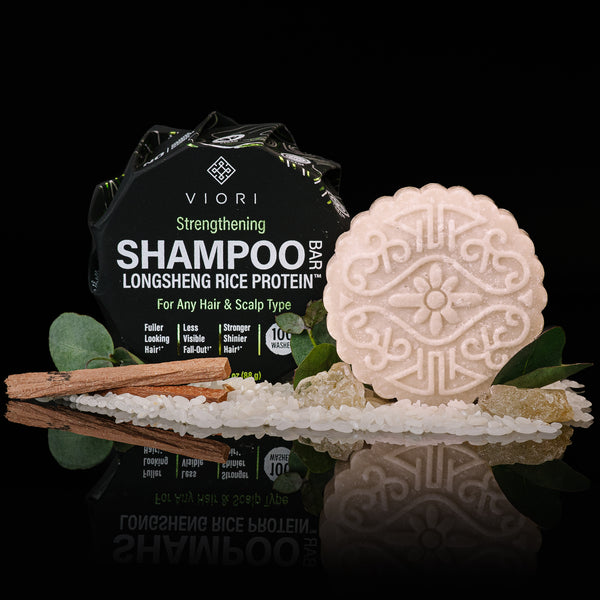
This is why Viori's bars combine fermented rice water with gentle cleansing agents-they're working with the science, not fighting it.
What Actually Works: The Three-Component System
After testing alternatives with hundreds of clients across every hair texture imaginable, here's the approach that consistently delivers results:
Component 1: Mechanical Sebum Redistribution (2-3 times weekly)
This is the step most people skip, and it's arguably the most important.
Natural boar bristle brushing-using the specific technique of firm, root-to-tip strokes-physically moves excess sebum from your roots (where overproduction happens) to your ends (where protection is desperately needed).
You're not removing the oil; you're putting it where it belongs. Work with your scalp's biology instead of against it.
Component 2: Selective Lipid Cleansing (1-2 times weekly)
This is where a well-formulated product makes all the difference.
Viori's shampoo bars, for example, use ingredients like Behentrimonium Methosulfate-a conditioning cleanser that provides mild cleansing action while simultaneously adding softness. The fermented rice protein adds temporary structural support to damaged cuticle areas.
The key is selective cleansing-removing excess buildup without stripping away protective compounds. You want to find the minimum effective dose, not the maximum cleaning power.
Component 3: pH Balancing (after every wash)
Your scalp's optimal pH is 4.5-5.5 (slightly acidic). Most tap water runs 7.0 or higher. Every time you rinse your hair, you're temporarily pushing it toward alkaline.
An acidic rinse-diluted apple cider vinegar (1 part vinegar to 4 parts water) or fermented rice water-brings your scalp back to its ideal pH range. This supports the beneficial microorganisms that live on your scalp and keeps problematic ones (like the fungus that causes dandruff) in check.
This step takes 30 seconds and makes an enormous difference in long-term scalp health.
The Timeline Nobody Tells You About
Here's what I tell every client considering transition to alternative cleansing: Your scalp needs 8-12 weeks to adjust, not the 2-3 week "detox period" you've read about online.
Why so long? Your sebaceous glands (the ones that produce oil) respond to cleansing frequency through hormonal feedback loops. When you strip sebum daily, you're sending signals that trigger increased oil production. But this regulatory mechanism takes 60-90 days to recalibrate-that's the duration of a complete hair growth cycle.
Most people abandon alternative methods at week 3 or 4, right when they hit peak adjustment discomfort, but before the biological recalibration occurs.
If you're going to try this, commit to 12 weeks minimum. That's when you'll see whether a method truly works for your hair or not.
The Water Factor Everyone Ignores
This might be the single most important technical factor in whether alternative cleansing works for you: your water's mineral content fundamentally changes cleansing chemistry.
In hard water areas (water with high calcium and magnesium content), several things happen:
- Soap scum forms-that chalky residue you can't quite rinse out
- Cleansing efficiency drops-minerals bind to cleansing agents before they can bind to oils
- pH balancing becomes harder-mineral-rich water resists pH changes
You can check your water hardness online through your municipal water report. If you're above 120 mg/L calcium carbonate, you have hard water, and alternative cleansing will be significantly more challenging without addressing this factor first.
For hard water situations, you need a chelating agent (something that binds to minerals)-ingredients like sodium citrate work well. Without this step, you'll struggle with buildup regardless of which cleansing method you choose.
One Size Fits Nobody: The Porosity Factor
From a materials science perspective, your hair's porosity determines everything about which alternative methods will work for you.
Low porosity hair (tightly closed cuticles):
- Resists water and product absorption
- Clay washing often worsens buildup because particles can't be fully rinsed from closed cuticles
- Needs warmth or pH adjustment to temporarily lift cuticles before cleansing
- Benefits from humectants applied before cleansing to help water penetration
High porosity hair (damaged, open cuticles):
- Over-cleanses with almost any surfactant method
- Loses protein rapidly and needs protein addition during every cleanse
- The rice protein and bamboo extract in Viori products are actually well-targeted for this hair type
- Requires gentler, less frequent cleansing
Medium porosity hair: The goldilocks zone where most "standard" alternative methods work reliably
How to test your porosity: Place a clean strand of hair in a glass of water. If it floats, you have low porosity. If it sinks immediately, you have high porosity. If it slowly sinks after a few minutes, you have medium porosity.
WHAT CUSTOMERS ARE SAYING
Real reviews for Rice Water Shampoo Bar – All Hair Types | VIORI
This simple test will tell you more about what cleansing methods will work for you than any product marketing ever could.
The Real Alternative: Reformed Understanding, Not Just Reformed Products
After 20 years of professional observation, here's my conclusion: The question isn't "shampoo versus alternative"-it's reforming our understanding of what "clean" actually means.
Your scalp doesn't need to be stripped to neutral pH and squeaky. That sensation people associate with "clean"? That's actually damaged, swollen cuticles with depleted lipids. True scalp health exists at pH 4.5-5.5, with a balanced microbiome and moderate sebum distributed from root to tip.
A truly effective alternative approach requires:
- Honest assessment of your water chemistry (most critical, least discussed)
- Hair porosity-matched protocol (one-size-fits-all fails)
- Realistic time expectations (12 weeks minimum for sebum regulation)
- Acceptance that some cleansing is necessary-the question is frequency and intensity, not complete elimination
- Understanding that "natural" doesn't automatically mean "better"
Where Viori Fits In: The Middle Ground
Full transparency: Viori's bars aren't what I'd call "truly alternative" cleansing in the purist sense. They're reformed conventional cleansing with significantly better chemistry than drugstore options.
They use gentler conditioning cleansers, add beneficial ingredients derived from fermented rice water tradition, and maintain proper pH balance. They're a bridge between harsh traditional shampoos and the more complex, DIY alternative approaches.
For many people, this middle ground is exactly what they need-cleansing that's effective enough to maintain scalp health without the harsh stripping action that leads to the overproduction-and-strip cycle.
The Real Bottom Line
The best "shampoo alternative" isn't a product-it's understanding the surface chemistry of your specific hair-water-scalp system and building a protocol around that science.
This means:
- Testing your water hardness
- Determining your hair porosity
- Understanding your sebum production patterns
- Choosing products (or DIY methods) that match your specific chemistry
- Committing to a 12-week adjustment period
- Adjusting based on results rather than marketing promises
Some of you will thrive with clay washes and apple cider vinegar rinses. Others will do better with reformed products like Viori that balance gentle cleansing with beneficial ingredients. Still others might find that traditional shampooing-just less frequently-works perfectly fine.
There is no universal answer, because hair is not universal.
What I can tell you after two decades behind the chair is this: the clients with the healthiest, most beautiful hair aren't the ones following trends. They're the ones who took the time to understand their own hair's chemistry and built a routine around that understanding.
That's the real alternative-and it works every single time.
Ready to start your journey? Begin with the basics: test your porosity, check your water hardness, and commit to 12 weeks of whatever method you choose. Document your hair's response with photos. Pay attention to how your scalp feels, not just how your hair looks.
The science doesn't lie, even when marketing does. Trust the chemistry, give it time, and your hair will tell you what it needs.


