
Look, we need to have an honest conversation.
I've spent two decades behind the salon chair, and I've watched the same scenario play out hundreds of times. A client picks up a bottle, tilts it, watches that thick, honey-like formula barely budge, and their eyes light up. "This one must be really good," they say. "It feels so luxurious."
And every single time, I have to bite my tongue a little. Because here's what I know that most people don't: that gorgeous, syrupy thickness? It has almost nothing to do with whether that shampoo will actually help your hair.
I'm not saying this to be contrarian. I'm saying it because after twenty years of seeing what really works-and what's just clever marketing-I think you deserve to know what you're actually paying for.
The Thickness You Feel Isn't What You Think
That luxurious, barely-moving texture that makes you feel like you're using something premium? Nine times out of ten, it's created by thickening agents. These are ingredients specifically added to change how the product flows, and here's the part that might surprise you: they're often the cheapest components in the entire bottle.
Walk into any beauty industry trade show, and you'll see the same ingredients listed on formulation spec sheets:
- Carbomers (synthetic polymers that puff up when mixed with water)
- Various PEG compounds
- Acrylates copolymers
- Hydroxyethylcellulose
- Xanthan gum
- Guar gum derivatives
- And believe it or not-regular table salt
A manufacturer can take a thin, watery formula and transform it into something that feels like liquid gold for literal pennies per bottle. They're not adding more of the expensive, beneficial ingredients. They're just making it feel like they did.
The Salt Trick That Changed Everything
Want to hear something that blew my mind when I first learned about formulation chemistry?
One of the most common ways to thicken conventional shampoos is with ordinary sodium chloride-yes, the same stuff sitting in your kitchen shaker. When you add salt to shampoos containing sulfates like sodium laureth sulfate, something happens at the molecular level. The salt disrupts how these cleansing molecules interact with each other, causing them to cluster together into larger structures. Suddenly, your watery formula becomes gorgeously thick.
NOT SURE WHICH PRODUCT IS RIGHT FOR YOU?
TAKE THE QUIZTakes 30 seconds · 134,000+ customers matched
This costs manufacturers next to nothing. And it does absolutely zero for your hair.
Here's the kicker: this is actually why many truly natural, sulfate-free shampoos feel thinner. Without those specific sulfates, the salt trick doesn't work. Brands have to choose between using more expensive thickening alternatives or accepting a runnier consistency. Many choose to keep the formula thin and let the results speak for themselves.
The Problem You Didn't Know You Had
Over the years, I've noticed something fascinating about how people use syrupy shampoos versus thinner formulas. And honestly? I think these thick formulas are actually designed-intentionally or not-to make you use way more product than you need.
Think about your routine for a second. You're in the shower, you squeeze the bottle... nothing happens immediately. So you squeeze harder. Then suddenly-glop. Way more than you wanted lands in your palm.
Or this: you get what seems like a reasonable amount, but when you apply it to your wet hair, it seems to dissolve or weaken. Your brain interprets this as the product not being strong enough, so you add more. And more.
Thick formulas also don't spread easily. You end up with product concentrated in some spots and barely anything in others, which makes you think you didn't use enough. So you reach for the bottle again.
From a business standpoint, this is actually brilliant-you run out faster, buy more frequently, and revenue goes up. From a hair health perspective? It's a disaster. Over-shampooing strips away your hair's natural protective oils and can seriously damage the cuticle layer over time.
Why Bars Change the Entire Equation
This is where I get genuinely excited about what we've created with Viori's shampoo bars.
The solid format completely eliminates the thickness game. There's no liquid viscosity to manipulate. No opportunity to add cheap fillers that create a premium impression without delivering premium results.
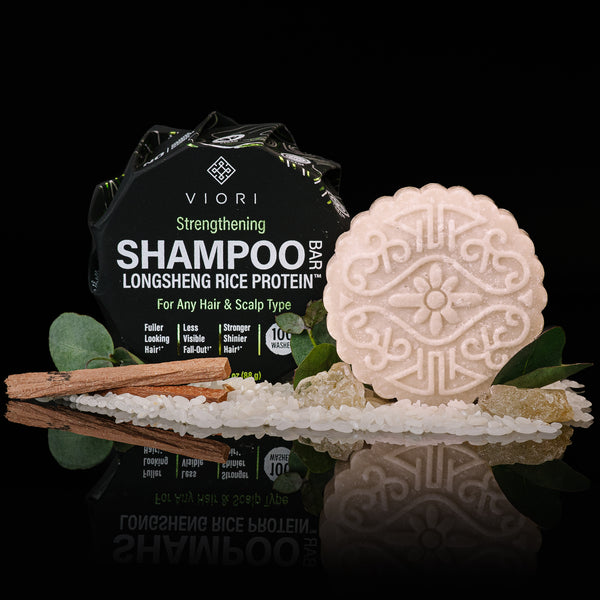
What you feel when you use a Viori bar is the actual concentrated active ingredients-the rice proteins, natural oils, and conditioning agents that truly benefit your hair. No thickeners. No fillers. And no water taking up 70-80% of the formula like it does in liquid shampoos.
The bar format forces what I call "formulation honesty." You can't hide behind textural tricks. What's in the bar is what touches your hair, period.
The Math Actually Matters Here
Let me break down what you're really getting when you compare formats:
Typical liquid shampoo:
- 70-80% water
- 10-15% surfactants (the stuff that actually cleans)
- 10-15% thickeners, preservatives, and other additives
- Less than 5% ingredients that actually benefit your hair
Viori shampoo bars:
- 0% water
- 40-60% gentle surfactants and conditioning agents
- Significantly higher concentrations of beneficial ingredients like Longsheng rice water, hydrolyzed rice protein, bamboo extract, and natural oils
- 0% synthetic thickeners
This is exactly why one bar lasts for 60+ washes. You're not paying for water and thickeners-you're getting concentrated hair care in every single use.
Why Your Brain Gets Fooled (And Why That's Okay)
Before you feel bad about falling for thick, syrupy formulas, let me tell you something: your preference isn't irrational. There's actual evolutionary psychology at work here.
Throughout human history, the most calorie-dense, nutrient-rich foods-honey, cream, nut butters-have been thick and viscous. Our brains learned to associate thickness with "this is valuable, this is good." That instinct doesn't just disappear when we're standing in a shower holding a shampoo bottle.
Research in consumer psychology shows we're hardwired to perceive viscous products as:
- More luxurious
- More concentrated
- More expensive
- More effective
When you pump out a thin, watery shampoo, there's immediate cognitive dissonance. Your brain whispers, "This can't be good-it feels cheap," even if that thin formula contains superior active ingredients.
This creates a real dilemma for ethical brands. Do you optimize for actual performance, or perceived performance? Most commercial brands choose perception every time, loading formulas with thickeners while keeping expensive active ingredients to a minimum.
At Viori, we took a completely different approach. By using a bar format, we removed texture from the equation entirely and let the results do the talking.
The Costs Nobody Talks About
What's Happening to Our Waterways
Here's something that honestly keeps me up at night: most commercial thickeners are synthetic polymers that don't readily break down in nature. Every time someone washes their hair, these substances flow down the drain and into rivers, lakes, and oceans, where they persist indefinitely.
These "inactive" ingredients that we barely think about contribute to microplastic pollution and can absorb and concentrate other pollutants. All of this environmental impact... for what? Just to make a product feel more premium in your hand?
It doesn't sit right with me. And I don't think it sits right with most people once they actually know about it.
Your Scalp Might Be Telling You Something
For those with sensitive scalps-and even those who think they don't have sensitivity issues-thick, heavily-formulated shampoos create challenges you might not have connected to the product.
Viscous products are genuinely harder to rinse completely. That residue left behind can clog follicles, create buildup that attracts dirt and oil, cause irritation and inflammation, and even trigger your scalp to overproduce sebum to compensate.
Many synthetic thickeners also only work at specific pH levels, which forces formulators to adjust the entire formula's pH away from hair's natural 4.5-5.5 range. This opens your hair cuticle unnecessarily and causes long-term damage you won't notice until months or years down the line.
Viori bars are pH balanced and contain no synthetic thickeners. The solid format lets natural conditioning ingredients-cocoa butter, shea butter, and rice bran oil-provide slip and texture without any additives your scalp has to deal with.
What Actually Matters (Hint: Not How It Pours)
After twenty years of professional experience, working with every hair type imaginable, I can tell you with absolute certainty: shampoo texture has zero correlation with hair health outcomes.
Here's what actually matters:
1. The Right Cleansing Agents
Your surfactants need to be effective but gentle. Viori uses sodium cocoyl isethionate, a coconut-derived surfactant that cleanses without stripping. It's substantially more expensive than sulfates, but infinitely better for long-term hair health.
2. Quality Conditioning Ingredients
Post-cleanse conditioning protects your cuticle integrity. Ingredients like behentrimonium methosulfate-which sounds scary but is actually sulfate-free and plant-derived-provide exceptional detangling and smoothing without buildup.
3. Hair-Identical Proteins
Your hair is approximately 90% protein (keratin, specifically). Formulas containing hydrolyzed proteins, like the hydrolyzed rice protein in Viori bars, can actually penetrate your hair shaft and temporarily repair damage by filling in structural gaps.
4. Proper pH Balance
I cannot overstate this. Hair's optimal pH is around 4.5-5.5. Outside this range, you risk cuticle lifting, increased friction, and breakage-regardless of how luxurious the product feels in your hands.
5. Active Botanical Ingredients
This is where Viori's formulation truly shines. Our Longsheng rice water contains inositol (Vitamin B8), which clinical studies show strengthens hair and promotes growth; panthenol (Vitamin B5), which improves moisture retention and elasticity; rice protein for volume and structural reinforcement; and antioxidants that protect against environmental damage.
These are expensive, active ingredients that deliver measurable benefits-not cheap thickeners that merely create an impression of quality.
Why Store Shelves Still Look the Same
If thick shampoo is such a trick, why does nearly every bottle on the shelf feel the same?
Honestly, it's partly a packaging problem. Bottles require specific viscosity ranges. Too thin, and products leak or dispense unpredictably. Too thick, and they won't come out at all.
WHAT CUSTOMERS ARE SAYING
Real reviews for Rice Water Shampoo Bar – All Hair Types | VIORI
This created a self-perpetuating cycle: manufacturers design bottles requiring medium-high viscosity, formulators add thickeners to meet those specs, consumers get accustomed to that texture, and any new product that doesn't match gets perceived as inferior.
Shampoo bars escape this trap completely. There's no viscosity to engineer, no bottle requirements to meet, no need for thickening agents. This freedom allows formulators to focus exclusively on what actually benefits your hair.
Looking Behind the Marketing
Let me show you what a typical "premium" syrupy shampoo really looks like when you break down the formula:
- 70-75% water
- 10-15% sulfates and secondary surfactants
- 3-5% thickeners (carbomer, salt, xanthan gum)
- 1-2% minimal conditioning agents
- 0.5-1% preservatives (necessary because of all that water)
- 1-2% fragrance (masking chemical scents, creating premium perception)
- 0.5-1% token amounts of trendy ingredients for marketing claims
Manufacturing cost? Usually around fifty cents to a dollar per bottle. Retail price? Anywhere from eight to twenty-five dollars. That syrupy texture is doing 90% of the perceived value creation while actual hair benefits remain minimal.
Now consider Viori's approach. Our bars contain 40-50% premium sodium cocoyl isethionate, 20-30% substantial conditioning agents like cocoa butter and shea butter, 10-15% active ingredients including Longsheng rice water and hydrolyzed rice protein, 5-10% beneficial oils, and 5-10% concentrated botanical extracts. Zero synthetic thickeners because they're not needed in solid format. Zero water, which eliminates 70% of typical formulas. And only minimal preservatives, since solid bars are naturally self-preserving when properly dried between uses.
The bar format allows ingredient concentration that's literally impossible in liquid formulas. It's honest, transparent, and optimized for hair health rather than textural impression.
What Comes Next
Consumers are getting smarter. I see it in my salon every day. People are asking better questions, reading ingredient lists, and demanding transparency in formulation. They want unnecessary additives eliminated, sustainable packaging (or no packaging at all), concentrated water-free formats, and demonstrable efficacy over textural manipulation.
Shampoo bars are perfectly positioned for this shift. They represent a return to formulation fundamentals: quality active ingredients in concentrated form, without the water, thickeners, and preservatives required by liquid formats.
My Professional Recommendation
I always tell my clients to evaluate shampoo based on these factors:
- Ingredient quality (check the first 5-7 ingredients-they make up over 80% of the formula)
- Appropriate pH (4.5-5.5 is ideal for hair)
- Absence of harsh sulfates (avoid SLS, SLES, ALS)
- Presence of beneficial actives (proteins, vitamins, botanical extracts)
- Environmental impact (packaging, water content, biodegradability)
Notice what's missing? Texture. Viscosity. "Feel." They're pleasant bonuses, but completely irrelevant to actual hair health outcomes.
Choosing Substance Over Sensation
The syrupy shampoo phenomenon reveals something important about consumer products in general: perceived value often trumps actual value. For decades, the hair care industry has exploited textural psychology, using cheap thickeners to create luxury impressions while minimizing investment in genuine performance ingredients.
Viori's shampoo bar format represents a complete rejection of this approach. By eliminating water and thickeners entirely, our bars deliver concentrated actives-the Longsheng rice water, proteins, and botanical extracts that the Red Yao women have used for centuries to maintain their famously long, healthy hair. There's no viscosity manipulation, no texture theater, just pure hair care efficacy.
The next time you pick up a thick, syrupy shampoo, I want you to ask yourself one question: am I paying for beneficial ingredients, or am I paying for the sensation of luxury?
Because in hair care, as in life, substance matters far more than texture.
When you choose Vi


