
Let me ask you something: Have you ever picked up a shampoo bottle, squeezed a bit onto your hand, and immediately felt disappointed because it seemed too "thin" or "watery"? If you're nodding right now, you're not alone. In my 20 years working behind the chair, I've watched countless clients equate thick, luxurious shampoo with quality and thin shampoo with something cheap or diluted.
But here's what I need to tell you: that instinct is completely backward.
The viscosity of your shampoo-how thick or thin it feels-has almost nothing to do with how well it actually cleans your hair. In fact, thin shampoo formulations offer some serious advantages that the beauty industry has been quietly ignoring for decades, all because we've been conditioned to believe that thick equals premium.
Today, I'm pulling back the curtain on one of the most persistent myths in hair care. Let's talk about why your "watery" shampoo might actually be giving you better results than that honey-thick formula you've been reaching for.
Why Is Shampoo Thick in the First Place?
Before we dive into the benefits of thin shampoo, let's understand what actually makes shampoo thick-because the answer might surprise you.
Shampoo thickness comes from added ingredients that have one primary job: making the product feel expensive. These thickening agents include:
Salt (Sodium Chloride) - Yes, regular table salt is one of the most common ways to thicken shampoo. It's cheap, effective, and has absolutely nothing to do with cleaning your hair.
Synthetic Polymers - These are ingredients like carbomers and acrylates that create that gel-like consistency. They're the same types of ingredients used to thicken hand sanitizer and industrial products.
Fatty Alcohols - Ingredients like cetyl alcohol and stearyl alcohol add thickness and a creamy feel, but they're not actually cleansing your hair.
NOT SURE WHICH PRODUCT IS RIGHT FOR YOU?
TAKE THE QUIZTakes 30 seconds · 134,000+ customers matched
Foam Boosters - Some thickening agents also make more bubbles, which creates another perception of "working better"-even though foam has nothing to do with cleaning efficacy.
Here's the critical point: None of these ingredients improve your shampoo's ability to clean your hair. They're added purely for perception-to make you feel like you're getting a premium product.
The Active Ingredients Work Better When They're Free to Move
Let's talk about what actually cleans your hair: surfactants. These are the surface-active agents that grab onto oil, dirt, and product buildup so water can wash them away.
Here's something fascinating that most people don't realize: in their natural, most effective state, most quality surfactants are actually quite fluid and thin. They work best when they can move freely across your scalp and hair strands, spreading evenly and making contact with every surface that needs cleaning.
When manufacturers artificially thicken shampoo, they're potentially:
- Slowing down the surfactants so they can't spread as efficiently
- Creating barriers that prevent even distribution across all your hair
- Adding extra ingredients that need to be rinsed out (more on this in a moment)
- Making you use more product than you actually need
Think of it this way: if you're trying to clean your kitchen counter, would you rather use a spray that spreads instantly across the entire surface, or a thick gel that sits in one spot? The same principle applies to your scalp and hair.
Five Powerful Advantages of Thin Shampoo
1. It Actually Rinses Clean (And That Changes Everything)
This is the game-changer that nobody talks about: thin shampoos rinse out of your hair more completely.
Think about the physics for a moment. Thick, viscous products cling to your hair strands. They create micro-layers of product that require significant water and time to fully remove. And here's the problem: most of us don't rinse nearly as long as we should.
When shampoo doesn't rinse completely, you're left with:
- Product buildup that weighs your hair down over time
- A dull appearance because there's a film coating each strand
- Scalp irritation from residual ingredients
- Hair that gets oily faster because your scalp is trying to compensate for the coating
I've seen this pattern hundreds of times in my salon. A client comes in complaining their hair feels heavy, looks dull, and gets greasy quickly-even though they're washing it regularly. We clarify their hair (strip away all the buildup), and suddenly they're amazed at how light and bouncy their hair feels. That's what their hair has been trying to be all along, underneath layers of incompletely rinsed shampoo.
Thin formulations solve this problem naturally. Water can penetrate immediately and flush away both the cleanser and everything it captured. The difference is especially dramatic if you have fine hair or you're prone to buildup.
2. You'll Use the Right Amount (Finally)
Here's something I've observed over thousands of shampoo applications: people almost always over-apply thick shampoo.
Why? Because thick texture tricks your brain. It sits in your palm in a concentrated blob, so you can't immediately feel whether you've used enough. You end up using a quarter-sized amount when you really only needed a dime-sized portion.
Thin shampoos provide instant feedback. You can feel when you've applied enough because the product spreads immediately across your scalp. You know exactly when you've achieved coverage.
This leads to:
- Serious product conservation-your bottles last longer
- Less exposure to cleansing agents-gentler on sensitive scalps
- Better scalp access-you're not working through a thick layer of unnecessary ingredients
And yes, this is better for your wallet and the environment. When you're using only what you actually need, you're buying less and wasting less.
3. Beneficial Ingredients Can Actually Reach Your Scalp
If your shampoo contains ingredients that are supposed to be good for your hair-like botanical extracts, proteins, vitamins, or fermented rice water-you want those ingredients to actually reach your scalp and hair shaft, right?
Here's the problem with thick formulations: beneficial ingredients can get trapped in that viscous gel matrix. They sit suspended in the thick product rather than making direct contact with your hair.
Thin formulations allow active ingredients to:
- Make direct contact with your scalp surface faster
- Penetrate between hair strands more effectively
- Actually work instead of getting rinsed away before they can do anything
Take Viori's approach with Longsheng rice water, for example. The fermented rice water contains inositol (Vitamin B8) and panthenol (Vitamin B5)-nutrients that have been clinically shown to support hair growth and strength. These water-soluble vitamins need to access your scalp and hair follicles to be effective. They work best when they're not trapped in a thick vehicle that gets rinsed away immediately.
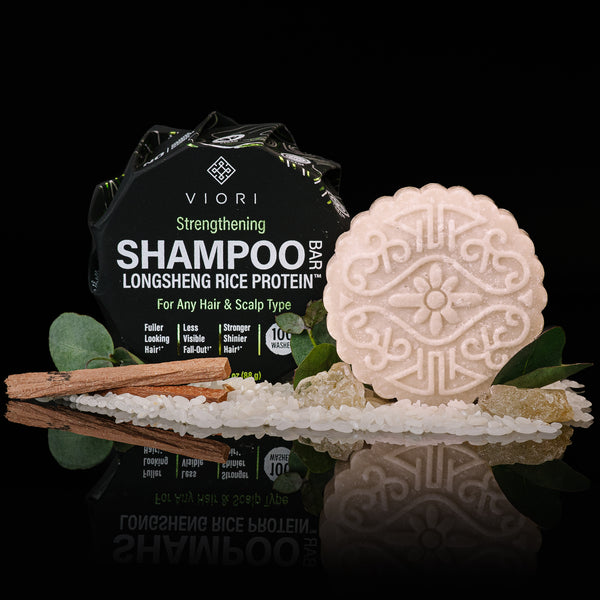
This is actually one of the key advantages of bar shampoo formats. Viori's bars deliver concentrated actives directly to your wet hair, where you control the dilution through how much you work the bar. There are no thickeners getting in the way-just the active ingredients and the natural binders that hold the bar together.
4. Consistent Performance in Any Water Temperature
Thin shampoos respond more predictably to temperature changes. They maintain their fluidity and cleaning action whether you're washing your hair in lukewarm or hot water.
Thick shampoos can behave unpredictably:
- They become even more viscous in cold water (making winter hair washing frustrating)
- They can break down inconsistently in very hot water
- Their performance varies depending on your water heater settings
This temperature stability means you get reliable, consistent results every single time you wash your hair, regardless of the season or your shower preferences.
5. You're Getting What You Pay For
Here's something the beauty industry doesn't advertise: thickening shampoo is cheap. Adding salt or basic polymers costs pennies per bottle.
The truly expensive components-quality surfactants, botanical extracts, proteins, vitamins, specialized active ingredients-these aren't what create thickness.
So when you buy a thick, "luxurious" shampoo, a significant portion of what you're paying for is:
- Water (60-80% of the bottle)
- Cheap thickening agents
- The plastic bottle itself
- Transportation costs for shipping all that water weight
- Marketing to convince you that thickness equals quality
When you choose a quality thin formulation or a concentrated bar, more of your money goes toward:
- The actual cleaning ingredients
- Beneficial additions that improve hair health
- Real active ingredients in meaningful concentrations
How We Got Here: The Marketing of Thickness
You might be wondering: if thin formulations have all these advantages, why have we been buying thick shampoos for decades?
The answer is pure marketing.
The preference for thick shampoo was manufactured by beauty companies in the 1970s and 1980s. When mass-produced synthetic shampoos flooded the market, companies needed ways to make their "premium" products look and feel different from basic options.
Thickness became a shortcut signal for:
- Luxury (cream feels more expensive than water)
- Concentration (the false belief that thick = more active ingredients)
- Value (the illusion that you're getting "more" for your money)
We've been conditioned for so long that these associations feel instinctive now. Picking up a thin shampoo triggers an unconscious response: "This seems cheap." But that response is based on marketing, not science.
What Actually Makes Shampoo Effective?
After 20 years of working with every hair type, texture, and concern you can imagine, I can tell you with absolute certainty: viscosity is theater. Chemistry is reality.
The factors that actually determine whether a shampoo will work for your hair are:
1. Surfactant Selection and Concentration
Is the cleanser too harsh (like certain sulfates) or appropriately gentle? Is there enough present to actually cleanse effectively?
2. pH Balance
Hair and scalp thrive at 4.5-5.5 pH. Many thick "luxurious" shampoos are alkaline (pH 7-9) because it's easier to create stable thick formulations at higher pH. This damages the cuticle over time.
WHAT CUSTOMERS ARE SAYING
Real reviews for Rice Water Shampoo Bar – All Hair Types | VIORI
3. Active Ingredient Quality
Are there actually beneficial ingredients present in meaningful amounts? Can they reach where they need to work?
4. Rinse Behavior
Does it leave buildup or wash completely clean?
5. Water Compatibility
How does the formula perform with your water type (hard vs. soft)?
Notice what's not on that list: how thick it feels in your palm.
The Adjustment Period: What to Expect When You Switch
If you decide to try a thinner formulation or switch to a concentrated bar format, I want to prepare you for something: there's often an adjustment period. This doesn't mean the new product isn't working-it means your hair is detoxing from years of buildup.
Years of using thick shampoos with silicones, polymers, and incomplete rinsing can create:
- Silicone buildup from dimethicone and related smoothing agents
- Polymer coating from thickening agents that cling to hair
- Mineral deposits from hard water and incomplete rinsing
- Scalp adaptation to aggressive cleansing (your scalp may be overproducing oil to compensate)
When you switch to a cleaner-rinsing formula, your hair may initially feel:
- Different in texture (you're feeling your actual hair, not a coating)
- More prone to tangling (without smoothing silicones masking the texture)
- Oilier or drier than usual (as your scalp recalibrates its natural oil production)
This transition typically lasts 2-3 weeks. Professional advice: stick with it. What you're experiencing isn't the new product failing-it's the old products finally washing out completely.
With Viori's bars specifically, we recommend using them consistently for 2-3 months to see full results. This isn't because the bars are slow to work-it's because your hair and scalp need time to return to their natural, healthy baseline after potentially years of synthetic conditioning and incomplete rinsing.
The Environmental Case for Thin (And Even Better: Concentrated Bars)
We need to talk about the environmental impact, because it's staggering.
Standard shampoo bottles contain 70-85% water. We're shipping water around the world in plastic bottles, burning fuel to transport something that literally comes out of your tap at home.
The environmental math speaks for itself:
- One Viori bar equals approximately 3 bottles of liquid shampoo (based on 60+ washes per bar)
- 90% reduction in transportation weight and volume
- Zero plastic bottles entering the waste stream
- Dramatically reduced carbon footprint per hair wash
Bar formats like Viori's eliminate the water entirely. What you're getting is concentrated active ingredients, necessary binders to hold the bar together, and nothing else. No thickeners, no unnecessary water, no plastic packaging.
It's worth noting: this isn't about sacrifice or settling for less. Viori bars are formulated with Longsheng rice water, natural proteins, and vitamins-they're pH-balanced, sulfate-free, paraben-free, and designed to work with your hair's natural biology. You're not giving up quality; you're just eliminating waste.
How to Use Thin Shampoo Effectively
If you're ready to rethink your relationship with shampoo viscosity, here's how to get the best results:
For Thin Liquid Formulas:
- Wet your hair thoroughly


