
I need to be honest with you-after two decades of working with hair, I've become pretty skeptical of trends. I've watched miracle products come and go, each one promising to revolutionize hair care. So when solid shampoo bars started gaining popularity, my first reaction was eye-rolling skepticism.
Then I actually looked at what was happening at the molecular level with Viori's formulation, and I realized we've all been having the wrong conversation.
Everyone wants to talk about the Red Yao tribe's beautiful hair or how many plastic bottles we're saving. Those are lovely stories, but they're missing the genuinely fascinating part: the chemistry happening on your head is fundamentally different from what conventional products-liquid or solid-can achieve.
Let me take you behind the curtain.
The Fermentation Story Nobody's Actually Explaining
Here's what drives me crazy: everyone mentions that Viori uses "fermented rice water," then immediately moves on like that's just a fancy marketing term. It's not. Fermentation doesn't just activate rice water-it completely transforms it at the molecular level.
During the 7-10 day fermentation process, something remarkable happens that you simply cannot replicate with fresh rice water or synthetic alternatives, no matter how much money you throw at a lab.
The Protein Transformation You Can Actually Feel
Large rice proteins get broken down into smaller peptide chains and free amino acids. Why does this matter? Because size is everything when we're talking about hair penetration.
Your hair cuticle is like overlapping roof shingles. Whole proteins are too large to slip between those shingles-they just sit on the surface until they rinse away. But fermented, hydrolyzed proteins? They're small enough to actually get inside the hair shaft and rebuild from within.
I always explain it to clients this way: imagine trying to repair a cracked wall by throwing whole bricks at it versus having perfectly sized mortar that fills every gap. That's the difference between topical protein and penetrating peptides.
The Vitamin Concentration Trick
The fermentation process increases inositol (Vitamin B8) levels by 3-4 times compared to fresh rice water. This isn't just "adding vitamins" to a formula-nature is creating higher concentrations through biological transformation.
NOT SURE WHICH PRODUCT IS RIGHT FOR YOU?
TAKE THE QUIZTakes 30 seconds · 134,000+ customers matched
Inositol is fascinating because it strengthens the cellular membrane of the hair follicle itself and improves your hair's elastic recovery. That's the technical term for "doesn't snap when you style it." In my chair, I can immediately tell when someone's hair has good elastic recovery versus when it's brittle and damaged.
The same thing happens with panthenol (Vitamin B5). Fermentation enhances it into a form your hair can use immediately, without needing additional chemical modifications. It's elegant, efficient chemistry.
Why Everyone Gets Bar Shampoos Wrong
I can't tell you how many times I've heard "bar shampoos are too harsh" or "they're drying." This reveals a fundamental misunderstanding of how cleansers actually work.
The format doesn't determine whether something's harsh. The surfactant selection does.
The Surfactant That Changes Everything
Viori uses Sodium Cocoyl Isethionate (SCI) as their primary cleanser, and this is absolutely critical. SCI is a mild, coconut-derived surfactant with a gentle negative charge that attracts dirt and oil without stripping your hair's natural protective lipids.
Compare this to Sodium Lauryl Sulfate (SLS)-the ingredient most people associate with shampoo. SLS has a much smaller molecular size and stronger charge, which means it doesn't just clean; it strips everything, including the natural oils that keep your hair supple and healthy.
It's the difference between a gentle magnet pulling away debris and a chemical bulldozer that destroys everything in its path.
The Conditioning-While-Cleansing Brilliance
Here's where the formulation gets really clever: Viori includes Behentrimonium Methosulfate (BTMS) in both their shampoo and conditioner bars. Despite having "sulfate" in the name, BTMS is actually a conditioning agent.
In the shampoo bar, BTMS deposits a protective conditioning film while you're washing. You're simultaneously cleaning and protecting, which means you're never completely stripping your hair bare. In my professional opinion, this is brilliant formulation that you typically only see in high-end salon products.
In the conditioner bar, BTMS works with fatty alcohols to create what chemists call an "emollient occlusive"-a breathable protective layer that seals the cuticle and locks in moisture. Think of it as a demolition crew that carefully preserves the foundation while clearing out debris.
The pH Factor That Makes or Breaks Bar Shampoos
This is the technical detail that separates quality bar shampoos from ones that damage your hair, and almost nobody talks about it properly.
Your hair's natural pH is approximately 4.5-5.5-slightly acidic. Viori maintains their products between 3.5-6.5 pH, which is crucial. When you use an alkaline product (pH above 7), several damaging things happen:
- The cuticle scales lift and swell, making hair tangle easily and appear frizzy
- The disulfide bonds that give hair its strength become vulnerable, leading to breakage
- Color molecules can escape more easily if you have treated hair
Traditional soap-based bars made with lye are inherently alkaline (pH 9-10). They might clean effectively, but they're causing microscopic damage with every single wash.
Viori's acidic pH means the cuticle remains closed and smooth. Closed cuticles reflect more light, which is why hair appears shinier. Protein structures stay stable. Color molecules stay locked in. This is sophisticated cosmetic chemistry, not simple soap-making.
The Functional Fragrance Nobody Notices
Here's something subtle that demonstrates really thoughtful formulation: the different scent variations aren't just about smell-they create functional differences for different scalp types.
The Citrus Yao contains citric acid from citrus essential oil components. Citric acid acts as a chelating agent, which means it binds to minerals in hard water and excess sebum. It enhances cleansing action specifically for oils and provides mild exfoliation benefits for the scalp.
This is why Viori recommends Citrus Yao for oily scalp types. It's not just marketing differentiation-the formulation has been functionally adjusted for enhanced oil control.
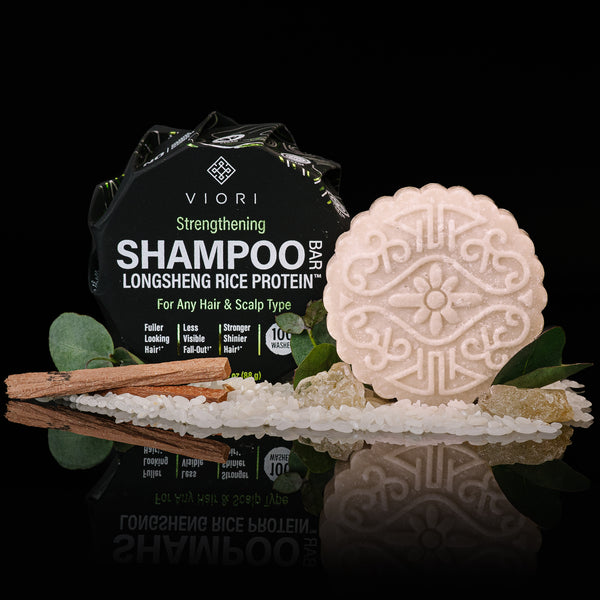
This level of attention to functional fragrance is something I typically only see in professional salon lines, where every single ingredient serves multiple purposes.
Why Your Conditioner Bar Shouldn't Lather
The Viori conditioner bar doesn't lather like the shampoo-it creates more of a paste-like texture. This is exactly what you want, and here's why.
Shampoo and conditioner work through fundamentally different chemical processes. Shampoo works by surrounding oil and dirt particles, making them water-soluble so they rinse away. Conditioner works by depositing beneficial ingredients onto the hair shaft through adsorption, not solubilization.
The paste-like texture tells you there's a high concentration of conditioning fatty alcohols, emollient butters, and that BTMS creating a cationic film.
When you apply this paste and let it sit, you're giving the positively-charged conditioning molecules time to bond with the negatively-charged sites on damaged hair. The damaged areas have more negative charges, so conditioner naturally deposits more heavily where your hair needs it most.
Your hair literally pulls the repair ingredients to the areas that need them through simple electrical attraction. That's intelligent formulation working with your hair's natural chemistry rather than against it.
The Ingredient Everyone Overlooks: Rice Bran Oil
Buried in the ingredient list is rice bran oil, and this deserves special attention because it's doing something really special.
Rice bran oil has a unique fatty acid profile. It's high in oleic acid (omega-9), which actually penetrates the hair shaft to provide internal lubrication. It contains gamma-oryzanol, a powerful antioxidant that protects against UV damage. It's rich in specific forms of vitamin E with superior free-radical scavenging ability.
The technical term for what rice bran oil does is "biomimetic lipid replacement." It doesn't just coat hair-it actually replaces lipids that have been lost due to chemical processing, heat styling, or environmental damage.
Combined with the fermented rice proteins, you're getting both internal strengthening from the proteins and internal lubrication from the oil. This is multi-level repair that typically requires multiple products in conventional hair care routines, delivered in a single concentrated bar.
The Bamboo Extract Secret
Another underappreciated ingredient: bamboo extract. Bamboo is one of the richest plant sources of silica (silicon dioxide).
In hair care, silica strengthens the hair shaft by reinforcing internal hydrogen bonds, improves elastic recovery so hair can stretch and return without breaking, and enhances the structural integrity of the cuticle layer itself.
There's emerging research suggesting that topical silica might actually influence the keratinization process-how your body produces the keratin proteins that become hair. While this is still theoretical, the presence of bamboo extract in both the shampoo and conditioner creates consistent delivery that allows for cumulative benefits over time.
The Hard Water Reality We Need to Discuss
One of the most common complaints about bar shampoos in general is inconsistent performance. Users report buildup, dullness, or difficulty lathering.
In my professional experience, this is almost always related to water hardness, and it reveals an important technical limitation that deserves honest discussion.
Hard water contains dissolved minerals-primarily calcium and magnesium. When anionic surfactants like SCI encounter these minerals, they can form insoluble salts. This causes reduced lathering, white or gray residue on hair, dull appearance, and buildup over time.
The solution isn't changing shampoos-it's addressing water chemistry. Here are professional solutions:
- Chelating rinses: An occasional rinse with diluted citric acid (1 tablespoon per cup of water) removes mineral deposits
- Filtered shower head: Removes minerals before they contact your hair
- Distilled water final rinse: Professional trick that instantly reveals your hair's true condition
The Citrus Yao formulation, with its higher citric acid content, naturally provides some chelating action-but it can't completely overcome very hard water. This is a technical limitation of all bar shampoos with anionic surfactants, regardless of quality.
I appreciate that we can have this honest conversation, because understanding this one factor can completely transform your experience with bar shampoos.
The Protein Sensitivity Question
Here's a nuanced point that separates experienced professionals from enthusiastic amateurs: protein sensitivity is real, and it's individual.
Viori's bars contain multiple protein sources-fermented rice proteins, proteins from bamboo extract, and amino acids from the fermentation process itself.
For hair that's damaged, porous, or chemically processed, these proteins are restorative. They literally patch holes in the cuticle and reinforce the cortex. I see this transformation constantly in my salon with damaged hair.
However, hair that's very fine, low porosity (naturally healthy with tightly sealed cuticles), or protein-sensitive (a genetic variation some people have) can experience "protein overload." This manifests as:
- Straw-like, brittle texture
- Increased tangling
- Paradoxical dryness despite conditioning
The professional solution? Alternate Viori with a protein-free moisturizing treatment, or use their conditioner as a leave-in only on the ends, avoiding the lengths and scalp.
WHAT CUSTOMERS ARE SAYING
Real reviews for Rice Water Shampoo Bar – All Hair Types | VIORI
This isn't a flaw in the product-it's understanding that one formulation cannot address every possible hair scenario. The key is knowing your hair's needs. If your hair is already healthy and strong, you may not need the intensive protein delivery that benefits damaged hair.
The Microbiome Perspective Nobody's Exploring Yet
Emerging research in dermatology is revealing that scalp health is intimately connected to the scalp microbiome-the ecosystem of bacteria, fungi, and other microorganisms living on your scalp.
Traditional harsh surfactants don't just strip oil-they indiscriminately destroy the beneficial microorganisms that maintain scalp health. This can lead to increased fungal overgrowth (dandruff), disrupted sebum production (paradoxical oiliness after using "oil-control" products), and chronic inflammation.
The mild surfactant system in Viori is much less disruptive to the microbiome. Additionally, there's intriguing preliminary research suggesting that fermented ingredients may actually support beneficial microorganism populations through prebiotic oligosaccharides, postbiotic metabolites, and pH-balancing organic acids.
This is highly speculative-we need dedicated studies. But conceptually, the biological nature of these ingredients aligns with supporting rather than destroying the scalp ecosystem. I believe the future of hair care lies not in stripping and replacing, but in supporting the natural biological systems that create healthy hair in the first place.
The Environmental Chemistry Angle
The sustainability angle gets discussed frequently, but let's examine the actual environmental chemistry.
Liquid shampoo is typically 70-80% water. This means you're transporting weight that serves no functional purpose, expending energy to purify water to pharmaceutical-grade standards, requiring preservatives (which create formulation challenges), and increasing shipping weight and fuel consumption.
The concentrated format of bars means active ingredients per wash are delivered more efficiently from an environmental chemistry perspective. You're not paying to ship water across the country-you're receiving pure, concentrated active ingredients.
Additionally, the SCI and BTMS used in Viori's formulation are readily biodegradable. They break down through hydrolysis and microbial action in water treatment systems without creating persistent environmental pollutants.
This is sophisticated green chemistry-not just eliminating plastic, but fundamentally rethinking the ingredient-to-delivery ratio.
Professional Tips for Maximum Performance
Based on formulation analysis and twenty years of hands-on experience, here's how to maximize the performance of this specific chemistry:
1. Temperature Matters More Than You Think
Use warm-to-hot water for shampooing. The fatty alcohols and butters in the bars soften at higher temperatures, improving distribution and rinsing. Cold water will leave residue because these ingredients haven't properly emulsified.
Think of it like butter: it spreads beautifully when warm, but becomes waxy and difficult to work with when cold. Same principle.
2. Lather in Your Hands First
Create lather in your hands before applying to hair. This pre-emulsifies the surfactants and conditioning agents, preventing uneven distribution. Direct bar-to-hair application can create concentration gradients-too much product in some areas, not enough in others.
I see this mistake constantly in my salon, and it's the single biggest reason people think bars "don't work" for them.
3. Give Conditioner Time to Work
Leave the conditioner on for a minimum of 3-5 minutes. You're not just coating hair-you're allowing time for cationic conditioning agents to bond to damaged sites, fatty alcohols to penetrate the cuticle, and oils to absorb into porous areas.
This is chemistry, not magic. The reactions need time to occur. Rushing this step is like expecting bread to rise in thirty


