
I'll never forget the day a long-time client sat in my chair, close to tears, holding a clump of her own hair. "I thought I was doing something good," she said. "Everyone raves about these bars. What am I doing wrong?"
She wasn't doing anything wrong. And that's exactly the problem.
In two decades as a hair professional, I've watched trends come and go like seasonal fashion. But the solid haircare movement has raised questions that go deeper than the usual "sulfate-free versus traditional" debates. There's something fundamental happening here-something that has nothing to do with whether ingredients are "natural" or "chemical," and everything to do with basic physics.
Why do shampoo bars work beautifully for some people and create absolute disaster for others-even when those people supposedly have similar hair types?
The answer isn't in the ingredient list. It's in the format itself. And after years of observation, consultation, and hands-on experience with every hair texture imaginable, I've come to understand that solid haircare has inherent limitations that the industry rarely acknowledges.
Let me share what I've learned-the uncomfortable truths, the physics that matters more than marketing, and the questions you should be asking before you make the switch.
The Mechanical Reality: When Format Becomes the Active Ingredient
Here's what salon professionals understand but consumers often don't: how you apply a product can matter as much as what's in it.
Think about it. When you apply liquid shampoo, you're distributing emulsified product evenly across your hair with your fingers. When you rub a solid bar directly onto wet hair, you're doing something completely different-you're creating directional friction stress.
NOT SURE WHICH PRODUCT IS RIGHT FOR YOU?
TAKE THE QUIZTakes 30 seconds · 134,000+ customers matched
The Physics of Friction (Or: Why I Started Paying Attention to Application Method)
Your hair's outermost layer-the cuticle-consists of overlapping scales, like roof shingles or a pinecone. In healthy hair, these scales lie smooth and flat. When you drag a solid object across them repeatedly, even gently, you're lifting those scales with each stroke.
For some hair types, this is no big deal. Straight, low-porosity hair with tightly sealed cuticles (common in East Asian hair types, for example) naturally resists this mechanical disruption. The cuticle structure is so compact that friction barely phases it. I have clients with this hair type who can do almost anything to their hair and it bounces back.
But for naturally porous, textured, or chemically-treated hair-where cuticle edges are already slightly elevated-this repeated friction creates cumulative roughening. It's not "damage" in the traditional sense. It's mechanical disruption that compounds with each wash, like running sandpaper in one direction over and over.
This is why texture matters more than you'd think when choosing between liquid and solid formats. It's not about one being "better"-it's about physics.
The Tell-Tale Workaround That Made Me Suspicious
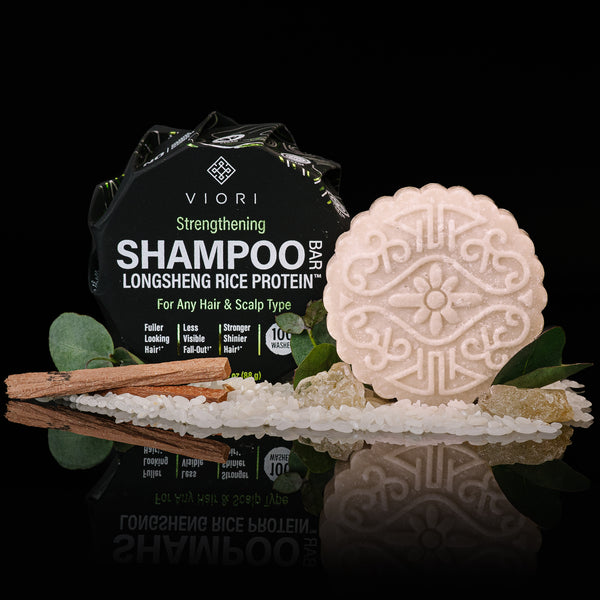
I find it revealing when product instructions include special handling for certain hair types. When Viori's guidance suggests that color-treated hair users should "get a lather in your palm and work it through your hair with your hands rather than rubbing the bar directly on your head," that's not a minor detail. That's an acknowledgment of something significant.
It confirms that the bar format itself creates mechanical stress independent of the formulation.
If solid and liquid formats were truly interchangeable, application method wouldn't matter. The fact that it does tells us the format introduces a physical variable that changes outcomes.
This doesn't make bars "bad." But it does make them format-sensitive in ways that liquid products simply aren't. And that matters when you're trying to troubleshoot why your hair feels different.
The Concentration Puzzle: Why Consistency Matters More Than You Think
In the salon, precision is everything. When I'm treating damaged hair or working with color, I need to know exactly how much product is reaching every strand. This is where solid formats face a challenge that's baked into their very nature.
How Bars Deposit Product Differently (And Why That Kept Me Up at Night)
Here's what happens when you wet a bar and rub it on your hair:
- First pass: You're depositing concentrated product directly from the bar-possibly too concentrated
- Subsequent passes: The bar has softened, mixing with water from your hair, creating an increasingly diluted mixture
- By the third or fourth stroke: You're essentially applying a much weaker concentration to the same sections you just saturated
Compare this to liquid shampoo, where you dilute the product in your hands before application, ensuring every strand receives roughly the same concentration.
You might be thinking, "Does that really matter? It all rinses out anyway." But it matters enormously when products contain active ingredients like:
Proteins-Viori bars contain hydrolyzed rice protein, which strengthens hair when properly applied. But uneven protein distribution can create brittle spots in some areas while leaving others under-strengthened. I've seen this happen. Hair needs consistent protein coverage for balanced results, or you end up with what I call "patchwork hair"-some sections look great, others snap off during brushing.
Conditioning agents-Their bars include behentrimonium methosulfate (a conditioning quaternary compound, despite the scary chemical name). When this deposits unevenly, some sections become over-conditioned-limp, weighed down, attracting dirt faster-while others remain rough and tangled.
For my clients with protein-sensitive hair, this inconsistency can be the difference between strengthened, bouncy hair and straw-like texture that breaks at the slightest tension.
The Temperature Variable Nobody Talks About
Here's something I started testing in the salon because I couldn't figure out why the same client would have different results week to week: bar performance changes dramatically with water temperature.
Cold water means the bar stays firm, deposits product heavily in concentrated patches, and spreads less evenly. You're essentially painting thick stripes of product onto your hair.
Hot water causes rapid softening-the bar may deposit too much product initially as it melts, then become mushy and difficult to control. Ever had a bar that felt like it was disintegrating in your hands? That's this.
Most liquid shampoos are formulated to maintain consistent viscosity across normal shower temperatures (80-110°F). They're engineered with emulsifier systems that compensate for temperature variations. It's chemistry working in your favor.
Bars can't make that adjustment once they're manufactured. Their solubility rate is fixed. This means your results can vary based on something as mundane as your water heater settings-a variable liquid formulations are specifically designed to handle.
I had one client who loved her shampoo bar in summer, hated it in winter. Same bar, same hair, different water temperature coming into her house. Once we figured that out, it explained everything.
The Hard Water Amplification Effect: When Your Water Works Against Your Haircare
If you live in an area with hard water-and about 85% of the United States does-this section is crucial. The interaction between solid bars and hard water minerals creates complications that even identical liquid formulations avoid.
The Science of Mineral Deposition (The Problem That Sneaks Up on You)
While Viori uses synthetic surfactants (sodium cocoyl isethionate) rather than traditional soap, there's still a problematic interaction with hard water that I see constantly in my chair.
The bar format means you're introducing concentrated surfactant directly to mineral-rich water before sufficient dilution occurs. This creates temporary surfactant-mineral complexes that deposit on hair before they fully rinse away. It's like the minerals and the cleansing agents team up to form a coating on your hair shaft.
Liquid shampoos pre-dilute surfactants and typically include chelating agents (like citric acid) evenly distributed throughout the formula. When these encounter hard water, the chelators bind minerals before they can interact with surfactants. Protection happens simultaneously with cleansing-it's all mixed together from the start.
With bars, you get surfactant deposition then chelation-a reversed sequence that allows more mineral buildup over time, especially on mid-lengths and ends where bar-to-hair contact is longest.
Who Notices This First?
Fine, high-density hair (fine texture but lots of it) shows buildup fastest because there's more surface area for mineral deposition. These are often the clients who tell me bars made their hair feel "heavy" or "waxy" after a few weeks-even though they genuinely loved it at first. "What changed?" they ask me. Nothing changed. The buildup just reached critical mass.
Coarse, low-density hair (thick individual strands, but fewer of them) may not notice buildup immediately, but will experience increased tangling as the cuticle becomes roughened by mineral deposits combined with mechanical friction. It feels like their hair texture is changing, and in a way, it is.
In the salon, I can usually tell when someone's been using bars in hard water by running my fingers through their hair. There's a distinctive texture that's not quite buildup, not quite damage, but somewhere in between. It reminds me of hair that's been in a chlorinated pool-that slightly sticky, resistant feeling.
The Fermented Rice Water Factor: Ancient Wisdom Meets Modern Hair Structure
Let's talk about one of Viori's signature ingredients-fermented rice water, inspired by the Red Yao tribe's hair care traditions. It's a fascinating ingredient with real benefits, and I genuinely respect the cultural tradition behind it. But understanding how it works (and for whom) requires some honest context.
What Fermentation Actually Creates
Fermentation increases beneficial compounds like inositol and panthenol precursors-this is well-documented and valuable. I'm not disputing that. But fermentation also produces:
- Organic acids (lactic acid, acetic acid) that lower pH and tighten cuticles
- Bacterial metabolites that can coat the hair shaft
- Polysaccharides that provide slip but may build up over time
In a liquid product, these components are precisely controlled and diluted to specific concentrations. In a bar format, concentration varies significantly between initial application and final rinse. You're getting a concentrated hit initially, then increasingly diluted product as the bar softens and mixes with water.
Understanding the Red Yao Hair Type Advantage (This Is Where It Gets Interesting)
Here's something I've learned from working with clients from diverse backgrounds and hair textures: The Red Yao women have a specific hair structure that responds exceptionally well to their traditional methods.
Their hair is predominantly:
- Low porosity (tightly sealed cuticles)
- Straight to slightly wavy
- Naturally low sebum production at the scalp but high retention along the length
This particular hair type benefits from:
- Mechanical friction (actually helps distribute sluggish sebum down the hair shaft)
- Protein treatments (low porosity needs protein to temporarily lift cuticles for moisture penetration)
- Acidic rinses (maintains their already-tight cuticle structure)
It's a beautiful system that works perfectly for their hair structure. I have massive respect for traditional knowledge that's been refined over generations. This isn't about dismissing cultural practices-it's about understanding biological compatibility.
WHAT CUSTOMERS ARE SAYING
Real reviews for Rice Water Shampoo Bar – All Hair Types | VIORI
The Extrapolation Problem (Or: Why One Size Doesn't Fit All Hair)
But here's where I see challenges in my salon chair: High-porosity, curly, or coily hair types (3A-4C textures) have fundamentally different structural needs.
High-porosity hair already has elevated cuticles-that's what makes it high porosity. These hair types benefit from acidic treatments, but they need to be followed by moisture-sealing, not more protein-forward formulations. Too much protein on already-porous hair creates rigidity and breakage.
Curly and coily hair faces a natural challenge: sebum doesn't travel easily down the hair shaft due to curl patterns. Where Red Yao hair benefits from friction to distribute natural oils, curly hair needs emollient-heavy products to compensate for the moisture that never makes it past the first few inches of growth.
Afro-textured hair is particularly fragile at the apex of each curl-the geometry creates a weak point. Mechanical friction from direct bar application can cause micro-tears that lead to breakage over time. I've seen this pattern too many times: someone switches to bars, loves the initial results, then three months later they're wondering why their ends are shredding.
The Red Yao tradition is remarkable and their results are genuine. I'm not questioning that for a second. But what works beautifully for one hair structure isn't automatically universal. The bar format can actually compound compatibility issues for structurally different hair types, and that's not something marketing materials tend to address.
Decoding the Conditioner Bar Mystery
Viori's FAQ notes that their conditioner creates a "paste-like lather" and that "even though you can't see a lot on your hair as you apply it, a little goes a long way."
As a professional, these descriptions tell me a lot about what's actually happening during application-and it's not always what consumers think.
The Emollient Distribution Challenge
Viori's conditioner bar contains rich ingredients:
- Behentrimonium methosulfate (cationic conditioning surfactant)
- Cocoa butter and shea butter (heavy emollients)
- Cetyl alcohol and stearic acid (fatty alcohols)
In a rinse-out liquid conditioner, these ingredients are:
- Emulsified in water, creating even suspension
- Applied uniformly across all hair
- Rinsed away, leaving a thin, even protective film
In a solid bar format:
- Ingredients soften with heat but don't truly emulsify-they remain somewhat separated
- They deposit in concentrated patches where the bar directly contacts hair
- They rinse away unevenly-heavy buildup in some areas, minimal coverage in others
Why Some People Love It (And What That Might Actually Mean)
I've noticed that clients with severely damaged, high-porosity hair often rave about conditioner bars initially. The heavy, uneven emollient deposition temporarily "fills in" damaged areas, creating an immediate feeling of smoothness that can be genuinely thrilling if your hair has felt like straw.
But here's my concern, and I say this as gently as possible: this masks damage rather than addressing it.
It's similar to how silicone buildup can temporarily make over-processed hair feel smooth. You're not seeing the actual hair condition-you're feeling product accumulation. There's a difference between hair that feels smooth because the cuticle lies flat and reflects light uniformly, and hair that feels smooth because it's coated in conditioning agents.
Conditioner bar "smoothness" sometimes comes from irregular emollient buildup that:
- Attracts dirt and environmental pollutants faster (giving you that "I need to wash my hair again


