
Have you ever noticed your hair feels completely different when you're traveling? Maybe it's drier, flatter, or just... off? If you've blamed the water or chalked it up to travel stress, you're only seeing part of the picture.
After 20 years working with hair, I've heard this complaint countless times from clients: "My hair is never the same when I stay in hotels." Most people assume it's just about water quality, but the reality is far more fascinating. The truth involves the unique science behind hotel amenities, formulation chemistry, and the impossible challenge of creating products that must work for literally everyone-regardless of hair type, water hardness, or how they're used.
Let me take you behind the scenes of hotel shampoo and conditioner to reveal why your hair reacts differently on vacation, and why the shift to bars is revolutionizing hospitality amenities in ways most guests never notice.
The Impossible Challenge: Making Products for Everyone
One Product, Infinite Variables
Here's something most people don't realize: hotel amenity formulators face challenges that would make most cosmetic chemists run for the hills.
Think about it-unlike the shampoo you buy at the store (formulated for your specific region's water), hotel products must perform equally well in Las Vegas with its extremely hard water (400+ parts per million of dissolved minerals) and in Seattle with its soft water (around 50 ppm). This is nearly impossible with traditional formulations.
Hard water contains calcium and magnesium that react with cleansing ingredients to create that waxy, filmy feeling you've probably experienced. Hotel formulations typically use higher concentrations of ingredients that counteract this (like citric acid), but here's the catch: what helps in hard water can strip hair too aggressively in soft water.
And the water chemistry is just the beginning.
The "One Size Fits All" Nightmare
A single hotel shampoo must adequately cleanse:
- Fine, oily hair that needs gentle cleansing with minimal conditioning
- Thick, coarse, textured hair requiring moisturizing formulas and heavy conditioning
- Color-treated hair needing sulfate-free or gentle alternatives
- Sensitive scalps requiring minimal fragrance and additives
This is like trying to be in multiple places at once-a formulation paradox that's incredibly difficult to solve.
NOT SURE WHICH PRODUCT IS RIGHT FOR YOU?
TAKE THE QUIZTakes 30 seconds · 134,000+ customers matched
The Economic Reality Nobody Talks About
Here's the part that really opens your eyes: hotel amenity budgets typically allocate just $0.15 to $0.45 per guest per stay for all bathroom amenities combined. Premium hotels might spend $1-2.
Compare that to the retail shampoo and conditioner you buy for $8-30 that lasts you weeks or months.
This means:
- Ingredient costs must stay rock-bottom
- Formulations rely on inexpensive cleansing bases
- "Active" ingredients like proteins and botanical extracts are present in minimal amounts
- Fragrance is often the single most expensive component (and serves a purely psychological purpose)
Understanding these constraints completely changes how you think about hotel amenities, doesn't it?
Why Hotels Are Switching to Bars (And It's Not Just About Plastic)
While environmental benefits drive the marketing conversation, there are significant technical and economic advantages to bar formats that hotel management understands but rarely discusses publicly.
1. Self-Preserving Formulas
Liquid products require preservative systems to prevent bacterial and fungal growth. With growing consumer concern about certain preservatives, formulators face a challenge: natural alternatives are expensive and sometimes less effective.
Here's where bars shine: when properly formulated and dried, they're naturally self-preserving. No water means microbes can't grow. This is a massive technical advantage:
- Lower allergen potential
- Simpler regulatory compliance across international markets
- Longer shelf life without quality degradation
- Lower formulation costs
2. Concentration Economics
A 30-40 gram hotel bar contains approximately the same number of washes as a 300ml liquid bottle, but:
- Shipping weight is one-tenth (90% of liquid shampoo is just water)
- Storage volume is one-fifth
- No leakage or spillage issues (hotels lose 8-12% of liquid amenities to housekeeping accidents)
- No pumps or bottles needed (packaging often costs more than the liquid inside)
For a 500-room hotel, this translates to approximately $12,000-18,000 in annual savings beyond just the sustainability narrative.
3. The Smart Delivery System
Here's where bar chemistry gets really interesting: solid bars can contain 40-60% active cleansing ingredients, compared to 10-15% in liquid shampoos. This sounds like it would be extremely harsh, but the delivery mechanism changes everything.
When you rub a bar on wet hair, you control the amount through contact time and pressure. Users naturally moderate application-something impossible with liquids where people pour unpredictably. This self-metering actually leads to more consistent results across different user behaviors.
The Technical Wizardry Behind Quality Bars
Not all bars are created equal. Creating a superior bar requires solving complex formulation challenges.
The Hard Water Problem
Traditional soap bars (made from saponified fats and oils) fail spectacularly in hard water-they create soap scum instantly. Modern synthetic detergent bars use different ingredients, but even these can leave residue in very hard water.
The solution involves:
- Incorporating conditioning agents that mask mineral deposits
- Using specialty ingredients that prevent buildup
- pH buffering systems that reduce calcium and magnesium reactivity
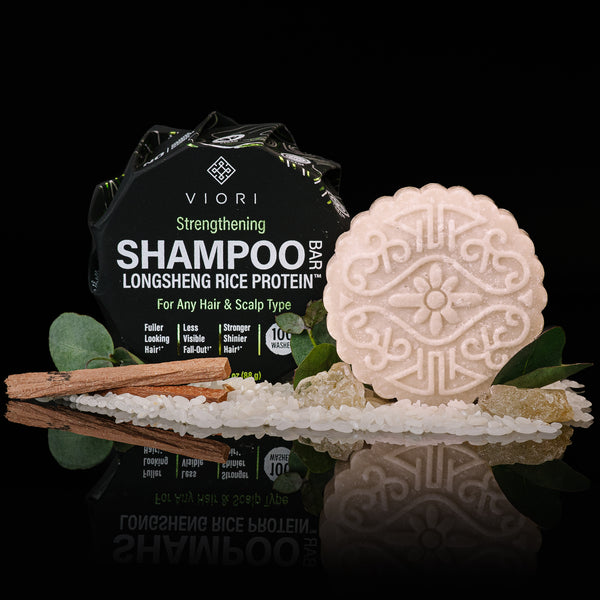
This is why quality bars-like those formulated with rice water, cocoa butter, and specific conditioning ingredients-perform better than cheap alternatives. The conditioning system is robust enough to counteract water hardness effects.
The Conditioner Bar Challenge
Conditioner bars are actually harder to formulate than shampoo bars. Here's why:
Conditioning requires depositing water-hating ingredients onto hair. In a solid bar, you need ingredients that:
- Melt slightly at skin and hair temperature (but not sitting in a shower dish)
- Spread smoothly without being greasy
- Rinse cleanly while depositing enough to actually condition
- Remain stable in solid form for months
This requires precise ratios of high-melting butters (like cocoa and shea), medium-melting conditioners, and slip-enhancing oils.
The formulation window is incredibly narrow. Too much butter and the bar becomes soft and mushy. Too little and it won't deposit enough conditioning. This is why many conditioner bars feel waxy or leave hair feeling coated-the formulation balance is off.
When you find a conditioner bar that works beautifully, you're experiencing genuine formulation artistry.
Why Your Hair Actually Feels Different: The Water Factor
It's More Complex Than "Hard vs. Soft"
Most discussions oversimplify water chemistry. Here's what actually matters:
Different cities have vastly different water profiles:
- Las Vegas: extremely high mineral content
- New York City: moderate hardness
- Portland, OR: very soft but high in silica
But here's the critical factor nobody mentions: chlorine levels. Many municipalities use significant chlorination for safety. Chlorine:
- Oxidizes hair proteins, creating roughness
- Degrades hair color
- Interacts with cleansing ingredients unpredictably
- Can create unexpected reactions with botanical extracts in shampoos
Hotels with hard, highly chlorinated water create the worst hair experiences, regardless of product quality. Some luxury hotels install room-level water softening or filtration specifically to address this, though it's rarely advertised.
The Temperature Factor
Hotels typically set water heaters to 120-130°F for safety and energy efficiency. This is actually slightly hotter than most home water heaters. Hotter water:
- Opens hair cuticles more aggressively
- Increases cleansing activity (making shampoo more stripping)
- Improves rinse-out but can remove too much natural oil
- Affects how conditioner bars soften and spread
This is why hair often feels drier after hotel showers-it's not just the products, it's the entire washing system.
The Fragrance Story: Why Hotel Products Smell "Generic"
The Neutrality Requirement
Hotels face intense pressure to use hypoallergenic, non-offensive fragrances. Industry guidelines suggest:
- Minimal known allergens
- Lower fragrance concentrations than retail products
- Avoiding common sensitizers
This results in the bland "clean" smell of most hotel amenities-it's not poor quality, it's risk mitigation to avoid guest complaints and reactions.
However, there's a fascinating technical consideration: fragrance stability in bar formats. Many popular fragrance notes (citrus, green florals, herbs) are volatile and break down quickly when combined with alkaline cleansing ingredients in solid form. This is why:
- Hotel shampoo bars often smell stronger when new, then fade
- Vanilla and musk-based scents are more stable in bars-these molecules are larger and less volatile
- Citrus-scented bars require special technology or higher fragrance loads to maintain scent throughout the bar's life
The Unscented Advantage
The growing trend toward fragrance-free hotel amenities reflects sophisticated understanding of guest diversity. Unscented doesn't mean odorless-it means no added fragrance. The natural scent of quality ingredients (rice protein has a subtle grain-like aroma, cocoa butter smells faintly of chocolate) creates a clean, neutral profile that doesn't trigger sensitivities or compete with guests' personal fragrances.
The Scalp Health Factor: What Science Reveals
The Microbiome Connection
Recent research on the scalp microbiome reveals that harsh, aggressive cleansing disrupts beneficial bacteria, potentially worsening dandruff, sensitivity, and oil production. This has profound implications for hotel amenities.
The Problem with Aggressive Cleansing: Many hotel shampoos use high concentrations of strong cleansers because:
- Faster lather equals perceived quality
- Squeaky-clean feel suggests effectiveness
- Antimicrobial claims address housekeeping concerns
However, this scorched-earth approach can leave scalps vulnerable. Guests using aggressive hotel shampoo daily for a week-long stay may experience:
- Rebound oil production (scalp overcompensates)
- Increased sensitivity
- Dandruff flares
- Accelerated color fade for treated hair
The Bar Advantage: Well-formulated bars, particularly those with pH-balanced cleansing systems (matching scalp's natural pH of 5.0-5.5), minimal preservatives, and beneficial ingredients can actually support scalp health better than liquid alternatives.
Formulations with fermented rice water are particularly interesting here. Fermentation produces lactic acid (which buffers pH and gently exfoliates), beneficial metabolites that support healthy bacteria, and B vitamins that condition the scalp.
This is formulation sophistication that rivals high-end retail products-in a hotel amenity bar.
WHAT CUSTOMERS ARE SAYING
Real reviews for Rice Water Shampoo Bar – All Hair Types | VIORI
The Sustainability Story: More Complex Than You Think
The Full Picture
Hotels proudly market bar amenities as sustainable, but the complete lifecycle analysis reveals interesting nuances:
Manufacturing Energy:
- Bars require heat for mixing, then cooling
- However, bars need no sterilization processes required for liquids
- Net result: bars typically use 30-40% less manufacturing energy
Packaging:
- Obvious advantage for bars (paper versus plastic bottles)
- Many "recyclable" hotel bottle programs have less than 15% actual recovery rates
- Bars leave essentially no waste when used completely
Transportation:
- A shipping container of bars holds 8-10 times the number of guest uses versus liquid bottles
- This is the biggest sustainability advantage, reducing transportation emissions by 80-85%
Water Usage:
- Bars require minimal water in manufacturing
- Liquids require water as the primary ingredient, plus processing water
The sustainability advantage is real and substantial, though more nuanced than marketing sometimes suggests.
The Future of Hotel Amenities
Where Technology Is Headed
Adaptive Formulations: Emerging technologies that adjust based on water hardness could solve the hard/soft water problem. Still experimental and expensive, but promising.
Better Ingredient Protection: Microencapsulation protecting delicate ingredients (antioxidants, certain vitamins, fragrances) in microscopic capsules that release during use extends effectiveness and sensory experience.
Sustainable, Effective Actives: Plant-based ingredients like rice protein, bamboo extract, and regionally significant botanicals that are:
- Sustainably sourced
- Effective at low concentrations
- Stable in bar formats
- Meaningful to guests (storytelling value for hotels)
Rice protein, for example, is one of the most effective hair-strengthening ingredients available due to its compatibility with hair's keratin structure and small molecular size that allows penetration. Fermentation increases its bioavailability even further.
Personalization: Digital profiles allowing guests to select formulations delivered to rooms is logistically still years away for most hotel chains, but represents an intriguing possibility.
What This Means for You
Understanding the technical realities behind hotel amenities reveals why:
Your hair genuinely responds differently to hotel products-it's a combination of water chemistry, temperature, and formulation universality requirements, not just your imagination.
Not all bars are created equal-formulation expertise matters enormously. The difference between a mediocre bar and an excellent one comes down to sophisticated chemistry solving complex problems.
"Hotel quality" doesn't mean "lower quality"-it means different optimization priorities. The constraints are different,


