
After two decades behind the chair, I've noticed something that's been bothering me: most advice about hair loss shampoos completely misses the mark for Indian men.
Here's what nobody's telling you-the "best" shampoos everyone recommends? They were formulated for completely different water, climate, and genetic conditions than what you're dealing with. And that difference isn't minor. It's the reason you've probably tried three or four highly-rated products only to watch your hairline continue its backward march.
I've worked with enough Indian clients to know there's a specific combination of environmental and genetic factors at play that changes everything about what makes a shampoo actually effective for your hair loss. Let me walk you through what really matters.
The Hard Water Reality Nobody Mentions
Let's start with something most articles completely ignore: India has some of the hardest water in the world. We're talking calcium and magnesium levels exceeding 300 ppm in many urban areas. Water is considered "very hard" at just 180 ppm.
"Big deal," you might think. "So my shower gets soap scum."
But here's what's actually happening on your scalp every single day:
When that hard water mixes with your shampoo, it creates a microscopic film that coats your scalp and hair follicles. You can't see it, but it's there. And it's doing three things that directly worsen hair loss:
- Raising your scalp pH from the healthy 4.5-5.5 range up to 7.0 or higher, creating conditions where scalp fungus thrives
- Blocking follicular openings, restricting oxygen flow to your hair roots
- Creating mineral buildup that mimics and accelerates DHT-related hair miniaturization
If you're genetically prone to pattern baldness-which most Indian men experiencing hair loss are-this hard water acts like gasoline on a fire.
What This Means for Your Shampoo Choice
Your shampoo needs to do three specific things that most international formulas simply weren't designed to handle:
First, it needs to chelate hard water minerals. Look for ingredients like EDTA or citric acid that can actually bind and remove calcium and magnesium buildup from your scalp.
NOT SURE WHICH PRODUCT IS RIGHT FOR YOU?
TAKE THE QUIZTakes 30 seconds · 134,000+ customers matched
Second, it must maintain an acidic pH between 4.5-5.5. This counteracts hard water's alkalizing effect and keeps your scalp environment healthy instead of fungus-friendly.
Third, it has to clarify without stripping. Strong enough to remove mineral deposits but gentle enough that you can use it frequently in India's climate.
Most imported "hair growth shampoos" were formulated for soft or moderately hard water. Use them in Indian water conditions and they can actually worsen your problem by leaving more residue on your scalp. I've seen this pattern repeatedly-guys switch to an expensive imported brand only to find their hair loss accelerating.
Why You're Already Behind Schedule
Here's something that should change how you think about timing: research published in the International Journal of Trichology found that Indian men show signs of male pattern baldness about 5-7 years earlier than Western men.
By age 25, roughly 30% of Indian men already show hair loss signs. Among Caucasian populations, that percentage isn't hit until age 30.
The reason? Studies indicate South Asian populations show higher activity of 5-alpha reductase type 2-the enzyme that converts testosterone into DHT, the hormone primarily responsible for male pattern baldness.
What This Earlier Timeline Actually Means
This isn't just trivia. It has real implications for your approach:
Prevention matters more than treatment. By the time you notice visible thinning, you're already in late-stage hair loss. Starting proper care in your early twenties isn't premature-it's strategic.
DHT-blocking ingredients become critical. Look for shampoos containing saw palmetto, pumpkin seed extract, or green tea catechins, which can reduce local DHT conversion before it miniaturizes your follicles.
Follicle stimulation should start younger. Ingredients like caffeine, niacinamide, and peptides that increase blood flow and cellular energy should be part of your routine from your early twenties, not something you start when balding is already obvious.
The typical advice to "start using hair loss shampoo when you notice thinning" is already too late for most Indian men. Your genetic timeline demands earlier, smarter intervention.
The Pollution Factor That Changes Everything
Let me tell you about something dermatologists in London or New York never even consider: the devastating effect of pollution particulate matter on hair follicles.
Indian metropolitan areas consistently rank among the world's most polluted cities. PM2.5 and PM10 particles don't just affect your lungs-they settle on your scalp and create oxidative stress that directly damages hair follicles.
Research from Delhi-based dermatology clinics has shown that particulate matter actually penetrates follicular openings, causing inflammation at the dermal papilla-your hair bulb's blood supply. Heavy metals in pollution accumulate in hair tissue and disrupt the natural growth cycle. Polycyclic aromatic hydrocarbons from vehicle exhaust trigger inflammatory responses that push more hair into the shedding phase.
Think about your daily commute. Every time you're stuck in traffic, exposed to construction dust, or walking through city streets, your scalp is being coated with these particles. By evening, you have an invisible layer of pollutants creating low-grade inflammation around every single hair follicle.
Your Shampoo Needs to Be a Detoxifier
For Indian men, an effective hair loss shampoo can't just focus on growth promotion-it must actively remove and protect against pollution. Look for:
- Activated charcoal or kaolin clay that binds particulate matter and heavy metals
- Antioxidant complexes like vitamin E, green tea polyphenols, or resveratrol to neutralize free radical damage
- Anti-inflammatory botanicals such as turmeric extract, neem, or aloe vera to calm pollution-induced scalp inflammation
Standard Western formulations focus almost entirely on DHT blocking and follicle stimulation. They completely ignore pollution detoxification-making them incomplete solutions for your specific context.
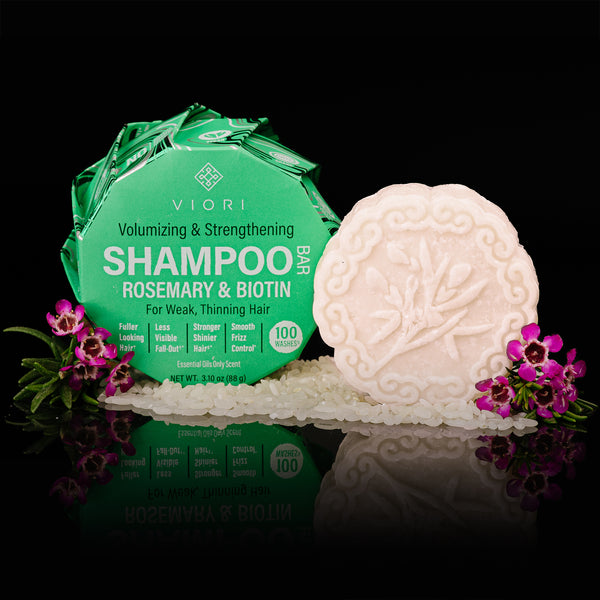
This is one reason I often recommend Viori to my Indian clients. Their rice-water-based formula includes bamboo extract and aloe vera, which provide the anti-inflammatory and protective action pollution-stressed scalps desperately need.
The Climate Paradox You Need to Understand
Here's something counterintuitive that surprises most of my clients: in India's tropical and subtropical climate, using a deeply moisturizing "nourishing" hair loss shampoo might actually accelerate your hair loss.
Let me explain the problematic sequence:
- Higher temperatures increase sebum (oil) production by up to 30%
- DHT is lipophilic-meaning it dissolves in and concentrates in oil
- Excess sebum creates a DHT-rich environment directly on your scalp
- Oily scalps also attract more pollution particles, compounding inflammation
Most hair loss shampoos are formulated for temperate climates where thinning hair tends to be dry. They're deeply moisturizing by design. But in Indian conditions-especially in humid coastal cities or during monsoon season-this heavy moisturization can worsen the oily scalp condition that's already problematic.
What Your Scalp Actually Needs
Indian men need hair loss shampoos that regulate sebum without over-stripping. Look for ingredients like niacinamide, zinc PCA, and witch hazel that normalize oil production rather than just adding more moisture.
You need lightweight hydration-focus on humectants like glycerin and hyaluronic acid rather than heavy oils and butters.
And interestingly, you want oil-soluble DHT blockers. Saw palmetto extract actually works better in slightly oily environments.
This is why I recommend the Citrus Yao variant from Viori for my Indian clients with oily scalps, which is common in humid climates. The citric acid content helps break down excess sebum while providing antimicrobial action, all while delivering the core hair-strengthening benefits of fermented rice water.
For those with normal to dry scalps-perhaps in northern India or with naturally drier skin-the Hidden Waterfall or Terrace Garden variants provide moisture balance without heaviness.
Why Ancient Rice Water Wisdom Actually Works
You've probably heard about rice water for hair-it's been trendy recently. But there's solid science behind why fermented rice water is particularly valuable for Indian men dealing with hair loss.
The Science Behind Rice Water for Your Hair
Inositol (a B-vitamin found in fermented rice) penetrates the hair shaft to repair internal damage from pollution and hard water. Studies show it can reduce hair fall by up to 30% over 12 weeks. It's particularly effective on the straight-to-wavy hair texture common in Indian populations.
Amino acids and proteins in rice water fill in damaged cuticle layers caused by hard water and environmental stress, strengthening hair at the cortex level and reducing breakage-related thinning.
The natural pH of fermented rice water (4.5-5.5) perfectly counters hard water's alkalizing effect and creates the optimal scalp environment for hair retention.
Why Viori's Approach Works for Indian Conditions
This is where Viori becomes particularly relevant. Their shampoo bars are built around Longsheng rice water-not as a trendy add-in, but as the foundational element. The traditional fermentation process increases inositol and panthenol (Vitamin B5) levels that have been specifically shown to promote hair growth and reduce premature graying.
For Indian men dealing with the triple challenge of hard water, pollution, and early-onset genetic hair loss, Viori's formulation addresses multiple needs simultaneously:
- Rice protein content helps counteract hard water damage by creating a protective film on hair strands
- pH-balanced formulation (4.5-5.5) specifically combats alkaline hard water effects
- Bar format eliminates water filler common in liquid shampoos, giving you higher concentrations of active ingredients per wash
- Bamboo extract and aloe vera provide anti-inflammatory action for pollution-stressed scalps
- Sulfate-free cleansing removes sebum and pollution without harsh stripping that triggers rebound oil production
The Native Essence (unscented) option is excellent for men with sensitive scalps-important because pollution-damaged skin often becomes reactive to fragrances.
The Protein-Moisture Balance Nobody Explains
Here's some technical detail that most content completely ignores: Indian men's hair has a specific structural profile-typically 7-9 cuticle layers compared to 5-7 for finer hair types, with moderate to high cortex density.
When hair loss begins, this structure changes. Thinning hair has fewer cuticle layers and lower cortex density. The mistake most men make is loading up on moisturizing products, thinking it will "strengthen" their hair.
Here's the truth: thinning hair needs protein first, moisture second.
Rice protein (hydrolyzed rice protein specifically) is particularly effective because its small molecular size allows penetration into the hair cortex, its amino acid profile closely matches human hair keratin, and it strengthens without weighing down fine, thinning strands.
Viori's inclusion of hydrolyzed rice protein alongside rice bran oil creates the protein-moisture balance that works specifically for hair in the miniaturization process-exactly what's happening in early-onset pattern baldness common among Indian men.
Why You Need to Wash More Often Than You Think
Most hair loss advice says "wash every 2-3 days to preserve natural oils."
This might work in London or New York, but in Mumbai, Delhi, Bangalore, or Chennai? It's terrible advice.
WHAT CUSTOMERS ARE SAYING
Real reviews for Rosemary Biotin Shampoo Bar – Thinning Hair | VIORI
Here's why: pollution accumulation requires daily cleansing to prevent follicular inflammation. High humidity increases sebum production, making 2-3 day intervals uncomfortable and impractical. The mixture of sweat and particulate matter creates the perfect environment for scalp infections that worsen hair loss.
But here's the catch: frequent shampooing with harsh sulfates strips your scalp, triggering even more oil production and weakening hair structure.
The Daily Washing Solution
This is where pH becomes critical. A shampoo with pH 4.5-5.5 can be used daily because it matches your scalp's natural acid mantle, cleanses without disrupting the moisture barrier, and doesn't trigger rebound sebum production.
Viori's pH-balanced formulation specifically allows for daily use-essential for Indian men who need frequent cleansing but can't afford the damage from harsh daily shampooing.
The bar format also matters here. It's easier to control application amount, meaning you can cleanse daily with minimal product while maintaining concentrated active ingredient contact with your scalp.
The Humidity-Fungus Connection You're Ignoring
India's humidity levels-often 70-90% in coastal and monsoon-affected areas-create ideal conditions for malassezia, a fungus naturally present on everyone's scalp that can overgrow in moist, oily conditions.
You might think this is just about dandruff, but recent research shows malassezia overgrowth has a direct connection to hair loss. It produces inflammatory compounds that attack the follicle bulb, metabolizes sebum into irritating fatty acids that inflame the scalp, and is associated with accelerated hair shedding even without visible dandruff.
Many men dismiss slight scalp itching or oiliness as minor annoyances, not realizing this fungal imbalance is actively contributing to their hair loss.
The Anti-Fungal Strategy
Effective hair loss shampoos for Indian conditions need anti-fungal components. Bamboo extract (present in Viori) contains silica with antimicrobial properties. Aloe vera provides natural antifungal and anti-inflammatory benefits. Rice fermentation byproducts create an acidic environment inhospitable to fungal overgrowth.
The combination of pH control and natural antimicrobial ingredients addresses this humidity-related hair loss factor that temperate-climate formulations completely ignore.
What You Should Realistically Expect
Let me be professionally honest with you: no shampoo alone will regrow significant amounts of hair lost to male pattern baldness.
The primary mechanisms of androgenetic alopecia-DHT miniaturization and follicle sensitivity-require systemic intervention (medications like finasteride or minoxidil) for actual regrowth.
However, the right shampoo for your specific Indian context can slow progression by creating optimal scalp conditions, reduce non-genetic hair loss (pollution damage, inflammation, breakage) that compounds pattern baldness, significantly improve the appearance and health of existing hair, and support medical treatments by maintaining scalp health.
The Realistic Timeline
Based on the hair growth cycle and the specific environmental factors we've discussed, here's what Indian men should realistically expect:
Weeks 1-4: Reduced scalp inflammation and itching from improved pollution particle removal, better scalp pH balance countering hard water effects, and reduced daily shedding from breakage and environmental damage.
Weeks 4-12: Noticeably improved


