
If you’ve ever tried washing your hair with a bar and thought, “Why does this feel incredible for some people and absolutely awful for me?”-you’re not imagining it. The bar format isn’t automatically good or bad. What matters is the chemistry inside the bar, the water coming out of your shower, and the way you apply it.
Here’s the part that almost never gets talked about online: washing hair with a bar is basically a mini experiment in surface science. Between pH, minerals in your water, and the electrical charge on your hair, you can predict-pretty accurately-whether you’ll get soft, bouncy hair or a tangled, squeaky mess.
First, let’s clear up the biggest confusion: “bar soap” isn’t always shampoo
When people say “bar soap for hair,” they’re often lumping two very different categories together. They may look similar in your shower, but they behave very differently on hair.
Traditional soap bars (saponified oils)
These are made when oils react with a strong base to form soap. This type of bar often runs more alkaline, which can be rough on hair over time because it encourages the cuticle to lift.
NOT SURE WHICH PRODUCT IS RIGHT FOR YOU?
TAKE THE QUIZTakes 30 seconds · 134,000+ customers matched
When the cuticle lifts, hair tends to feel:
- rougher to the touch
- more tangled when you rinse
- frizzier once it dries
- duller because the surface isn’t reflecting light smoothly
Modern shampoo/conditioner bars (pH-balanced cleansing)
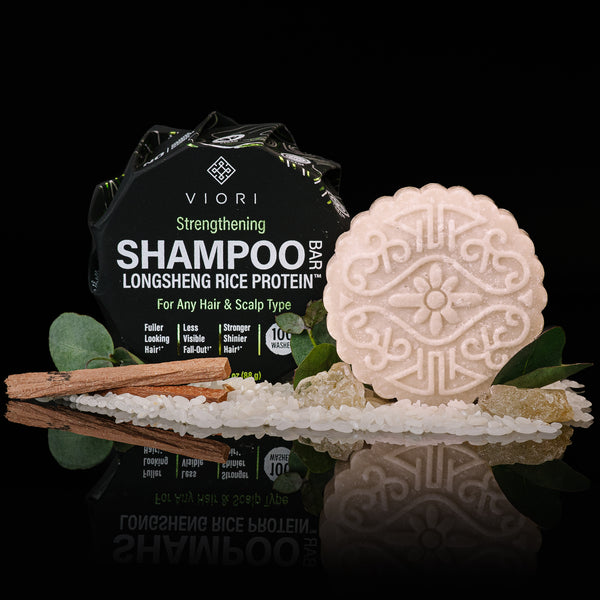
This is where a lot of the “shampoo bar success stories” live. These bars use modern cleansing agents designed to wash hair without behaving like traditional soap. Viori, for example, uses a gentle cleanser called Sodium Cocoyl Isethionate (SCI), which is known for creating a creamy lather without the harsh feel that can come with stronger cleansers.
More importantly, Viori’s bars are designed to be pH balanced, which matters a lot for the way your cuticle behaves during and after cleansing.
The silent troublemaker: hard water
If you’ve ever had that coated, waxy feeling after using a bar, there’s a good chance you weren’t dealing with “bad hair” or “the wrong technique” at all-you were dealing with water chemistry.
Hard water contains more minerals (mainly calcium and magnesium). With traditional soap bars, those minerals can react in a way that creates stubborn deposits. The result can feel like product buildup-even when you’re barely using product.
Common signs hard water is getting involved:
- Your hair feels waxy or coated after rinsing
- It looks dull no matter how well you wash
- Detangling suddenly feels like a workout
- You notice you scrub harder and harder to feel “clean”
One reason many people do better with modern, pH-balanced shampoo bars is that they’re less likely to create that classic “soap scum” situation in hard water.
The “charge” factor: why hair gets squeaky, tangled, and snags on itself
This is my favorite nerdy detail-because it explains so much. Hair in water tends to carry a negative charge, especially if it’s damaged, porous, color-treated, or frequently heat-styled. When you shampoo, you remove sebum (your natural lubrication), and suddenly those hair fibers have less slip and more friction.
That’s why conditioner isn’t just a “nice extra” for many hair types-it’s the step that changes the feel of your hair immediately after cleansing. Conditioners often use positively charged conditioning agents that are attracted to negatively charged hair, improving slip and reducing tangles.
Viori’s conditioner bars include Behentrimonium Methosulfate (BTMS), a widely used conditioning ingredient that helps with:
- detangling
- softness
- smoothness
- static control
And yes-the name confuses people. Even though it contains the word “methosulfate,” BTMS is not the same thing as the harsh cleansing sulfates people typically avoid in shampoo. It’s a conditioning ingredient that helps hair feel better after you cleanse.
pH and the cuticle: the difference between “silky” and “shredded”
The cuticle is basically your hair’s protective outer layer, and it responds to pH. Viori notes that hair products generally perform best in a range around pH 3.5-6.5. When products skew too alkaline, the cuticle can lift more easily, which increases friction and dryness over time.
In real-life hair terms, pH problems can show up as:
- more frizz
- more tangles, especially at the crown and nape
- faster fading for some color types (friction plays a big role here, too)
- that “never quite smooth” texture even after styling
Why technique matters more with bars than with liquids
Bars can be brilliant-but they also make it easy to accidentally overdo friction. With liquid shampoo, product spreads quickly. With a bar, it’s tempting to rub it directly down the lengths, and that can create concentrated product + mechanical rubbing in the areas that are already the most fragile.
Viori even recommends a smart approach for color-treated hair: lather in your hands and apply with your hands rather than rubbing the bar directly on your head. That advice isn’t just about being gentle-it’s about reducing cuticle disturbance and minimizing unnecessary wear.
Porosity and protein: why one person swears by bars and another quits after two washes
Your hair’s porosity-how easily it absorbs and holds onto moisture-changes how it reacts to almost everything, including shampoo bars. Viori shares a simple water-glass test (float = low porosity, middle = medium, sink = high), and while it’s not perfect science, it can be a helpful starting point.
Generally speaking:
WHAT CUSTOMERS ARE SAYING
Real reviews for Hidden Waterfall Barra de Champú
- Low-porosity hair is more prone to buildup and often prefers lighter routines and very thorough rinsing.
- High-porosity hair absorbs quickly but loses moisture easily, and usually needs more conditioning support and gentler handling.
Viori uses fermented Longsheng rice water and a low concentration of rice protein, which is intentional. Their FAQs note that overly concentrated rice water used too often can disrupt pH, so their formula is designed to deliver similar benefits in a more balanced, frequent-use-friendly way.
The scalp-to-ends strategy most people skip (and it’s the reason their results stall)
Your scalp is living skin with oil glands. Your ends are older hair fiber that’s been through weather, heat, brushing, coloring, and time. Treating your entire head as one uniform zone is one of the fastest ways to end up with oily roots and dry ends.
Viori’s recommendations reflect what I see in the salon all the time: match your cleansing approach to your scalp type, and match your conditioning approach to your mid-lengths and ends. For example, Viori notes that Citrus Yao contains citric acid in the scent system, which helps break down oil and is often recommended for normal-to-oily scalps, while Terrace Garden, Hidden Waterfall, and Native Essence lean more moisturizing for normal-to-dry scalps.
The best way to wash your hair with a bar (the salon method)
If you want the benefits of a bar without the frustration, do this. It sounds simple, but it changes everything-especially for long hair, tangly hair, porous hair, and color-treated hair.
- Soak your hair thoroughly. Bars perform best when hair is fully saturated.
- Lather in your hands. Build a creamy lather first instead of rubbing the bar down your lengths.
- Cleanse your scalp with your fingertips. Focus where oil actually lives.
- Let the rinse water cleanse the mid-lengths and ends. This reduces friction on fragile areas.
- Apply conditioner from mid-length to ends. Keep it lighter near the scalp unless you’re very dry there.
- Let it sit for a couple minutes, then rinse well. That contact time improves slip and softness.
So, is bar soap for washing hair “worth it”?
If you’re talking about traditional soap bars, they can work for some people-but they’re also the most likely to struggle with pH issues and hard-water residue, especially on longer, drier, higher-porosity, or color-treated hair.
If you’re talking about a modern, pH-balanced shampoo and conditioner bar system, it’s a completely different experience. With Viori specifically, you’re getting a gentle cleanser (SCI), a conditioner built around a proven conditioning agent (BTMS), and a formula designed around fermented Longsheng rice water in a balanced concentration.
The best part is that once you understand what’s really happening-pH, minerals, friction, and charge-you can stop guessing and start getting consistent results.


