
Black African soap has a reputation for being a “reset button” wash-especially if you’re dealing with oily roots, stubborn buildup, or flakes that keep coming back. And I get the appeal: one simple bar, a deep clean, and the feeling that you’re cutting out the clutter.
But here’s the honest, behind-the-chair truth: hair is not skin. A cleanser that can feel incredible on the scalp can be quietly rough on the lengths. When people say black African soap “either saved my hair” or “wrecked my hair,” they’re often both right-because the outcome depends on a few technical factors most routines never account for.
Let’s break down what’s actually happening at the cuticle level, why your water chemistry can make or break your results, and how to get that clean-scalp feeling without sacrificing softness, shine, and slip.
NOT SURE WHICH PRODUCT IS RIGHT FOR YOU?
TAKE THE QUIZTakes 30 seconds · 134,000+ customers matched
A bar is not automatically a shampoo bar
A lot of confusion starts with one word: bar. In haircare, a bar can mean two very different things.
- True soap bars (traditionally made through saponification-oils/fats combined with an alkali to create “soap”)
- Hair-cleansing bars (made with modern surfactants-cleansing agents designed to behave well on hair fiber)
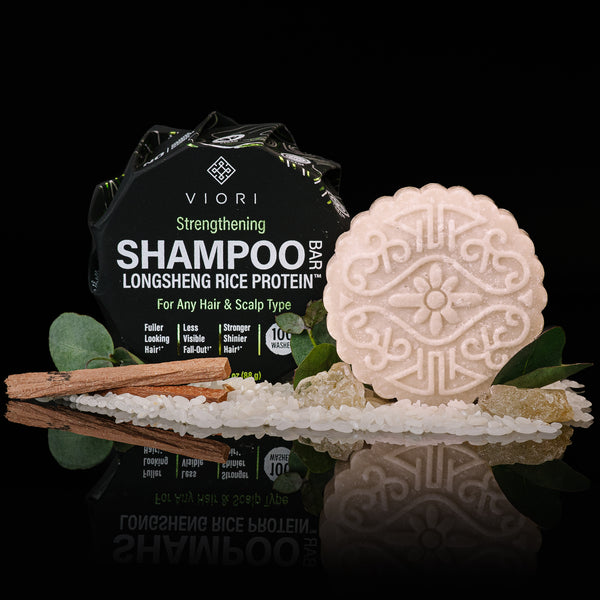
Black African soap, in many traditional forms, falls into the true soap category. That matters because hair is a keratin fiber with an outer surface (the cuticle) that reacts strongly to pH shifts and friction. Hair-cleanser bars like Viori, on the other hand, are formulated specifically for hair and scalp and use a gentle cleanser called Sodium Cocoyl Isethionate (SCI), which is often described as a very mild, effective cleansing agent.
The cuticle-level issue most people miss: pH changes everything
If there’s one concept that explains 80% of the “love it or hate it” experience, it’s pH.
The hair cuticle is like shingles on a roof. When the cuticle lies flat, hair looks shinier, tangles less, and feels smoother. When it lifts, hair gets rougher, more grabby, and more prone to snapping-especially in the mid-lengths and ends where hair is older and naturally more worn.
Many true soaps are alkaline by nature. Alkalinity can encourage the cuticle to lift, which can lead to:
- More friction between strands (tangles, knots, breakage)
- That “squeaky clean” feel (often mistaken for health, but frequently a sign of higher friction)
- Dryness on lengths even when the scalp feels clean
- Faster fading on color-treated hair (a lifted cuticle holds color less reliably)
Viori addresses this problem directly by keeping their formulas pH balanced. Their guidance notes that hair products generally perform best in a range of about pH 3.5-6.5, and that consistently high/alkaline products can contribute to dryness and damage over time.
The rarely discussed factor that decides your results: hard water
Now for the part that almost never gets enough attention online: water hardness.
If your water is high in minerals like calcium and magnesium, true soap can react with those minerals and form insoluble deposits-the same kind of film people notice on shower walls or tubs. On hair, that can show up as “mystery buildup” that doesn’t rinse away.
When soap deposits build on the hair shaft, you may notice:
- Hair feels waxy or coated but still somehow dry
- Loss of shine (light doesn’t reflect evenly off the strand)
- More snagging and tangling during rinsing and detangling
- Ends that feel stiff or more breakage-prone
This is why one person can use black African soap and rave about it, while another person with the same hair type swears it made their hair dull and rough. Sometimes the difference isn’t the hair-it’s the water.
Why it can feel great for oily roots and flakes (and why it can backfire)
Black African soap is often used as a “scalp rescue” cleanser because it can cut through sebum and heavy product film quickly. For some scalps-especially oily ones-that immediate degreasing effect feels like relief.
The risk is that if cleansing is too aggressive, the scalp can feel tight or over-dried. In some people, that triggers a rebound cycle where the scalp tries to compensate by producing more oil-so you end up washing more often, which keeps the cycle going.
For oilier scalps, Viori’s FAQ guidance often points toward Citrus Yao, noting that it’s commonly recommended for normal-to-oily hair types and that citric acid helps break down oil effectively. The goal is targeted cleansing without turning every wash into a cuticle-lifting event.
Hair has two “territories”: scalp care and length care
Here’s a professional mindset shift that instantly improves most wash routines: you’re not cleansing one surface-you’re managing two.
- Scalp: living skin, produces oil, influenced by barrier health and microbiome balance
- Lengths/ends: non-living fiber, accumulates damage, needs slip and protection
Many problems happen when a very “scalp-strong” cleanser is treated like a full-length shampoo. The scalp might feel fresh, but the lengths pay the price in tangles and roughness.
One practical tip Viori shares (especially for color-treated hair) is worth stealing for almost any bar routine: lather in your hands and apply with your hands rather than rubbing a bar directly on your hair. Less friction means less cuticle disturbance-and that’s one of the simplest ways to preserve softness and reduce breakage.
WHAT CUSTOMERS ARE SAYING
Real reviews for Hidden Waterfall Barra de Champú
If you’re going to try it anyway: a stylist’s safer testing method
If you’re determined to experiment with black African soap on hair, do it like a controlled trial-not like a full routine overhaul. The goal is to reduce the two biggest troublemakers: friction and deposit formation.
- Keep it on the scalp: focus cleansing where oil lives; let runoff cleanse the lengths lightly.
- Don’t rub the bar on your ends: friction + lifted cuticle is where tangles and snapping start.
- Condition every time: lengths need slip after strong cleansing-especially if your hair is curly, coily, porous, colored, or heat-styled.
- Watch for “hard water symptoms”: waxy feel, dullness, stiffness, and increased tangling can point to mineral/soap deposits.
- Don’t confuse squeaky with healthy: squeaky often means high friction, and friction is not hair’s friend.
A more hair-compatible path to the same goal: pH-balanced cleansing bars
Most people who reach for black African soap are chasing a very specific outcome: a clean scalp, less residue, and healthier-looking hair with a simpler routine. Those goals are solid-the chemistry just needs to match the material you’re cleaning.
Viori’s shampoo and conditioner bars are designed for hair and scalp, using SCI for gentle cleansing and maintaining a pH-balanced formula. Their bars include fermented Longsheng rice water in a balanced concentration (Viori notes that high concentrations of rice water can disrupt hair and scalp pH if used too often), plus supportive ingredients like hydrolyzed rice protein and nutrients associated with fermentation such as vitamin B8 (inositol) and vitamin B5 (panthenol).
And if you’re choosing by scalp type, Viori’s guidance is refreshingly practical:
- Normal to oily scalp: Citrus Yao is commonly recommended.
- Dry to normal scalp: Terrace Garden or Hidden Waterfall are often recommended.
- Sensitive scalp or fragrance concerns: Native Essence is the unscented option.
Final thoughts: it’s not “good or bad”-it’s chemistry
Black African soap on hair isn’t automatically a mistake, and it isn’t automatically a miracle. It’s a chemistry match problem: pH, friction, water hardness, and conditioning support determine whether your hair ends up glossy and bouncy-or dull, tangled, and stressed.
If you want that fresh, clean-scalp feeling while keeping your lengths soft and resilient, you’ll usually get the most consistent results from a cleanser built for hair fiber: a pH-balanced shampoo bar paired with a true conditioner for slip and protection-exactly what Viori is designed to do.


