
After two decades behind the chair and countless conversations with clients about their at-home routines, I've heard it all. But one trend keeps resurfacing: people washing their hair with body bar soap. You've probably seen the posts in natural beauty groups-glowing testimonials about how simple bar soap "transformed" someone's hair, followed by equally passionate warnings that it's a disaster waiting to happen.
So what's the truth? As someone who's spent twenty years studying both hair science and product formulation, I'm going to give you the nuanced answer you won't find in most articles. Because here's the thing: the reality is far more interesting than a simple yes or no.
First, Let's Talk About What "Soap" Actually Means
Before we dive deeper, we need to clear up a massive misconception that changes this entire conversation.
Most modern cleansing bars-the ones people are actually using on their hair-aren't technically soap at all. They're synthetic detergent bars, called "syndets" in the industry.
True soap is made through saponification: combining fats with lye to create an alkaline cleanser with a pH of 9-10. This high pH forcibly opens your hair cuticle, which is why your grandmother's bar soap left hair feeling like straw-stripped, tangled, and often coated with that dreaded soap scum (the chalky residue that forms when soap reacts with hard water minerals).
Syndet bars, on the other hand, are formulated with synthetic surfactants like sodium cocoyl isethionate-the exact same gentle cleanser found in many premium shampoo bars, including those made by Viori. These create a pH closer to 6-7, which is significantly less disruptive to hair's natural pH of 4.5-5.5.
This is critical: when most people say they're washing their hair with "soap," they're actually using a syndet bar that shares more DNA with modern shampoo bars than with traditional soap. The chemistry is fundamentally different.
Why It Actually "Works" (At First)
Here's where my professional experience intersects with chemistry in fascinating ways. Many people who switch to simple cleansing bars report genuine improvement in their hair-at least initially. I've watched this pattern unfold dozens of times, and what's happening isn't what most people think.
NOT SURE WHICH PRODUCT IS RIGHT FOR YOU?
TAKE THE QUIZTakes 30 seconds · 134,000+ customers matched
The "Detox" Phase That Isn't Really Detox
Conventional shampoos and conditioners deposit layers of silicones, polymers, and conditioning agents that create artificial smoothness. These coatings make hair feel soft, but they also prevent moisture from actually penetrating the hair shaft and can weigh down your natural texture.
When you strip these layers away with a basic cleanser, you remove years of buildup. For the first 2-4 weeks, people often experience:
- Dramatic volume increase (from removal of weighing agents)
- A squeaky-clean feeling (actual clean hair versus coated hair)
- Better texture (your natural curl or wave pattern returning)
- More "bounce" (hair moving freely without coating)
This mirrors what I see with any product transition-sulfate-free shampoos, natural products, clarifying treatments. Your hair isn't necessarily healthier; it's just uncoated. And people interpret this newfound lightness as improvement.
I've had clients come in raving about their new routine during this phase, convinced they've found the secret. And I understand why-the difference is real and immediate.
But then month three arrives.
The Problem That Reveals Itself Over Time
This is where my professional concern kicks in, because I've also seen what happens six months down the line.
Hair has a unique problem: it's dead protein fiber. Unlike your skin, which regenerates and heals, your hair cannot repair itself. Every bit of damage is permanent until you cut it off. This makes your daily care routine not just cosmetic-it's preservation.
The Cuticle Closure Crisis
Here's some basic hair science: your hair cuticle (the outer protective layer) opens during cleansing and needs to be deliberately closed and sealed afterward. This isn't optional-it's fundamental to healthy hair.
Professional formulations use ingredients specifically designed to do this. They contain positively-charged conditioning agents that bond to hair's negative charge, sealing cuticles and protecting the vulnerable inner cortex.
Body bars contain moisturizing ingredients, yes-but these are designed for skin, not hair. The difference matters enormously:
Skin:
- Living tissue that regenerates
- Produces its own protective oils
- Has a naturally higher pH (around 5.5)
- Can heal from damage
Hair:
- Dead protein that cannot regenerate
- Relies entirely on external protection
- Has a lower pH (4.5-5.5)
- Accumulates permanent damage
The moisturizers in body bars may provide temporary slip while you're washing, but they lack the specific chemical properties that make conditioners actually bond to damaged areas of your hair shaft and seal the cuticle.
What's Really Happening: The Three Phases
Let me walk you through what I've observed happening at the molecular level:
Phase 1: Weeks 1-4 (The Honeymoon)
- Buildup removal creates unprecedented volume
- Natural oil production normalizes after years of stripping shampoos
- Hair feels completely different-lighter, bouncier, "cleaner"
- You're convinced you've discovered the secret
Phase 2: Months 2-4 (The Plateau)
- Without proper cuticle sealing, your hair becomes increasingly porous
- Moisture escapes faster
- You notice you need to wash more frequently
- Protein structure begins degrading from repeated friction without protection
- Split ends accelerate because there's no protective seal
- You start adding leave-in products to compensate
Phase 3: Months 4+ (The Decline)
- Cumulative cuticle damage creates chronic dryness
- Hair becomes progressively more porous and prone to breakage
- If you color your hair, it fades noticeably faster
- Texture becomes coarser and harder to manage
- You're now using more products than when you started
I've watched this cycle repeat. The people who stick with body bars long-term are either those with very specific hair types (more on this shortly) or those who've begun supplementing with so many leave-in treatments that they've essentially recreated a full hair care routine anyway.
The Hidden Variable No One Talks About: Your Water
One of the most overlooked factors in the body-bar-for-hair phenomenon is something you might never consider: your water chemistry.
In soft water areas, basic cleansing bars perform significantly better because:
- Surfactants rinse completely without mineral interference
- Minimal residue formation
- Hair cuticles lie flatter without mineral deposits
In hard water areas, even gentle syndet formulas leave residue that accumulates over time, creating that waxy, dull buildup that users eventually complain about.
This explains the wildly contradictory experiences you see online. Someone in Seattle (notoriously soft water) might have genuine success, while someone in Phoenix (extremely hard water) experiences disaster with the identical routine.
Water chemistry is the hidden variable no one accounts for.
I always ask about water hardness when clients describe their home routine, because it fundamentally changes my recommendations.
The Protein Problem: What Your Hair Is Starving For
Here's something rarely addressed in natural hair care communities: your hair needs protein, not just moisture.
Hair is approximately 91% protein (specifically keratin). When the cuticle is damaged-through heat styling, chemical processing, or even just daily friction-microscopic gaps form in this protein structure.
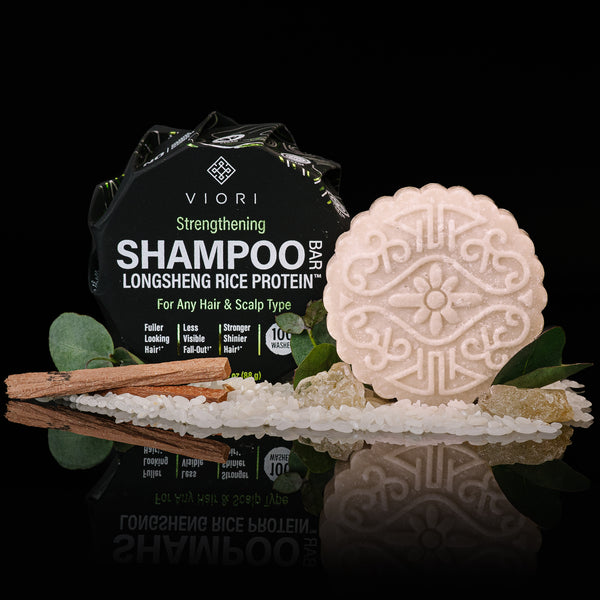
Quality hair care products contain hydrolyzed proteins (broken down into tiny molecules) that temporarily fill these gaps. Viori bars, for example, incorporate hydrolyzed rice protein, which provides amino acids that:
- Strengthen compromised hair structure
- Improve elasticity and resilience
- Reduce hygroscopic swelling (the expansion and contraction that causes damage)
- Help hair retain essential moisture
Body bars contain no significant protein components because skin doesn't need them. Over time, hair washed exclusively with body bars becomes protein-deficient, leading to:
- Excessive elasticity when wet (overstretching before breaking)
- Limp, lifeless texture that won't hold style
- The "wet noodle" effect-hair that feels mushy when wet
- Accelerated mechanical damage from normal styling
In the salon, I can identify protein-deficient hair instantly. It has a characteristic limpness and stretches alarmingly when wet. Once hair reaches this state, it requires intensive protein treatments to restore any semblance of strength.
The pH Journey Your Hair Takes
Let me walk you through what happens during a body bar wash from a pH perspective, because this reveals a lot about long-term effects:
Body Bar Routine:
- Pre-wash: Hair at natural pH 4.5-5.5, cuticles relatively closed
- During cleansing: pH rises to 6.5-7, cuticles open
- Post-rinse: Without acidic conditioner, pH remains elevated
- Air drying: pH very slowly returns to normal, but cuticles remain partially raised
Proper Shampoo + Conditioner Routine:
- Pre-wash: Hair at pH 4.5-5.5
- During cleansing: pH rises to 5.5-6.5 (gentler elevation)
- Conditioning: pH drops to 3.5-4.5 (acidic conditioner closes cuticles)
- Post-rinse: Cuticles sealed, protective layer in place
- Air drying: Hair maintains optimal pH and structure
Every time you wash without proper pH rebalancing, your cuticles spend hours partially elevated. That's hours of vulnerability to friction, moisture loss, and environmental damage.
Multiply this by 2-3 washes per week over months, and the cumulative effect becomes significant.
When Body Bars Might Actually Be Acceptable
Professional honesty requires me to acknowledge that for a very specific subset of people, body bars may not cause immediate disaster.
Potentially Acceptable For:
- Very short hair (less than 2 inches) where damage doesn't have time to accumulate before being cut
- Naturally low-porosity, virgin hair (never chemically treated) with robust cuticle structure
- People in soft water environments
- Those who use separate leave-in conditioning treatments
- Individuals with naturally high sebum production who need daily cleansing
I have exactly two clients who successfully use simplified cleansing bars long-term. Both have pixie cuts that they trim every 4-6 weeks, virgin hair, and use conditioning oils afterward. Their hair literally doesn't exist long enough to show cumulative damage.
WHAT CUSTOMERS ARE SAYING
Real reviews for Hidden Waterfall Barra de Champú
But even for them, it's a compromise rather than an optimal choice.
The Cost Analysis Everyone Gets Wrong
I frequently hear: "Body bars are so much cheaper than expensive shampoo bars!"
Let's actually do the math:
Body Bar Approach:
- Basic cleansing bar: $1-2
- Lasts approximately 2-3 weeks for hair washing
- Annual cost: $26-52
- Required supplemental leave-in conditioner: $96-144/year
- Deep conditioning treatments for damage control: $180-240/year
- More frequent trims to remove split ends: $240-480/year
- Total annual cost: $542-916
Quality Shampoo + Conditioner Bar Approach:
- Shampoo bar (like Viori): $12-15
- Conditioner bar: $12-15
- Each lasts 60-80 washes (2-3 months for most users)
- Annual cost for both: $96-180
- Reduced need for additional treatments: saves $100/year
- Better hair health means less frequent cuts: saves $120/year
- Total annual cost: $96-180 (with additional savings)
When you account for all the supplemental products and damage control required with body bars, the math actually favors properly formulated products.
Plus, there's a cost you can't measure in dollars: the cumulative damage. Hair grows approximately 6 inches per year. If you're causing damage faster than it grows, you're stuck in a cycle of perpetually damaged hair.
What Professional Products Provide That Body Bars Cannot
As someone who has worked extensively with hair care chemistry, I can identify specific functional ingredients that body bars fundamentally lack:
1. Panthenol (Pro-Vitamin B5)
- Penetrates the hair shaft (not just coats it)
- Improves moisture retention from the inside
- Adds flexibility without weighing hair down
- Present in professional formulations; absent in body bars
2. Hydrolyzed Proteins
- Fill structural gaps in damaged cuticles
- Provide temporary strength until next wash
- Critical for chemically-treated or heat-styled hair
- Not included in body bar formulations
3. Cationic Conditioning Agents
- Bond specifically to damaged (negatively-charged) areas
- Provide targeted repair where needed most
- Create lasting smoothness and protection
- Body bar moisturizers don't function this way
4. pH-Balancing Systems
- Gradually lower pH after cleansing
- Ensure cuticle closure
- Protect color treatments and chemical processes
- Not part of body care formulation philosophy


