
“Carbonated acid shampoo” is one of those phrases that sounds like it was invented to grab attention: bubbles, tingling, instant shine, scalp “detox.” And to be fair, some of it can feel impressive in the shower.
But the real story isn’t the fizz you can see. The genuinely interesting part is what carbonation and acidity can do in the very short window that shampoo is actually on your hair-usually a minute or two. That’s when oils are emulsified, the cuticle surface swells or smooths, and your scalp barrier either feels comfortable… or starts complaining.
Let’s break this down like a hair professional would: what “carbonated + acidic” can realistically mean, where it can help, where it can backfire, and how to get the benefits people are chasing without irritating your scalp or roughing up your ends.
What “carbonated acid shampoo” usually means
When you see the term, it typically points to three concepts working together:
NOT SURE WHICH PRODUCT IS RIGHT FOR YOU?
TAKE THE QUIZTakes 30 seconds · 134,000+ customers matched
- Carbonation (dissolved CO2)
- An acidic system (a lower pH environment than many traditional cleansers)
- A surfactant system (the true cleansing ingredients that lift oil and grime)
Here’s the chemistry in plain language: when CO2 dissolves in water, a small portion becomes carbonic acid. It’s a weak acid, and it’s also temporary-as soon as the product is exposed to air and agitation, CO2 wants to escape. So the “carbonated” effect is often a quick moment at dispensing and early application, not a long-lasting treatment that keeps working for hours.
The overlooked angle: carbonation is more about physics than “cleaning power”
Most online explanations stop at “it tingles” or “it feels cleaner.” That’s not really the point. The more useful question is: can carbonation change how efficiently shampoo does its job during the short time it’s on your head?
1) Micro-mixing: bubbles can help product move where it needs to go
Your scalp and hair aren’t smooth glass surfaces. They’re textured, layered, and coated in a mix of sebum, sweat salts, pollutants, and styling residue. When CO2 comes out of solution, it can create tiny currents and microbubbles that help disrupt the “still water” layer sitting on the surface. In practical terms, that can mean:
- Faster spreading through dense hair
- Better contact with oily areas at the scalp
- A more even cleanse without you needing to scrub harder
This is why the fizz can feel like it’s “doing something,” even though the actual cleansing still comes from surfactants.
2) Micro pH shifts at the surface (yes, that can matter)
Here’s a nuance people almost never talk about: even if a shampoo has a set pH in the bottle, carbonation can create brief, localized pH changes at the hair surface as CO2 equilibrates and escapes. Those micro-shifts can influence:
- Cuticle behavior (how much the surface lifts or lays down)
- Surface charge (which affects friction, frizz, and “slip”)
- Deposition (how well conditioning ingredients cling to hair)
Is it dramatic? Usually not. But it’s one of the more plausible ways carbonation could contribute to a smoother feel-especially if the rest of the formula is well designed.
Acidic doesn’t automatically mean gentle (pH is only one part of the story)
Hair behaves best within a hair-friendly pH range. Many professionals consider roughly pH 3.5-6.5 a safe zone for most hair products. When formulas lean too alkaline (often around pH 8+), hair can swell more, the cuticle can lift, friction increases, and over time hair may look dull and feel rough.
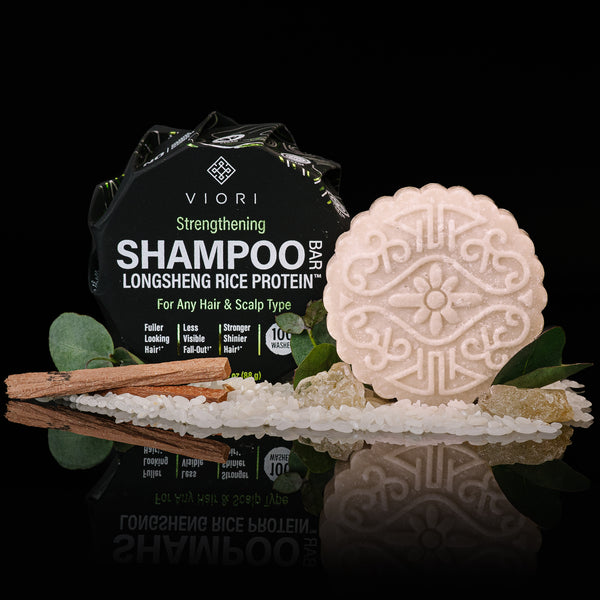
This is why pH-balanced haircare matters. For example, Viori positions their bars as pH balanced, which helps support consistent hair feel and long-term manageability rather than chasing that “squeaky clean” moment that can lead to dryness later.
What acidity can do well
- Help the cuticle lie flatter, which can boost shine
- Reduce friction, improving combability and reducing tangles
- Support smoother styling and less “puffiness,” especially on porous hair
Where acidity can go wrong
If your scalp barrier is already irritated-think over-washing, aggressive scratching, recent chemical services, or chronic sensitivity-an acidic system can feel stingy or tight. Add fragrance or strong actives, and that “refreshing tingle” can turn into “my scalp is mad at me.”
Foam and fizz aren’t the cleanser-surfactants are
This is the truth that clears up most of the confusion: bubbles don’t clean hair. Surfactants do.
Carbonation can change feel and spread, but the actual cleansing comes from the surfactant system lifting oils and debris so they rinse away. Viori shampoo bars use Sodium Cocoyl Isethionate (SCI), a cleanser known in the industry for being mild while still giving satisfying lather. If you’re drawn to the “acid + gentle cleanse” idea, the cleansing system matters far more than the novelty of fizz.
The “tingle” factor: sensation isn’t proof of results
Carbonated products often create a noticeable sensation. That can come from CO2 release, acidity, or even fragrance components. It can feel energizing, but it’s not evidence of:
- Improved hair growth
- Follicle “activation”
- Dandruff cure-all performance
If tingling is strong, persistent, or paired with redness, that’s your sign to step back and think scalp barrier first.
A practical perk people miss: acid systems and hard water behavior
If you live in a hard water area, minerals can contribute to a coated feeling, dullness, and that frustrating “my hair never feels clean” cycle. An acid-leaning, pH-balanced wash environment can sometimes help hair feel smoother during rinse-out and reduce the grippy texture that mineral-heavy water can exaggerate.
That said, if you’re dealing with serious buildup (minerals, heavy styling products, or dense oils), carbonation isn’t a reset button. You still need a smart cleansing routine and good conditioning habits.
Color-treated hair: the real enemy is friction
When people worry about fading, they often focus only on ingredients. In the salon, I see another culprit constantly: mechanical abrasion.
WHAT CUSTOMERS ARE SAYING
Real reviews for Hidden Waterfall Barra de Champú
Any shampoo applied aggressively-especially in bar form-can add friction, lift the cuticle, and encourage color to slip out faster if the color isn’t truly permanent. One of the best techniques (and one Viori recommends) is simple:
- Build lather in your hands first, then apply to hair with your palms and fingers rather than rubbing a bar directly on the head.
You’ll get the cleanse with less surface wear-and-tear, which is exactly what color-treated and fragile hair needs.
So, is carbonated acid shampoo worth trying?
It can be-if you’re clear about what it is and what it isn’t.
When it can be a good fit
- You like the sensory experience and it encourages gentler washing
- You want better spread through thick hair without extra scrubbing
- The formula is pH balanced and built on a mild cleanser
- You pair it with a solid conditioning step to restore slip
When it tends to disappoint
- You expect fizz to replace good formulation
- Your scalp is reactive or already inflamed
- The cleanser is too strong and the acidity can’t “save” the moisture balance
How to get the benefits people want (without upsetting your scalp)
If your goals are shine, smoothness, frizz control, and a comfortable scalp, the best routine is usually the least dramatic one. Focus on the fundamentals:
- Choose a pH-balanced cleanser that doesn’t leave your scalp tight.
- Use a mild surfactant system so you don’t have to overcompensate with heavy conditioners.
- Condition intentionally to restore slip and reduce friction after cleansing.
- Reduce rubbing and scrubbing-especially on color-treated hair. Lather first, then apply.
- Give your hair time. Real change often shows up over consistent use, not one shower.
Bottom line
Carbonated acid shampoo isn’t magic, and it isn’t automatically nonsense either. The fizz is best understood as a brief physical effect that can improve spread and sensation. The results you care about-softness, shine, frizz control, scalp comfort-still come down to pH balance, a thoughtfully chosen cleanser, proper conditioning, and low-friction technique.
If you want a hair-friendly approach that’s built around those fundamentals, Viori’s pH-balanced shampoo and conditioner bars (with a mild cleanser and conditioning ingredients designed for slip) match the parts of this trend that actually matter-no theatrics required.


