
If you’ve ever searched for a “dermatitis shampoo,” you’ve probably been handed the same generic checklist: avoid harsh cleansers, look for an anti-dandruff ingredient, skip fragrance. Helpful? Sometimes. Complete? Not even close.
In practice, scalp dermatitis is less about finding a magical bottle (or bar) and more about understanding what your scalp is reacting to. The most useful shift is this: a dermatitis-friendly shampoo routine is designed to reduce cleansing stress, maintain a stable pH, and limit mechanical irritation so the scalp barrier can finally settle down.
Why “dermatitis” shampoo advice often fails
One reason people get stuck in a cycle of switching products is simple: dermatitis isn’t one condition. It’s a symptom pattern with different root causes, and those causes don’t all respond to the same shampoo strategy.
NOT SURE WHICH PRODUCT IS RIGHT FOR YOU?
TAKE THE QUIZTakes 30 seconds · 134,000+ customers matched
The common scalp dermatitis patterns (and why they matter)
- Irritant contact dermatitis: burning or stinging, tightness right after washing, dry/powdery flaking. Often triggered by over-cleansing, hot water, or aggressive scrubbing.
- Allergic contact dermatitis: itch and redness that can show up hours to a day later. Fragrance can be a trigger for some people, but sensitivities are individual.
- Seborrheic dermatitis: greasier scale, itch, sometimes odor; tends to track with oil levels and the scalp’s microbial environment.
- Atopic-leaning scalps: highly reactive, dry-prone skin that flares easily from detergent stress and friction.
Here’s the key point: what “works” for a greasy, oil-driven scalp can absolutely aggravate a dry, barrier-fragile scalp. A smart routine starts by matching the approach to your scalp’s behavior.
The real job of dermatitis shampoo: controlling surfactant stress
Most articles talk about actives. Far fewer explain what I consider the main event: surfactant aggression. Surfactants are the cleansing agents that break up oil and lift debris. When the system is too strong (or used too intensely), it can keep dermatitis active.
Repeated over-cleansing can disrupt the scalp in a few predictable ways:
- Lipid extraction (pulling out the protective “mortar” between skin cells)
- Increased moisture loss (tightness and that “itchy-clean” feeling)
- Greater irritant penetration (a compromised barrier reacts faster and harder)
- Inflammation signaling (stressed skin cells are loud communicators)
This is why someone can switch shampoos ten times and still feel miserable: the issue isn’t always the product label, it’s the total cleansing load-strength, frequency, water temperature, contact time, and friction.
Where Viori fits into a dermatitis-conscious routine
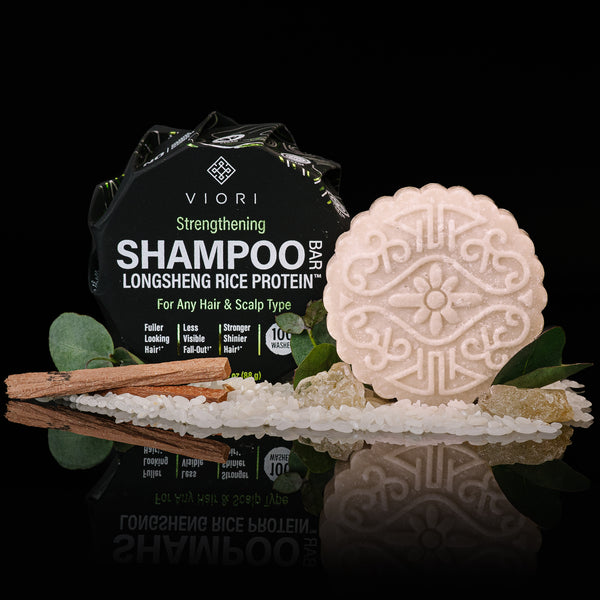
Viori shampoo bars use Sodium Cocoyl Isethionate (SCI) as the cleanser. In salon terms, that’s a notably mild cleansing choice when compared to harsher detergent systems, especially when you apply it correctly and don’t overwork the scalp.
pH isn’t trivia; it’s flare control
If your scalp is reactive, pH matters more than most people realize. Hair and scalp generally do best in a mildly acidic range. When cleansing skews too alkaline, you can see a domino effect: the hair cuticle lifts (more tangling), friction increases (more irritation), and the scalp barrier struggles to regulate itself.
Viori emphasizes that their bars are pH balanced. For dermatitis-prone scalps, that’s not a marketing detail-it can be the difference between “clean” and “clean but angry.”
The deposit-layer paradox: conditioning can soothe… or backfire
When the scalp is inflamed, reducing friction is crucial. Conditioning helps because it improves slip and lowers mechanical stress while detangling. But there’s a nuance people miss: too much deposit at the scalp can feel heavy, trap sweat and oil, and sometimes worsen itch-particularly for oilier, seborrheic-leaning scalps.
Viori conditioner bars include conditioning and emollient ingredients (including behentrimonium methosulfate, a conditioning compound used in haircare for slip and manageability). The winning move is less about the ingredient list and more about placement:
- Start conditioning mid-length to ends.
- If your scalp is extremely dry, you can experiment with minimal scalp contact, but watch for heaviness or itch rebound.
The most overlooked factor: how you physically wash
This is the part that rarely gets the spotlight, but it’s the game-changer: dermatitis is inflamed skin. Inflamed skin does not want friction.
Bar products can tempt people into rubbing directly on the scalp. For dermatitis-prone users, that can create “hot spots” of over-cleansing and mechanical irritation. Viori’s guidance is especially relevant here: lather in your hands and apply with your fingers rather than dragging the bar over the scalp.
A gentle, professional wash method (especially helpful with bars)
- Soak your hair thoroughly. Water is your first dilution step.
- Create a rich lather in your palms.
- Press the lather into the scalp with press-and-release motions instead of aggressive scrubbing.
- Rinse extremely well. Residual cleanser on reactive skin can keep itch going.
- Condition primarily from mid-length to ends and detangle gently.
Rice-water-inspired care: the nuance most people skip
Rice water gets talked about like a miracle, but concentration and pH are where people get into trouble. Viori uses Longsheng rice water™ in a controlled, hair-friendly way and notes that high concentrations of rice water used too often can disrupt the scalp’s pH balance.
In practical terms, rice-derived components like hydrolyzed rice protein and fermentation-associated nutrients such as inositol (Vitamin B8) and panthenol (Vitamin B5) can support smoother feel, improved slip, and the appearance of stronger, shinier hair. The benefit for dermatitis routines is indirect but important: less friction, less stress, better comfort.
WHAT CUSTOMERS ARE SAYING
Real reviews for Hidden Waterfall Barra de Champú
Choosing the right Viori bar based on scalp behavior
Instead of choosing by hype, choose by how your scalp behaves between washes.
If your scalp burns or stings easily (barrier-fragile)
- Prioritize: minimal triggers, gentle cleansing, low friction technique.
- Consider: Viori Native Essence (unscented) to reduce fragrance exposure.
- Tip: patch test first if you’re actively flaring.
If your scalp is oily with greasy scale (often seborrheic-leaning)
- Prioritize: effective oil control without stripping (to avoid rebound oil/itch).
- Consider: Viori Citrus Yao, which is commonly recommended for normal-to-oily scalp types.
- Tip: if your ends are dry, keep conditioner focused on the lengths and ends.
If your scalp is dry, tight, and flaky
- Prioritize: reduce cleansing intensity, support moisture retention, avoid hot water.
- Consider: Viori Terrace Garden or Viori Native Essence for dry-to-normal scalp types.
How often should you wash when you have dermatitis?
There’s no single perfect schedule. What matters is whether your itch pattern points toward over-cleansing or oil buildup. A simple way to read your scalp is to notice when discomfort peaks:
- Itch right after washing often signals too much cleansing stress, too-hot water, or friction.
- Itch that builds on day 2-3 often signals oil/buildup dynamics.
If you’re switching to a new routine, give it time to be fairly judged. Viori commonly recommends allowing 2-3 months for best evaluation, since scalp barrier recovery and oil normalization aren’t instant.
A quick safety note
If your scalp is cracked, weeping, painful, or you suspect an infection, it’s time for medical guidance. And if you have a history of sensitivities, a patch test is always wise before full use.
The bottom line
The best “dermatitis shampoo” routine isn’t just about what cleanses-it’s about what calms. When you keep the system gentle, pH-supportive, and low-friction, you give your scalp a chance to rebuild its barrier and stop overreacting. Viori can be a strong fit within that approach, especially when you match the bar to your scalp type and apply it with a scalp-friendly technique.


