
Every few months, the same hair hack makes the rounds again: “Just wash it with dish soap.” It’s usually suggested when someone’s dealing with oily roots, heavy buildup, or that stubborn, coated feeling that won’t rinse away. And I’ll be honest-on the first wash, it can feel like a miracle. Big foam. Super clean. That unmistakable squeak.
But here’s what rarely gets talked about: that squeaky-clean feeling is often your hair telling you it’s in a high-friction state, not a “healthy” state. Dish soap is engineered to break down greasy food oils on hard surfaces, not to preserve the delicate lipid layer that helps hair stay smooth, shiny, and resilient. Once you understand the science, the pattern makes sense: immediate clarity followed by weeks of roughness, tangles, frizz, and breakage.
Why Dish Soap Seems to Work (At First)
Dish soap is built for maximum degreasing. It’s meant to grab onto oils, lift them off a surface, suspend the mess, and rinse it away fast. Hair does have oil (sebum), and hair does collect residue (styling product, pollution, minerals from hard water), so the overlap is real.
NOT SURE WHICH PRODUCT IS RIGHT FOR YOU?
TAKE THE QUIZTakes 30 seconds · 134,000+ customers matched
The problem is that hair isn’t a plate. It’s a layered fiber with a cuticle that can lift, wear down, and snag. Your scalp is living skin with a protective barrier. A cleanser that’s perfect for cookware can be wildly out of balance for hair and scalp-especially if you repeat it.
The Part Most People Miss: Hair Has Its Own “Slip System”
Healthy hair isn’t just clean-it’s lubricated in a very specific way. Hair fibers have a naturally water-repelling surface lipid layer (often discussed in cosmetic science as the F-layer) that helps strands glide past each other. This is one of the biggest reasons your hair can feel soft, detangle easily, and reflect light.
When a cleanser is too aggressive, it doesn’t only remove excess scalp oil and product film. It can also strip away some of what keeps the hair’s surface low-friction. That’s when people start describing their hair as “straw-like,” “poofy,” or “weirdly dry even though it’s clean.”
What over-cleansing often looks like in real life
- “Squeaky” hair that tangles the moment you rinse
- Ends that suddenly feel rough, thin, or brittle
- More frizz even with your usual styling routine
- Knots that tighten and take longer to detangle
- Breakage that shows up gradually (not always immediately)
That “Squeak” Isn’t a Compliment-It’s Friction
In the salon, I pay close attention to how hair behaves under the hands: how it combs, how it clumps, how it responds to water, and whether it glides or grabs. The squeak people love after dish soap is usually a sign of increased surface friction.
And friction is where quiet damage begins. When strands grip each other, tangles form faster. When tangles form, you use more force. That force concentrates on weak points-often the mid-lengths and ends, or any lightened/color-treated sections. Over time, that can mean less shine, less smoothness, and less length retention.
pH and Cuticle Behavior: Why Balance Matters
Hair doesn’t just respond to what cleans it-it responds to what a cleanser leaves behind. One factor that matters a lot is pH. Hair products typically perform best in a mildly acidic range because it supports a smoother cuticle and better manageability. When products lean too alkaline, the cuticle can lift, hair can swell, and the surface can feel rougher.
Viori highlights this point in their education: hair products are best kept within a hair-friendly pH range (roughly 3.5-6.5). That’s not marketing fluff-it’s basic hair science. A balanced formula helps cleansing happen without leaving the cuticle in a “raised and vulnerable” position.
The Scalp Side of the Story: Over-Cleaning Can Trigger More Oil
If dish soap leaves your scalp feeling tight, itchy, or “too clean,” that’s your skin barrier signaling stress. Your scalp’s barrier is meant to hold onto moisture and maintain a stable environment. When it gets repeatedly stripped, some people end up in a frustrating loop: dryness and irritation followed by reactive oiliness.
Not everyone experiences rebound oil, but it’s common enough that I never consider dish soap a sustainable routine-especially for anyone already dealing with flakes, sensitivity, or an oily scalp that seems to “come back” faster than it should.
Color-Treated Hair: The Risk Isn’t Just Fading
Most people worry dish soap will strip color immediately. Sometimes the bigger issue is what happens next: hair is left rougher and more prone to tangling, which leads to more brushing, more friction, and more cuticle wear. That cuticle wear is one of the fastest ways to make color look dull and washed out.
Viori makes an important technique recommendation for bar formats that applies here, too: for less friction (and better color preservation), build lather in your hands and apply with your palms instead of rubbing a bar directly on your head. Less abrasion means a calmer cuticle-and calmer cuticles hold onto color and shine better.
What to Do Instead: Get the “Reset Wash” Without the Fallout
If your goal is a true reset-removing oil, residue, or that coated feeling-use a cleanser designed for hair and then follow through with conditioning. That’s the difference between a quick strip and a real refresh.
WHAT CUSTOMERS ARE SAYING
Real reviews for Hidden Waterfall Barra de Champú
A practical reset strategy (stylist-approved)
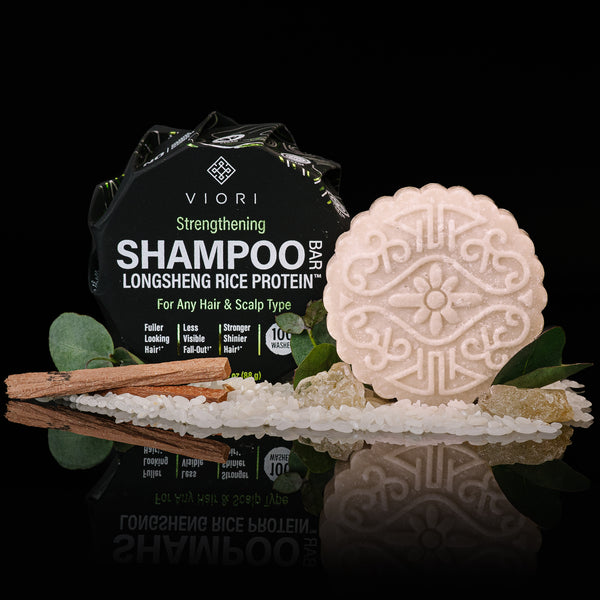
- Choose a hair cleanser made for hair behavior. Viori shampoo bars are built around Sodium Cocoyl Isethionate (SCI), a gentle cleanser often nicknamed “baby foam” in the industry because it’s effective without being as aggressive as harsher cleansers.
- Keep friction low. Wet hair thoroughly, create lather in your hands, and work it through the scalp with your fingertips. Let the suds rinse through the lengths instead of scrubbing the ends.
- Condition every time you reset. Viori explains conditioner well: conditioning agents are positively charged, so they cling to freshly cleansed hair and help restore slip and protection while your natural oils replenish.
- Give your routine time to stabilize. Hair and scalp often need consistency to settle. Viori commonly recommends allowing 2-3 months to fairly assess results-especially if your hair has been through a lot.
How to Pick a Viori Bar Based on Scalp Needs
One detail I appreciate about Viori is that the bars are positioned by scalp type rather than pushing a one-size-fits-all answer. In practice, this matters-because oily roots and dry ends need a different approach than dry scalp and coarse hair.
- Citrus Yao: a great match for normal-to-oily scalps (it’s often recommended when oil control is the priority)
- Terrace Garden: typically favored for normal-to-dry scalps when moisture is the goal
- Hidden Waterfall: a flexible option many people enjoy across hair types, especially when you want balance
- Native Essence: unscented and often the gentlest choice for sensitive scalps or fragrance sensitivities
If your scalp gets oily but your ends are dry, a split approach can be a game changer: use a more oil-managing shampoo choice for the scalp, then a more moisturizing conditioner focus on mid-lengths and ends.
The Bottom Line
Dish soap can make hair feel dramatically clean because it’s designed to remove oils aggressively. But hair health isn’t just about removing oil-it’s about what happens to the cuticle, the lipid layer, the scalp barrier, and the friction level after the rinse.
If you want that fresh, reset feeling without signing up for tangles and breakage later, reach for a pH-balanced hair cleanser, keep your technique gentle, and always follow with conditioner. That’s exactly where a routine like Viori shampoo and conditioner bars tends to shine: a clean scalp, smoother lengths, and a finish that feels like hair-not like a stripped surface.


