
Let's be honest, after twenty years behind the chair, I've seen every haircare trend come and go. But the buzz around shampoo and conditioner bars? It's got staying power. This isn't just about ditching plastic-though that's a fantastic perk. It's a complete reinvention of how we cleanse and condition, marrying ancient wisdom with some seriously smart science. So, let's move past the basics and talk about what makes these little bars a big deal for your hair's health.
NOT SURE WHICH PRODUCT IS RIGHT FOR YOU?
TAKE THE QUIZTakes 30 seconds · 134,000+ customers matched
It's Not Just Soap: The Science of Solid State
Think of a great shampoo bar as a concentrated powerhouse, not a dehydrated version of your old liquid. The real magic is in the reformulation. To create a solid that cleanses effectively, you need a gentle yet efficient surfactant system. Many top-tier bars use a coconut-derived cleanser known for its mild, creamy lather that won't strip your scalp's natural, protective acid mantle. Keeping your scalp's pH balanced is the secret to healthy hair, and the right bar is engineered to do just that.
And what holds it all together? Often, it's vegetable-based fatty alcohols. Before you balk, know this: these are the good guys. They provide structure while acting as emollients, smoothing the hair cuticle and locking in moisture from the very first wash.
The Lather Lowdown: Why Conditioner Bars Play Different
This is the biggest "aha!" moment for my clients. Your shampoo and conditioner bars have completely different jobs, and their lather-or lack thereof-proves it.
- The Shampoo Bar is your cleanser. Its job is to create a lather that lifts away oil and grime, gently opening the hair cuticle. A good, rich foam here is a sign it's working.
- The Conditioner Bar is your sealant. Its mission is to smooth, detangle, and hydrate. It contains positively charged ingredients that cling to your hair, sealing the cuticle shut. Its texture is a luxurious, creamy paste-a direct hit of butters and oils. If it sudsed, it wouldn't be doing its job!
Your Scent is Secretly Smart
Here's an insider tip most people miss: fragrance can be functional. A zesty citrus scent often contains natural clarifying properties, ideal for balancing oily scalps. A warm, vanilla or floral scent typically pairs with deeply hydrating ingredients for dry hair. And an unscented bar is a purist's formula, meticulously crafted for sensitive skin. Your nose might be choosing more than just a pleasant aroma.
Pro Tips: How to Use Bars Like a Stylist
The format is different, so your technique should adapt. Here’s how I advise my clients:
WHAT CUSTOMERS ARE SAYING
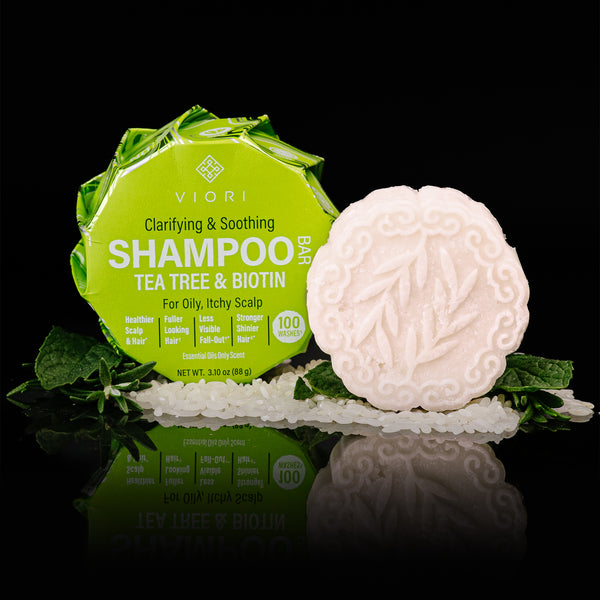
Real reviews for Tea Tree Shampoo Bar – Oily & Itchy Scalp | VIORI
- For Color-Treated Hair: Protect your investment. Lather the shampoo bar in your palms first, then apply the foam to your scalp. This minimizes friction on your delicate strands.
- For Fine or Oily Hair: Focus shampoo on the roots. Apply conditioner only from the mid-lengths to ends. The concentrated formula means a little is truly plenty.
- For Curly or Dry Hair: Embrace the direct moisture! Glide that creamy conditioner emulsion over your strands. For a treat, leave it on for 3-5 minutes as a quick deep-conditioning mask.
The Heart of the Ritual: More Than Just a Bar
The story reaches a deeper level with a brand like Viori, which is built around a specific, ancient tradition. The key is their use of fermented Longsheng rice water. This isn't a simple rinse; fermentation unlocks nutrients like inositol to strengthen hair from within and panthenol to bind in moisture. The brilliance is stabilizing this potent, ancient ritual into a gentle, pH-balanced bar you can use every day. It’s a perfect example of how looking back can give us the most advanced solutions for healthy hair.
Making the switch is a conscious choice. It asks you to relearn a simple ritual, but the reward is potent, sustainable, and incredibly effective hair care. Trust me, your hair will feel the difference.


