
Apple cider vinegar has been my go-to recommendation for salon clients for nearly two decades. When someone walks in with dull, lifeless hair weighed down by product buildup, I know exactly what to suggest-a simple ACV rinse. The transformation is often stunning. That sharp, clarifying rinse leaves hair squeaky-clean and ridiculously shiny in ways that expensive salon treatments sometimes can't match.
So when ACV shampoo bars started popping up everywhere, promising all those beloved benefits in a convenient, eco-friendly package, I was genuinely excited. Finally, the magic of apple cider vinegar without the hassle of measuring and mixing!
But here's where my excitement hit a wall. After spending twenty years in this industry, I've developed a habit that's both a blessing and a curse-I can't help but look past the marketing and straight into the chemistry. And what I discovered about ACV shampoo bars stopped me in my tracks: the very process of turning liquid ACV into a solid bar fundamentally changes or eliminates the compounds that make apple cider vinegar work in the first place.
This is the paradox nobody's talking about. Let me walk you through what's really happening when you lather up that ACV bar.
What Makes Apple Cider Vinegar Actually Work for Hair
Before we get into why solid bars are problematic, let's talk about what makes liquid ACV so effective.
Traditional apple cider vinegar contains several key components that work wonders for hair:
Acetic acid at 4-6% concentration gives ACV that characteristic tang and a pH around 2.5-3.5. This acidity is everything-it's what closes your hair cuticle after shampooing, creating that smooth, reflective finish you can actually see and feel.
Alpha-hydroxy acids gently exfoliate your scalp, lifting away dead skin cells and stubborn product residue without harsh scrubbing.
NOT SURE WHICH PRODUCT IS RIGHT FOR YOU?
TAKE THE QUIZTakes 30 seconds · 134,000+ customers matched
Polyphenolic compounds like quercetin and catechin act as antioxidants, protecting your hair from environmental damage and oxidative stress.
"The Mother"-that cloudy, slightly off-putting stuff floating in raw, unfiltered ACV-contains beneficial bacteria (primarily Acetobacter) and cellulose strands. This is where the probiotic magic happens.
When you mix a traditional ACV rinse (typically one part vinegar to four parts water), you're harnessing all these components in their active, living form. The diluted solution maintains enough acidity to make a real difference without burning your scalp.
Now here's where things fall apart when we try to make this into a bar.
The Chemistry Problem Nobody Wants to Talk About
Creating a shampoo bar isn't like freezing liquid shampoo into a popsicle. The chemistry required to make a solid product fundamentally alters delicate ingredients-especially something as temperamental as apple cider vinegar.
The Neutralization Problem
This is the elephant in the room. You cannot combine highly acidic liquid ACV (pH 2.5-3.5) with alkaline cleansing agents in a bar formula without triggering a chemical reaction. It's impossible.
Most shampoo bars use surfactants like Sodium Cocoyl Isethionate or similar compounds to create lather. These ingredients are naturally alkaline. When you mix acids with alkaline substances, they neutralize each other. This isn't marketing talk-it's basic chemistry you learned in high school.
The final pH of most ACV shampoo bars lands somewhere between 4.5 and 6.5. This is fine for hair care and necessary to prevent scalp irritation, but it means the product is no longer truly acidic like pure ACV. That dramatic pH-shifting effect that makes traditional ACV rinses so effective? It's been chemically muted.
The Heat Problem
Manufacturing solid bars typically requires heating ingredients to 160-180°F to melt butters, bind components, and create that solid structure. This heat creates serious problems for ACV:
- The live bacterial cultures in "the Mother" die instantly at these temperatures. They're literally cooked away, eliminating any probiotic benefits.
- Heat-sensitive polyphenols degrade or transform into different compounds with potentially different properties.
- Acetic acid concentration changes through evaporation during heating.
- When acetic acid meets alkaline ingredients at high temperatures, it converts to acetate salts-chemically different compounds that don't function like the original acid.
The Water Dilemma
Here's another fundamental issue: ACV is approximately 95% water. Solid bars must have minimal water content to maintain their structure and prevent bacterial growth.
This forces manufacturers to either:
- Use ACV in very small quantities (often less than 5% of the total formula)
- Evaporate it down to a concentrate, losing volatile compounds in the process
- Use ACV powder that's been spray-dried-yet another processing step that transforms the original material
Each approach involves significant alteration of the raw apple cider vinegar you're picturing when you buy the product.
The Functional Contradiction: Cleansing AND Acidifying at the Same Time?
Here's something that fascinates me from a professional standpoint: traditional ACV rinses work after cleansing, not during it.
The typical hair washing process looks like this:
- Shampoo cleanses the hair (an alkaline process that raises the hair cuticle)
- You rinse thoroughly
- An acidic ACV rinse closes that cuticle, removes mineral buildup, and restores pH balance
- You follow with conditioner if needed
Notice that cleansing and acidifying are separate, sequential steps. There's a scientific reason for this separation.
But ACV shampoo bars attempt to do both simultaneously-cleanse (alkaline) and acidify (acidic) at the same time. When you combine these opposing chemical actions in a single product, you create what chemists call a buffer system. The final effect depends on the relative strengths and quantities of each component.
Most commercial ACV bars end up being mildly acidic to pH-balanced (around 5.0-6.0), which is perfectly fine for gentle cleansing. But this means you're not getting that strong acidic clarification that makes traditional ACV rinses so effective for removing buildup.
Think of it like trying to heat and cool something simultaneously-the actions cancel each other out, and you end up somewhere in the middle.
What Actually Survives the Bar-Making Process?
This is what you really need to know. When all that processing, heating, and formulating is done, what's left of the original apple cider vinegar?
What likely remains:
- Some acetic acid (though at much lower effective concentration than liquid ACV)
- More stable polyphenols like quercetin and catechin (reduced from the original, but present)
- Trace minerals such as potassium and magnesium
- The apple scent or essence (often supplemented with additional fragrance)
What's likely degraded or eliminated:
- Live bacterial cultures-"the Mother" cannot survive
- Heat-sensitive enzymes
- Volatile aromatic compounds
- Water-soluble vitamins (B-complex vitamins, vitamin C)
- That dramatic pH-shifting acidity
You're essentially left with a product that contains apple-derived ingredients but doesn't function like traditional ACV treatments. It's like comparing fresh ginger root to dried ginger powder-both come from the same source and both have value, but they work quite differently due to processing.
Setting Realistic Expectations: What ACV Bars Actually Deliver
I'm not suggesting ACV shampoo bars are worthless or deceptive-but we need to adjust our expectations based on chemistry rather than marketing copy.
What ACV bars genuinely offer:
- Mild acidic pH from residual acetic acid and other organic acids, which benefits hair cuticle health
- Gentle cleansing from the surfactant system (though this comes from the bar's other ingredients, not primarily from the ACV)
- Some antioxidant compounds that survive processing
- Eco-friendly format with reduced plastic waste
- Pleasant sensory experience with that apple scent and natural association
- Convenience of a solid format that's easy to travel with and store
What they likely don't provide (or provide minimally):
- Probiotic scalp benefits since no live cultures survive
- Strong acidic clarification because the pH is too balanced for that dramatic buildup-removing effect
- The full spectrum of raw ACV compounds due to processing losses
- Equivalent function to a traditional ACV rinse because the chemical interaction is fundamentally different
Does this make ACV bars "bad"? Absolutely not. It simply means they're a different product than liquid ACV treatments, despite sharing a common ingredient ancestor.
What I've Observed After 20 Years Behind the Chair
In my salon, I've noticed something revealing: clients who absolutely swear by liquid ACV rinses rarely get the same dramatic results from ACV bars. And this isn't placebo or imagination-it's chemistry in action.
The clients with the most success typically use a combination approach:
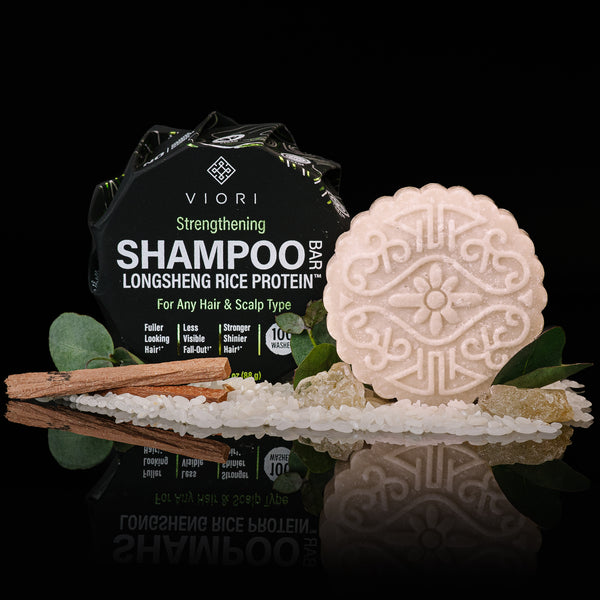
- Cleanse with a gentle, pH-balanced shampoo bar (Viori's rice water bars work beautifully for this purpose)
- Follow with a diluted liquid ACV rinse (1-2 tablespoons in 8 ounces of water) once or twice a week
- Condition as needed for their hair type
This two-step process respects the chemical reality: cleansing and strong acidification are separate functions that work best sequentially, not simultaneously.
For everyday cleansing, a quality shampoo bar provides gentle, effective cleansing without stripping. Then, when you need that deep clarification and shine boost, a traditional ACV rinse delivers the full effect.
A Smarter Approach: Why Fermented Rice Water Works Better in Bar Form
This is where I find Viori's formulation approach particularly intelligent from a chemistry standpoint. Rather than forcing ACV into a solid format where its benefits are compromised, they've focused on fermented rice water-an ingredient that actually translates well into bar form.
Here's why fermented rice water makes more sense in solid shampoo bars:
Chemical stability: The beneficial compounds in fermented rice water-including inositol, amino acids, and minerals-are much more heat-stable than ACV's delicate components. They survive the bar-making process with their properties intact.
pH compatibility: Fermented rice water naturally sits closer to hair's optimal pH range (around 4.5-5.5), so it doesn't require the same degree of neutralization that ACV does when combined with cleansing surfactants.
Protein survival: The proteins in rice water are more robust and survive processing better than the enzymatic and probiotic components in raw ACV.
WHAT CUSTOMERS ARE SAYING
Real reviews for Hidden Waterfall Barra de Champú
Realistic expectations: There's no assumption of live probiotic cultures or dramatic acidic clarification-just gentle, protein-rich cleansing and strengthening that the ingredient can actually deliver in solid form.
From a professional formulation perspective, this represents a more chemically honest approach. The ingredient can actually deliver its promised benefits without the contradictions inherent in ACV bars.
How to Read Labels Like a Pro
If you're currently using or considering an ACV shampoo bar, here's how to evaluate what you're really getting:
Red flags that suggest minimal ACV benefit:
- "Apple cider vinegar" or "ACV" listed near the end of the ingredient list (indicates very low concentration)
- "Apple cider vinegar powder" as the only ACV-related ingredient (heavily processed)
- pH of 6.0 or higher (too neutral to provide traditional ACV effects)
- No percentage or concentration disclosure (likely contains less than 5% ACV-derived ingredients)
- Marketing that promises "all the benefits of ACV rinses" (chemically unlikely in solid form)
Better indicators of quality formulation:
- "Acetic acid" or "vinegar" appearing in the first 5-7 ingredients (suggesting higher concentration)
- Transparent pH disclosure in the 4.0-5.0 range (formulated for genuine but safe acidity)
- Realistic claims about gentle cleansing and pH-balancing rather than dramatic clarification
- Additional beneficial acids or fermented ingredients showing sophisticated formulation
The most honest brands position their ACV bars as gentle, pH-balanced cleansers inspired by apple cider vinegar rather than claiming they replace traditional ACV treatments.
The Bottom Line: Chemistry Over Marketing
None of this analysis means ACV shampoo bars are ineffective or that you should stop using them if you enjoy them. Understanding the chemistry simply allows you to use products strategically with realistic expectations.
If you love ACV bars for their mild, gentle cleansing, pleasant apple scent, eco-friendly format, convenient solid form, and slightly acidic pH-then keep enjoying them! These are genuine benefits.
But if you're seeking dramatic buildup removal, that intense shine boost from pH shock, probiotic scalp benefits, or the full clarifying effect of traditional ACV, you'll likely need to supplement with liquid ACV rinses (1 part ACV to 4 parts water) once or twice weekly, used after your regular cleansing routine.
Your Hair Deserves Chemistry That Actually Works
After 20 years of cutting, coloring, and treating every hair type imaginable, I've learned that the best results come from understanding why products work, not just what they contain.
Solid and liquid ACV formulations are fundamentally different products that happen to share an ingredient ancestor. One isn't inherently "better" than the other-they simply serve different purposes and work through different mechanisms.
Use ACV bars for gentle daily cleansing with a mildly acidic pH. Use liquid ACV rinses for intensive clarification and that dramatic cuticle-closing effect. Or, consider alternatives like fermented rice water bars from Viori that deliver their promised benefits without the formulation contradictions.
The key is matching your product choice to your actual hair needs based on chemistry, not just clever marketing.
Your hair will thank you for the difference.


