
Making your own vegan shampoo sounds simple-until you’re standing in the shower with hair that feels squeaky, tangled, and somehow both dry and greasy at the same time. I’ve seen it happen countless times: good intentions, trendy ingredients, and a recipe that ignores the stuff that really determines whether your hair behaves.
Here’s the reality: a great vegan shampoo isn’t defined by how “natural” it sounds or how many oils you pour in. It’s defined by how it manages hair’s surface charge, cuticle behavior, pH, and rinse-clean performance-especially in hard water. Once you understand those mechanics, DIY becomes much more predictable (and your hair stops feeling like a science experiment).
What “Vegan Shampoo” Means (and What It Doesn’t)
Vegan is an ethical category: no animal-derived ingredients and, depending on your standards, no animal testing. It’s a great goal. But it doesn’t automatically guarantee a shampoo will be gentle, color-friendly, or even functional.
Performance still comes down to formulation choices-specifically your cleanser system, conditioning strategy, and pH. You can make a vegan shampoo that feels incredible, and you can also make a vegan shampoo that leaves residue, fades color, or irritates your scalp. The difference is the details.
The Part Most DIY Advice Skips: Hair Is Charged
If there’s one “behind-the-chair” truth that rarely shows up in DIY discussions, it’s this: hair behaves like a charged surface, especially when wet.
NOT SURE WHICH PRODUCT IS RIGHT FOR YOU?
TAKE THE QUIZTakes 30 seconds · 134,000+ customers matched
Your hair strand is built like a layered material:
- Cuticle: the outer shingle-like layer. When it lies flat, hair looks shiny and feels smooth.
- Cortex: the inner structure responsible for strength, elasticity, and the integrity of color-treated hair.
When hair is wet-particularly if it’s porous or damaged-it often presents a stronger negative surface charge. Many cleansers also carry negative charge. That can translate to more friction, more tangling, and more frizz unless your formula is designed to counterbalance it.
The Biggest DIY Trap: “Shampoo” That’s Actually Soap
A lot of DIY vegan “shampoo” recipes are really saponified oils (soap). Soap can absolutely be vegan. The issue is that soap is typically alkaline, and hair generally performs best with products that are pH balanced.
Why does that matter? Because pH influences how your cuticle behaves. In haircare, pH isn’t just a number-it’s a tool.
- Higher/alkaline pH tends to lift and swell the cuticle.
- A lifted cuticle increases roughness and friction.
- More friction can mean tangles, dullness, frizz, and faster color fade.
- In hard water, soap can react with minerals and create that notorious waxy “soap scum” feel.
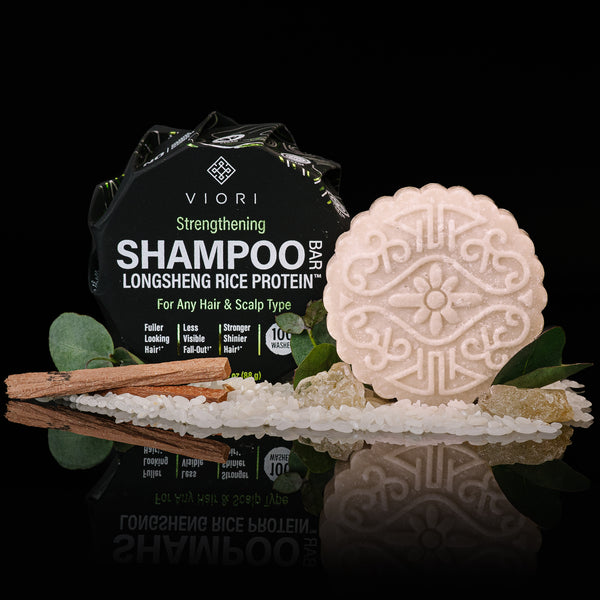
This is one reason I’m such a fan of well-made shampoo bars that use modern, mild surfactants and are formulated to be pH appropriate. For example, Viori emphasizes that their products are pH balanced, which is a major factor in keeping hair from feeling stripped over time.
Think in Systems, Not “Hero Ingredients”
DIY culture loves a star ingredient-rice water, aloe, oils, vinegar rinses. Those can be interesting tools, but hair doesn’t respond to one ingredient in isolation. It responds to the full system you build.
If you want a vegan shampoo that behaves like professional haircare, you need these building blocks working together:
- A surfactant system (cleansing power + mildness + foam)
- A conditioning/deposition strategy (slip, detangling, static control)
- pH control (cuticle management, shine, comfort)
- Hard-water defense (to avoid waxy residue and dullness)
- Preservation (mandatory for liquids with water)
Surfactants: “Gentle” Is a Blend, Not a Buzzword
Surfactants are what clean your scalp and lengths. They form micelles that lift oil and grime so they can rinse away. But not all surfactants feel the same, and the best formulas rarely rely on just one.
A smart vegan shampoo usually uses a blend so you can get effective cleansing without turning the hair into Velcro. In solid formats, one commonly used cleanser is Sodium Cocoyl Isethionate (SCI)-the cleanser Viori uses in their shampoo bars. In the formulating world it’s often called “baby foam” because it can be very mild while still cleansing well.
The Conditioning Paradox: Oils Don’t Condition in Shampoo the Way You Think
This is where I see DIY shampoo recipes go off the rails. People add lots of oils and butters, expecting soft, glossy hair. But shampoo is a rinse-off cleansing step. Many oils either rinse away with the cleanser or deposit unpredictably and leave a heavy feel-especially on low-porosity hair.
If you want hair to feel smoother after rinsing, the formula needs a strategy for reducing friction and static. That’s usually done with ingredients that can lightly adhere to the hair fiber, particularly where it’s most damaged.
Viori’s conditioner bars, for example, use Behentrimonium Methosulfate (BTMS)-a common conditioning ingredient used in professional-quality formulas to improve slip and manageability. A quick clarification that matters: despite the word “methosulfate,” it is not the same as harsh sulfate cleansers. It functions as a conditioning agent, not a stripping detergent.
pH: The “Invisible Active Ingredient” You Need to Measure
You can have beautiful ingredients and still get disappointing results if the pH is off. pH impacts:
- Cuticle position (flat cuticle = smoother feel)
- Shine (light reflects better off a smoother surface)
- Frizz potential (less roughness = less frizz)
- Scalp comfort
- Preservative effectiveness (in liquid products)
Viori notes that hair products generally need to stay within an appropriate pH range (they cite 3.5-6.5). That aligns with what we see in practice: when hair products drift too alkaline, hair often gets rougher over time.
If you’re DIY-ing, don’t guess. Use pH strips at minimum; a calibrated pH meter is even better.
Liquid vs. Bar: The Unsexy Issue Is Preservation
If you’re making a liquid vegan shampoo, you’re also making a product that can grow microbes if it isn’t properly preserved. This is non-negotiable for safety.
Important: essential oils, vitamin E, and botanical extracts do not preserve a water-based shampoo. A safe liquid formula needs a preservation system designed for the product’s pH and ingredient profile.
With a bar, preservation is usually less complex because there’s little to no free water when the bar is properly made and kept dry. That’s part of why well-formulated bar systems are appealing-Viori also notes the bar format can have a long shelf life when stored cool and dry.
Hard Water: The Real Reason Your DIY Shampoo Might Feel “Waxy”
Here’s a classic salon scenario: someone tells me their shampoo works great at a hotel, then at home their hair feels coated and dull. That’s often not the shampoo-it’s the water.
Hard water minerals can cause hair to feel:
- waxy or coated
- dull and less “swingy”
- more tangled after rinsing
Soap-based shampoo is especially prone to mineral issues, but even surfactant-based formulas can struggle without a plan for hard water. If your results vary by location, minerals are a prime suspect.
Personalize Like a Pro: Start With Scalp Type
Your scalp is living skin. Your ends are older fiber. Treating them the same is how people end up with greasy roots and crispy ends.
WHAT CUSTOMERS ARE SAYING
Real reviews for Hidden Waterfall Barra de Champú
Use this simple framework:
- Oily scalp (oily 1-2 days after washing): prioritize rinse-clean cleansing; keep heavy deposition away from the roots.
- Normal scalp (oily around day 3): balanced cleansing and conditioning.
- Dry scalp (4+ days): gentle cleansing and stronger conditioning; reduce irritation triggers.
Viori organizes recommendations in a similar scalp-first way, which mirrors how I approach it in the salon: match cleansing strength to the scalp, then condition the lengths based on dryness and porosity.
Rice Water in Vegan Shampoo: The Nuanced Truth
Rice water is popular for good reason, but the “more is better” approach can backfire-especially if it throws off pH or overloads hair with protein-like materials.
Viori addresses this head-on: they use a lower concentration of fermented Longsheng rice water because overly concentrated rice water can disrupt hair and scalp pH if used too often. They also build it into a broader formula so you get the benefits without the common DIY downsides.
In fermented rice systems, components like inositol (vitamin B8) and panthenol (vitamin B5) are often highlighted for their hair-feel and strengthening support-when used at appropriate levels in a balanced formula.
Troubleshooting: What Your Hair Is Telling You
If hair feels squeaky, then frizzy
- cleansing system may be too aggressive
- pH may be too high
- not enough conditioning/deposition support
If hair feels coated or waxy
- too many oils/butters in a rinse-off product
- hard water mineral interaction
- film buildup without a hard-water strategy
If scalp gets oily faster
- over-stripping can trigger rebound oiliness
- irritation can drive oil production
- too much residue at the roots
If color fades quickly
- pH may be too high
- cleansing may be too aggressive for color-treated hair
- too much friction during washing
One easy friction fix (especially with bars): build lather in your hands and apply with your fingertips instead of rubbing the bar directly on the hair. Viori makes a similar recommendation for better color preservation, and it’s a technique I use myself.
Bottom Line: DIY Vegan Shampoo Works Best When You Build It Intentionally
If you want your DIY vegan shampoo to feel truly “professional,” keep your focus on the fundamentals:
- Use real shampoo surfactants (not alkaline soap)
- Balance cleansing with conditioning that reduces friction and static
- Measure and adjust pH instead of guessing
- Plan for hard water if your hair feels waxy or dull
- Preserve liquids properly for safety
If you love the sustainability of solid formats but don’t want the trial-and-error of DIY, a well-designed, pH-balanced bar system can be a smart alternative. Viori is a strong example of that approach: mild cleansing (with SCI), pH balance, and a conditioning system designed for slip and manageability.
If you want to get more specific, share your scalp type (oily/normal/dry), hair porosity (low/medium/high), and whether your hair is color-treated. I can help you map out what to prioritize-whether you go DIY or choose a bar routine.


