
After two decades of working with every hair type imaginable, I've discovered something that changed my entire approach to shampooing. The problem isn't that you're using the wrong products-it's that you're treating your entire head of hair like it's all the same. Spoiler alert: it's not even close.
If you've ever stepped out of the shower feeling like your roots are still greasy while your ends feel like straw, you're about to have a serious lightbulb moment. What I'm sharing today is a professional approach that most people never learn, and it's honestly a game-changer.
Here's Why That One-Bottle Approach Isn't Cutting It
Let me paint you a picture. Your scalp is an oil-producing machine, constantly creating sebum to protect itself. That's completely normal and healthy. But here's the thing-those oils slide down your hair shaft at a snail's pace, and if you've got hair past your shoulders, they're probably never making it to the ends.
Meanwhile, your ends have been through the wringer. We're talking months or even years of brushing, blow-drying, flat ironing, sun damage, chlorine exposure, you name it. They're survivors, but they're definitely battle-worn.
So riddle me this: why would we cleanse brand-new, oil-rich roots the exact same way we cleanse damaged, moisture-starved ends? It makes zero sense when you actually think about it.
The Strategic Cleansing Method That Changed Everything
This is where understanding how different shampoo formulations actually work becomes your superpower. Instead of thinking about different products as just different scents, we can use them strategically in a single wash session. Mind-blowing, right?
The Two-Step Oil Control and Moisture Balance Technique
This technique is perfect if you're dealing with oily roots and dry ends-which, let's be honest, describes about 70% of the people who sit in my chair.
First Cleanse - Target the Scalp Where Oil Actually Lives
NOT SURE WHICH PRODUCT IS RIGHT FOR YOU?
TAKE THE QUIZTakes 30 seconds · 134,000+ customers matched
Start with something citrus-based like Viori's Citrus Yao, but here's the key: apply it exclusively to your scalp and roots. The natural citric acid is fantastic at breaking down excess sebum without those harsh sulfates that strip everything away. Use your fingertips (not your nails!) to massage your scalp in gentle circular motions. Let the cleansing agents actually do their job where oil accumulates.
Second Cleanse - Show Your Lengths Some Love
After rinsing thoroughly-and I mean thoroughly-grab a more moisturizing formula like Viori's Hidden Waterfall or Terrace Garden. Apply this one from mid-length down to your ends. You're giving gentle cleansing to the parts that desperately need moisture, not aggressive oil removal.
This dual approach solves the fundamental problem you've been fighting: you're finally giving different parts of your hair the different treatment they're literally begging for.
Flip Your Conditioning Approach Too
Once you've nailed the cleansing strategy, flip everything for conditioning:
- Skip conditioner on your scalp entirely, or if you absolutely must, use Citrus Yao conditioner very sparingly on roots only
- Apply Hidden Waterfall, Terrace Garden, or Native Essence conditioner generously from mid-shaft to ends-don't be stingy here
This creates a complete system that actually respects what your hair needs instead of forcing a one-size-fits-all approach on something that clearly isn't one-size.
The Fermented Rice Water Thing Everyone Gets Wrong
Let's talk about something I rarely hear discussed outside professional circles: concentration matters just as much as the ingredient itself.
When you see a product contains a "moderate concentration" of something beneficial, your first thought might be that it's somehow inferior. But here's what changed my entire perspective-pure rice water at very high concentrations has an alkaline pH that can actually mess with your hair's natural pH balance of 4.5-5.5. When used frequently, this can cause more problems than it solves.
The Protein-Moisture Balance Your Hair Is Desperately Trying to Tell You About
Rice protein is absolutely incredible for hair strength and elasticity. But there's a critical concept that every single person needs to understand: protein-moisture balance. Your hair needs both, but in the right ratio for your specific hair type. Get this wrong and you'll be frustrated for months wondering why products aren't working.
Fine or low-porosity hair can actually become stiff, brittle, and weirdly straw-like with too much protein. This is called "protein overload," and trust me, you don't want it. These hair types do way better with a moderate concentration approach that provides strengthening without overwhelming the delicate hair shaft.
High-porosity or damaged hair is the opposite-it's starving for protein because the damaged cuticle is basically letting moisture slip in and out like a broken screen door. These folks benefit from using rice water products more frequently or leaving conditioner on longer as a deep treatment.
Here's where it gets really fascinating: the vitamin B8 (inositol) and B5 (panthenol) created through fermentation? That's where the real magic lives. Clinical studies have shown that inositol actually binds to your hair shaft and stays there even after rinsing. You're getting ongoing protection and strengthening long after you've left the shower.
The Transition Period Nobody Warns You About (But I'm About To)
When you switch to bar shampoos, especially those with natural cleansers like Sodium Cocoyl Isethionate, there's often a transition period that catches people completely off guard. Understanding what's actually happening chemically helps you push through instead of giving up and going back to your old products.
The Great Buildup Revelation
Conventional shampoos often contain silicones and coating agents that create artificial smoothness. Here's the thing nobody tells you-these don't actually repair anything. They're masking damage with a coating, kind of like spackling over a crack in the wall instead of actually fixing the wall.
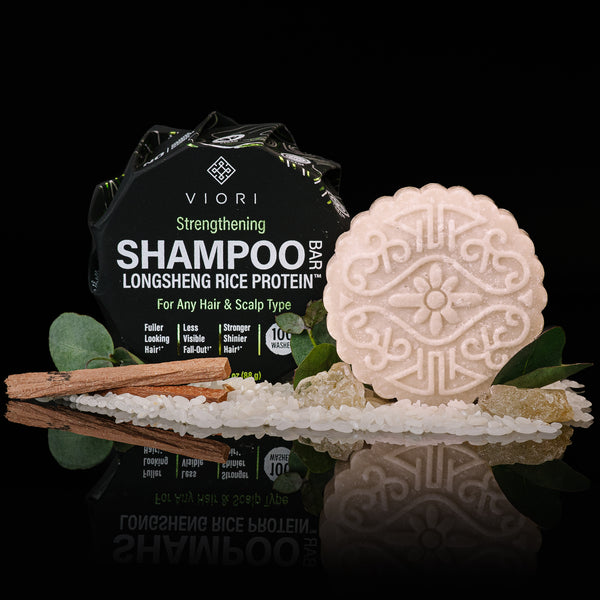
When you switch to a natural formula, there's a "stripping away" period where these coatings are removed and your hair's true condition is revealed. During this phase, which typically lasts 2-4 weeks, your hair might feel different-sometimes rougher, sometimes greasier as your scalp adjusts its oil production to match the new cleansing level.
This is actually your hair and scalp recalibrating to healthier products. The key is persistence and possibly tweaking your technique:
1. Ensure Ridiculously Thorough Rinsing
Bar shampoos require more rinsing than liquid formulas. Period. Residue that would be invisible with liquid shampoo can be more apparent with bars. Spend an extra minute rinsing-I know it feels like overkill, but I promise it makes a massive difference.
2. Use Cooler Water for the Final Rinse
This helps close the hair cuticle, enhancing shine and reducing frizz. It's especially important when you're not relying on silicones for that artificial slip and smoothness.
3. Adjust Your Application Technique
Create a lather in your hands first rather than rubbing the bar directly on your hair. This gives you way more control and even distribution, which is particularly important for color-treated hair.
The Factor Nobody Talks About: Your Water Quality Is Sabotaging Everything
Here's something that rarely gets discussed but dramatically impacts how any shampoo performs: your water quality makes an enormous difference, especially with bar shampoos.
Hard Water Challenges
Hard water contains high levels of calcium and magnesium minerals. These minerals can bind with ingredients in shampoo bars, creating a film on your hair that makes it feel waxy or heavy. This isn't a product failure-it's literally a chemical reaction between minerals in your water and cleansing agents.
Solutions for hard water users:
Apple Cider Vinegar Rinse: After conditioning, do a final rinse with diluted apple cider vinegar (1 tablespoon per cup of water). This acidic rinse helps remove mineral buildup and restore pH balance. Yes, it smells like salad dressing for about 30 seconds, but the smell completely dissipates as your hair dries. Promise.
Chelating Treatment: Once weekly, use a chelating treatment to remove mineral buildup. You can create a natural version using citric acid powder dissolved in water.
Install a Shower Filter: This is the most effective long-term solution, removing minerals before they ever touch your hair. It's an investment that pays dividends for your skin too.
Soft Water Considerations
Conversely, very soft water can make it difficult to rinse shampoo completely because there are fewer minerals for the cleansing agents to bind with. If you have soft water and find your hair feels slippery and difficult to rinse clean, you might need slightly less product and more thorough rinsing time.
Why Your Scalp Type Matters More Than Your Hair Type
Here's a professional insight that literally changes the entire game: your scalp type is way more important than your hair type when selecting a shampoo.
The hair that's already grown out of your head is dead. I know, morbid, but true. It can't repair itself. You can condition it and protect it, but the health of new hair growth depends entirely on scalp health.
The Scalp Microbiome Revolution
Recent dermatological research has revealed that your scalp has its own microbiome-an entire ecosystem of beneficial bacteria and microorganisms that maintain scalp health. Harsh shampoos with sulfates and strong preservatives can absolutely wreck this microbiome, leading to:
- Increased oil production as your scalp tries to rebalance itself
- Dandruff and flaking
- Irritation and sensitivity
- Even hair loss in extreme cases
Natural formulas work with your scalp microbiome rather than against it. Fermented rice water actually contains probiotics and nutrients that support healthy scalp ecology. This is why so many people report that after an adjustment period, their scalp issues improve and they can go longer between washes-their scalp microbiome has finally rebalanced.
Determining Your True Scalp Type
Here's a dead-simple test: how long after washing does your scalp feel oily?
WHAT CUSTOMERS ARE SAYING
Real reviews for Hidden Waterfall Barra de Champú
- 1-2 days = Oily scalp → Viori's Citrus Yao is your best friend
- 3 days = Normal scalp → Any formulation will work beautifully for you
- 4+ days = Dry scalp → Terrace Garden, Hidden Waterfall, or Native Essence
But here's the nuance most people miss: your scalp type isn't set in stone. It can change based on:
- Seasonal weather (more oily in summer, drier in winter)
- Hormonal fluctuations
- Stress levels
- Diet and hydration
- Product buildup
- Over-washing creating a rebound oil effect
This is exactly why having multiple formulations available allows you to adapt your routine to your current scalp state rather than forcing your scalp to adapt to a single product year-round.
The Color-Treated Hair Chemistry You Actually Need to Understand
The guidance for color-treated hair is absolutely critical and worth diving deep into, because the chemistry of how hair color and shampoo interact is fascinating and seriously misunderstood.
Permanent vs. Semi-Permanent: Why Application Method Changes Everything
Permanent hair color works by opening your hair cuticle, removing natural melanin, and depositing artificial color molecules deep in the cortex (the inner layer of your hair shaft). These molecules are larger than the entry point, so they become trapped inside-that's literally what makes the color "permanent."
Semi-permanent and demi-permanent colors don't penetrate as deeply. They coat the cuticle or enter just the outer layers, making them way more vulnerable to washing out.
The Bar Shampoo Strategy for Color
The key recommendation for color-treated hair isn't really about the ingredients-it's about the application method. When you rub a bar directly on your head, you create friction. Friction opens the hair cuticle. An open cuticle allows color molecules to escape. See the problem?
This is why lathering in your palms and working the shampoo through with your hands is absolutely crucial for color-treated hair. You're minimizing friction while still cleansing effectively.
pH Protection for Lasting Color
pH-balanced shampoos in the 4.5-5.5 range cleanse without excessive cuticle swelling, helping color last significantly longer. Fermented rice water naturally contains amino acids that help seal the cuticle after cleansing, providing additional color protection.
Pro technique for color-treated hair:
- Always use cool to lukewarm water-hot water opens the cuticle like you're inviting color molecules to leave
- Lather shampoo in hands before applying to hair
- Focus cleansing on the scalp, let the lather rinse through lengths
- Use conditioner generously from mid-shaft to ends
- Final rinse with cool water to seal the cuticle
- Extend time between washes as much as possible-dry shampoo is your friend
Hair Porosity: The Test That Changes Everything
Understanding your hair porosity is like getting a roadmap for every single product decision you'll ever make. Let me explain why this matters so incredibly much.
The Float Test
Take a clean strand of hair (one that's shed naturally after brushing-don't yank one out) and place it in a glass of room-temperature water:
- Floats = Low porosity: Cuticle is tightly closed, resists moisture
- Floats mid-way = Medium porosity: Balanced cuticle, healthy hair
- Sinks = High porosity: Cuticle is damaged or open, absorbs moisture rapidly but can't retain it
Low Porosity Hair Strategy
Low porosity hair repels moisture because the cuticle scales lie flat and tight. This hair type often experiences product buildup because ingredients literally sit on top of the hair rather than absorbing.
Your optimal approach:
- Use Viori's Citrus Yao shampoo-the citric acid helps gently open the cuticle for better cleansing
- Apply conditioner to damp (not soaking wet) hair
- Use warm water during conditioning to help open the cuticle
- Let conditioner sit for 3-5 minutes before rinsing
- Avoid heavy oils and thick leave-in products that will just sit on the surface
- Rinse thoroughly to prevent buildup


