
Rice water gets tossed around online like it’s a miracle growth potion-and I understand why. When something makes your hair feel softer, look shinier, and break less, it’s easy to assume your hair is suddenly “growing faster.” But hair regrowth is more complicated than a single rinse or ingredient, and the real story is a lot more interesting (and useful) than the usual before-and-after hype.
After 20 years as a hair stylist, here’s the most accurate way I can put it: rice water can absolutely support the conditions that help hair look fuller and stay on your head longer. But that’s not always the same thing as true follicle-level regrowth-and knowing the difference is what helps you get results without accidentally causing more breakage or scalp irritation.
First, what kind of “regrowth” are we talking about?
Most people say “regrowth” when they’re seeing one of these three outcomes. They’re all valid, but they’re not the same biologically-and rice water doesn’t affect each one equally.
NOT SURE WHICH PRODUCT IS RIGHT FOR YOU?
TAKE THE QUIZTakes 30 seconds · 134,000+ customers matched
- True regrowth: more hairs shift into the growth phase (anagen), or hairs become thicker over time.
- Reduced shedding: fewer hairs release from the follicle during washing and brushing.
- Better retention: hair breaks less along the mid-lengths and ends, so you keep the length you’re growing.
In real-world haircare, rice water is most likely to help with reduced shedding (when shedding is linked to irritation) and retention (because stronger, smoother hair snaps less). That alone can create a huge “I have more hair” effect.
The rarely discussed factor: fermentation changes the entire conversation
People talk about rice water as if it’s one simple thing, but preparation matters. Fermented rice water isn’t just “old rice water”-fermentation changes the makeup of what you’re putting on your scalp and hair.
Why that matters: topicals don’t “feed” follicles the way nutrition does. Your follicles are supplied by blood flow, hormones, and internal nutrient status. What topical haircare can do, very effectively, is improve the scalp environment and the hair fiber so you lose less hair to breakage and irritation.
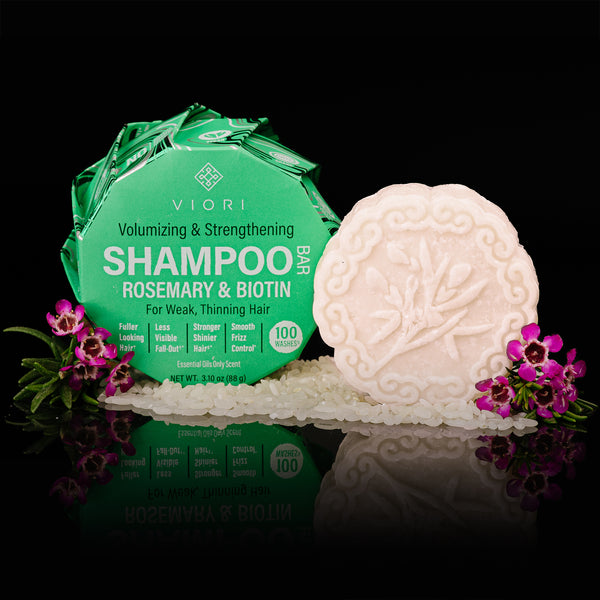
Viori uses fermented Longsheng rice water in a way that’s designed to be practical for regular use-meaning it’s built into a routine product format instead of relying on unpredictable DIY batches.
Let’s talk pH: where DIY rice water can quietly backfire
If there’s one technical detail that gets glossed over online, it’s pH. Hair and scalp do best when products stay within a hair-friendly pH range (commonly discussed as roughly 3.5-6.5). When products drift too alkaline, the hair cuticle can lift, friction increases, and breakage becomes more likely.
Here’s the part most trend posts don’t mention: using rice water at high concentration too often can disrupt the hair and scalp’s pH balance. Viori addresses this directly by using a lower concentration of Longsheng rice water because overly strong rice water can be too much for frequent use.
That matters because pH issues don’t always show up as dramatic damage right away. Sometimes it looks like:
- rougher texture and more tangling
- extra frizz that wasn’t there before
- itchiness or tightness on the scalp
- ends snapping, which can mimic “thinning”
When people feel like a “growth routine” made their hair worse, this is often part of the reason.
What rice water is most likely doing: helping you keep the hair you already have
One of the most believable benefits of rice-water-based haircare is improved retention. In plain terms: your hair stops breaking as easily, so your length finally accumulates.
Rice-derived ingredients are often paired with strengthening and conditioning components. Viori includes hydrolyzed rice protein (a smaller, more workable protein form) and notes that the protein level in their bars is kept at a low concentration, which is important. More isn’t always better-too much protein for the wrong hair type can make hair feel stiff, which increases friction and breakage.
When retention improves, you’ll typically notice:
- less hair snapping during detangling
- ends that look thicker for longer
- better shine (a smoother cuticle reflects more light)
- hair that feels stronger without feeling straw-like
Scalp comfort is a “regrowth” strategy (even if nobody calls it that)
Many shedding complaints come from a scalp that’s quietly irritated-dryness, itchiness, flaking, oil imbalance, or just a constant feeling that the scalp isn’t happy. You don’t need a dramatic condition for irritation to influence how much hair you shed.
Viori’s bars are designed with scalp health in mind and include ingredients like aloe vera and bamboo extract, which are commonly used in formulations aimed at reducing dryness and supporting overall hair and scalp feel.
When the scalp environment calms down, people often report what they interpret as “regrowth,” because they’re seeing:
- less itch-and-scratch damage
- less inflammation-related shedding
- a healthier feel that makes routines easier to stick with
The detail that can make or break results: how you use a bar
This is a big one, and it’s surprisingly overlooked. Bar products can be amazing, but they introduce one extra variable: friction. Too much rubbing directly on the hair can rough up the cuticle, tangle the lengths, and trigger breakage-especially if your hair is color-treated, high-porosity, or already fragile.
WHAT CUSTOMERS ARE SAYING
Real reviews for Rosemary Biotin Shampoo Bar – Thinning Hair | VIORI
Viori specifically recommends creating a lather in your palms and applying it with your hands instead of rubbing the bar directly on your head. That technique change alone can be the difference between “my hair feels incredible” and “why does my hair feel rough?”
So, does rice water help with hair regrowth?
Here’s the most honest, nuanced answer: rice water can help support regrowth-like results by improving scalp comfort and reducing breakage, which helps you retain more hair and see better length over time. It is far less likely to act like a stand-alone solution for genetic thinning or internal, medically driven hair loss.
Rice-water-based haircare is best viewed as a support system-especially when it’s fermented, pH balanced, and formulated for consistent use-rather than a one-step cure.
How to get the best results with rice-water-based haircare
If your goal is thicker-looking hair, less shedding, and better length retention, focus on the basics that actually move the needle.
- Match products to your scalp type. Viori generally recommends Citrus Yao for normal-to-oily scalps (it includes citric acid to help break down oil), while Terrace Garden, Hidden Waterfall, and Native Essence are often favored for normal-to-dry scalps. Native Essence is the unscented option for fragrance-sensitive users.
- Reduce friction. Lather in hands first, massage with fingertips, and let the rinse cleanse the lengths instead of scrubbing your ends.
- Condition consistently. Conditioner helps protect the hair after cleansing and improves slip, which reduces snapping and tangles.
- Give it a fair timeline. Hair changes happen slowly. Viori recommends giving products 2-3 months before deciding whether they’re working for you, and that’s a realistic window for noticing meaningful improvements in retention and scalp balance.
Final thoughts
If rice water “works” for someone, the success story is often less about instant follicle transformation and more about quiet, consistent wins: a calmer scalp, stronger strands, less breakage, and less hair left on the shower wall. That’s not flashy, but it’s exactly how healthy hair progress usually looks.
If you want to personalize this even further, start by identifying whether you’re dealing with shedding from the root or breakage along the strand. Those two problems can look similar in the drain, but they require totally different strategies.


