
After two decades behind the chair, I've learned that some of the most popular hair care ingredients aren't always what's best for our clients. Mint shampoo is the perfect example. That refreshing, tingly feeling seems like proof that something amazing is happening to your scalp-but what if I told you that sensation is actually a neurological trick that has nothing to do with clean hair?
Today, I want to share something I've observed throughout my career: how mint shampoo's cooling sensation can create a problematic cycle that leaves hair damaged, scalps irritated, and clients convinced they need to wash even more frequently.
What's Really Happening When Your Scalp Tingles
When you feel that signature mint "tingle," you're not experiencing deep cleansing or scalp stimulation. Here's what's actually going on:
Menthol activates something called the TRPM8 receptor-the same receptor that responds to cold temperatures. When menthol touches these receptors, your brain interprets it as "cold" even though there's no actual temperature change. It's essentially a sensory illusion.
Here's the critical part: This tingling sensation has absolutely nothing to do with whether your hair is actually clean.
Yet the psychological connection is incredibly strong. I've had clients tell me outright that they don't believe their hair is clean unless they feel that cooling sensation. This belief is where the problems begin.
The Mint Dependency Cycle I See in My Chair
Over the years, I've noticed a troubling pattern that plays out remarkably consistently. I call it the "mint dependency cycle," and here's how it typically unfolds:
It Starts Innocently
Someone tries mint shampoo and loves it. The invigorating feeling is so much more noticeable than regular shampoo. They associate this intense sensation with "extra clean" hair because the sensory feedback is so pronounced.
Makes sense, right? We're wired to believe that stronger sensations mean stronger results.
NOT SURE WHICH PRODUCT IS RIGHT FOR YOU?
TAKE THE QUIZTakes 30 seconds · 134,000+ customers matched
Then Your Body Adapts
After about 4-6 weeks of regular use, something interesting happens: the sensation becomes less intense. The shampoo hasn't changed-your TRPM8 receptors have simply become less sensitive to constant stimulation. Scientists call this "receptor downregulation."
It's similar to how you stop noticing a scent after you've been wearing it for a while, or how coffee drinkers need more caffeine over time to feel the same effects.
The Damage Begins
This is where I see hair health start to deteriorate. To recapture that "ultra-clean" feeling, my clients unconsciously start to:
- Pump out more product than they need
- Scrub their scalp more vigorously
- Wash their hair more frequently
- Leave the shampoo on longer than necessary
- Search for even stronger mint formulations
The Downward Spiral
This overcleansing behavior creates a cascade of problems:
- Stripped natural oils: Your scalp's protective sebum layer gets completely removed
- Rebound oil production: Your scalp panics and produces even more oil to compensate
- The greasy cycle: Your hair feels greasy faster, so you wash more frequently, which makes the problem worse
- Mechanical damage: Aggressive scrubbing damages the hair cuticle
- Scalp irritation: Your skin becomes increasingly sensitive
- Microbiome disruption: The beneficial bacteria on your scalp get thrown out of balance
The tragic irony? The cooling sensation that made you feel "extra clean" ultimately created the exact conditions that made your hair get greasy faster and feel dirtier sooner.
The pH Problem Hidden Behind the Mint
Here's something most people don't know: many mint shampoos have pH balance issues that the intense tingling sensation masks.
Your hair and scalp naturally sit at a pH of about 4.5-5.5-slightly acidic. At this pH level, your hair cuticles lie flat and smooth, creating that glossy, healthy appearance we all want.
When you use a shampoo with a pH above 6.5, those cuticles start to lift and swell. The result? Rough, porous hair that tangles easily and loses moisture quickly.
Many heavily mentholated shampoos-especially those marketed for "deep cleansing" or "dandruff control"-have a more alkaline pH, ranging from 6 to 8. The problem is that the overwhelming mint sensation completely distracts you from what should be a warning sign.
You know that "squeaky clean" feeling? That slight roughness after washing? That's not cleanliness-that's raised cuticles and potential damage.
The mint sensation is so dominant that it drowns out your hair's natural feedback system.
I can't tell you how many times clients have described their hair as "clean but dry" or "refreshed but tangled." These contradictory descriptions reveal exactly what's happening: cuticle damage masked by sensory satisfaction.
Let's Talk About the "Hair Growth" Claims
One of the most common marketing claims about mint shampoo is that it "increases blood flow to promote hair growth." As someone who's spent two decades studying what actually makes hair grow, I need to address this.
Yes, menthol can cause mild vasodilation-blood vessels expanding slightly in the skin. But the idea that this meaningfully impacts hair growth? The research is surprisingly thin.
Consider these facts:
Duration matters: The vasodilation from menthol lasts maybe 15-30 minutes after you rinse. Hair growth is a process that unfolds over months, not minutes.
Depth matters: Hair follicles sit 3-5mm beneath your skin surface. Menthol's effects are mostly superficial.
Concentration matters: Most shampoos contain far less menthol than you'd need for any therapeutic effect.
Contact time matters: Shampoo sits on your scalp for what, two or three minutes? Then it's gone.
In my professional experience, I've seen far better hair growth results from clients who use gentle, pH-balanced cleansing routines that maintain scalp health over time. No tingling required.
What actually promotes healthy hair growth is consistent, gentle cleansing that protects your scalp's natural pH and microbiome-not temporary temperature receptor activation.
When Mint Actually Makes Sense
After all this, you might think I'm completely anti-mint. I'm not. Mint in shampoo isn't inherently bad. The problems arise from poor formulation and conditioned behavior.
Here's when mint can actually be beneficial:
In pH-Balanced Formulas
When mint is used in modest amounts within a properly pH-balanced formula (like Viori's bars, which maintain that ideal 4.5-5.5 range), you can enjoy the sensory benefits without the harsh alkalinity common in mass-market mint shampoos.
For Soothing, Not Stripping
Mint genuinely has anti-inflammatory and mild antimicrobial properties. In a gentle, sulfate-free formulation, these can help calm minor scalp irritation-as long as you're not over-washing in pursuit of that tingle.
As an Occasional Treat
Think of mint shampoo like an exfoliating face scrub: beneficial occasionally, potentially damaging if overused. If you love the sensation, use mint shampoo once or twice a week and alternate with an ultra-gentle, pH-balanced cleanser.
In Hot Climates
The evaporative cooling effect of menthol can provide genuine comfort in hot, humid weather. Just don't confuse "cooling" with "cleansing" and fall into the over-washing trap.
What I Recommend Instead: The Viori Difference
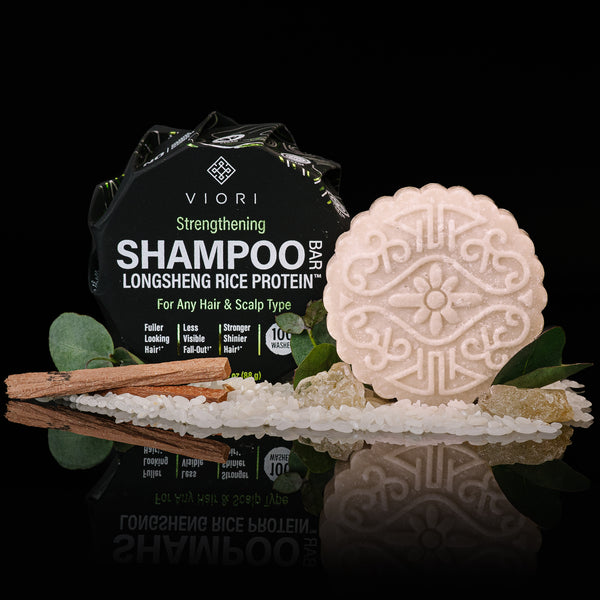
This is where I genuinely appreciate what Viori has done with their formulation approach. Rather than relying on menthol to create a "performance sensation" that tricks your brain, their bars use fermented Longsheng rice water and traditional ingredients that provide real, measurable hair benefits.
For clients struggling with the issues I've described, I often recommend:
Viori's Citrus Yao for those who want sensory feedback without the menthol dependency risk. The citrus provides a fresh, clean scent, and the citric acid genuinely helps with oil control through pH balancing-not sensory trickery.
Viori's Native Essence for those recovering from over-cleansing. The unscented formula removes those sensory associations that drive excessive washing.
Viori's Terrace Garden or Hidden Waterfall for the scalp-soothing properties people often seek from mint, but delivered through genuinely nourishing ingredients rather than receptor activation.
Because all Viori bars are properly pH-balanced, your scalp can recalibrate its natural sebum production without fighting against alkalinity.
Breaking Free: My Two-Month Reset Protocol
If you think you've developed a dependency on that mint sensation, here's the professional protocol I use with clients:
Weeks 1-2: The Difficult Transition
Switch to a fragrance-free or very gently scented, pH-balanced shampoo (Viori's Native Essence works beautifully here).
I'll be honest: your hair will feel "not quite clean" even though it absolutely is. This is just the psychological association breaking down. It's uncomfortable, but it's progress.
Resist the urge to wash more frequently or use more product. Instead, focus on scalp massage technique-30 to 60 seconds of gentle circular motions-to create new positive associations with washing.
Weeks 3-4: Sebum Recalibration
This is when your scalp starts producing oil at normal levels again. Your hair may go through a brief adjustment period where it feels slightly different than usual.
WHAT CUSTOMERS ARE SAYING
Real reviews for Hidden Waterfall Barra de Champú
Trust the process. Your scalp's ecosystem is healing.
Weeks 5-8: The New Normal
This is when most of my clients report breakthrough moments:
- Hair feels cleaner for longer periods
- Scalp sensitivity decreases noticeably
- Hair appears shinier (those properly closed cuticles reflecting light)
- Many people find they need to wash less frequently
After 8 Weeks: Reassessment
Now you can reintroduce mint products if you'd like, but with awareness. Use them as an occasional treat, not a daily necessity.
Pay attention to whether you're using them for genuine enjoyment or because you're chasing that "clean feeling." There's a big difference.
The Bottom Line
Mint in shampoo isn't inherently good or bad-it's a sensory ingredient that creates powerful psychological associations.
Problems arise when:
- Formulations prioritize sensation over hair health: High menthol combined with high pH and harsh surfactants equals damaged hair with a "clean" feeling
- Marketing conflates sensation with efficacy: The implied message that "tingly = working"
- Users develop compensatory behaviors: Overcleansing to maintain the sensation they've learned to associate with cleanliness
As a hair professional, I believe we need to help people understand that the best cleansing is often the kind you barely feel.
Your hair should feel soft, smooth, and manageable after washing-not stripped, tight, or tingly.
The mint sensation can be a pleasant bonus, but it should never be your primary indicator that your shampoo is working. That indicator should be the long-term health, appearance, and manageability of your hair-results that unfold over weeks and months, not seconds in the shower.
My Most Controversial Opinion
Here's something I really believe: the popularity of mint shampoo tells us more about human psychology than it does about hair care science.
We're drawn to products that provide immediate, intense sensory feedback because they create the illusion of effectiveness. If we can feel it working, surely it must be working, right?
But the most effective hair care is often subtle, gentle, and cumulative. It's the pH-balanced formula you barely notice. It's the natural ingredients that strengthen hair protein bonds without fanfare. It's the traditional fermentation processes that create nutrients your scalp can actually absorb and use-not just feel.
This philosophy is exactly what drew me to Viori. Their products deliver genuine results through time-tested ingredients and proper formulation, not neurological sleight of hand.
And in my experience, your hair will thank you for understanding the difference.
Have you experienced the mint dependency cycle I've described? I'd love to hear about your experiences in the comments. And if you're currently using mint shampoo daily, I encourage you to try the two-month reset protocol-you might be surprised by the results.


