
A “henna shampoo bar” sounds straightforward: wash your hair, get a little extra warmth and shine, move on with your day. In practice, it’s one of the most misunderstood categories in haircare-because henna inside a cleanser doesn’t behave like henna used as a traditional coloring paste.
What you’re really dealing with is a balancing act between deposit chemistry, cuticle behavior, and how a solid bar cleanses in your specific water. Get those three working together and the result can look glossy and expensive. Miss one variable and you’ll wonder why it felt amazing last week but looks dull (or grabs unevenly) today.
Henna in a cleanser isn’t henna as a dye service
Traditional henna coloring relies on long contact time-often hours-plus warmth, moisture, and a heavy concentration of plant material sitting on the hair. That environment gives henna time to stain the fiber more deeply.
NOT SURE WHICH PRODUCT IS RIGHT FOR YOU?
TAKE THE QUIZTakes 30 seconds · 134,000+ customers matched
A shampoo bar is the opposite. Your contact time is short, you rinse with force, and you’re using surfactants that are designed to lift oil and debris away. So instead of acting like a full-on “dye,” henna in a shampoo format tends to behave more like a sheer, buildable glaze-subtle, cumulative, and very dependent on technique.
The molecule that matters: lawsone (and why your hair may “grab” it)
Henna’s signature coppery tone comes primarily from lawsone, the pigment molecule that can bind to keratin. Here’s the part most people don’t hear: lawsone doesn’t deposit evenly on every head of hair. It deposits most readily where the cuticle is lifted or the hair is porous.
Porosity changes your result more than you think
Your hair’s porosity-its ability to absorb and hold moisture-has a huge influence on how any botanical deposit shows up.
- High porosity hair (bleached, highlighted, heat-stressed, rough ends) can grab tone quickly, but it can also grab it unevenly.
- Low porosity hair (tight cuticle, often virgin hair) may resist noticeable deposit during a quick wash, so you might see shine changes before you see obvious color changes.
This is why one person will swear a henna shampoo bar “changed everything,” while someone else says it “did nothing.” Often, both are telling the truth-they just have different fiber conditions.
What your bar is made of matters: pH and surfactant design
Many disappointing “henna bar” experiences come down to the cleansing base, not the henna. If the cleansing system leaves hair rough, overly dry, or coated with residue, warm tones can look muted instead of bright.
From a stylist’s perspective, the sweet spot is a bar that cleans effectively without throwing the cuticle into chaos. That’s where a pH-balanced formula is especially helpful, because hair generally performs best when the cuticle stays smoother and more aligned.
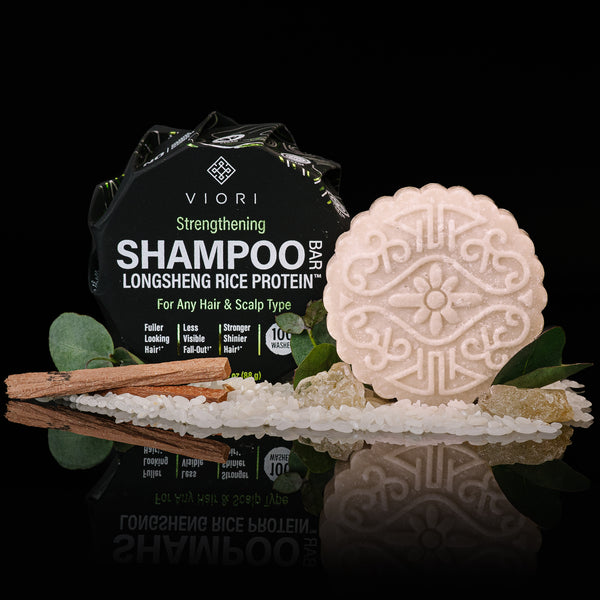
Viori’s shampoo bars are formulated to be pH balanced and use a gentle cleanser system (including Sodium Cocoyl Isethionate, a mild surfactant often nicknamed “baby foam” in formulating circles). In the chair, that kind of mild-but-effective cleanse typically translates to less drag, better slip, and a cleaner canvas-especially important when you’re trying to evaluate subtle tone and shine.
The “silent spoiler”: hard water can change how henna tones look
If you live in a hard-water area, minerals like calcium and magnesium can interfere with lather and leave a film that changes how light reflects off the hair. Henna tones are particularly sensitive to this because copper and gold shades rely on clean light reflection to look vibrant.
- Mineral film can make warm tones read more flat or muddy.
- Reduced lather can tempt you to scrub harder, which increases friction and can roughen the cuticle.
If your hair ever looks noticeably better after washing somewhere else, water chemistry may be playing a bigger role than you realize.
Friction: the shampoo bar double-edged sword
With shampoo bars, friction is the variable that sneaks up on people. More rubbing can increase contact with depositing ingredients-but it can also lift the cuticle, tangle the lengths, and make results less even (and less shiny).
This is one reason Viori recommends a color-friendly approach: build lather in your hands and work it through the hair, rather than rubbing the bar directly onto your head. Technically speaking, that reduces localized abrasion and helps keep the cuticle smoother-which supports better shine and more consistent tone.
Conditioner is what makes the tone look “expensive”
A lot of people judge henna results by color alone, but in real life the most noticeable upgrade is often the finish: shine, softness, and how smoothly the hair moves. That’s conditioning territory.
Conditioners typically use positively charged conditioning agents that cling to the hair (which tends to be negatively charged, especially when damaged). This improves slip, reduces frizz, and helps the cuticle lie flatter-so warm tones look brighter, not brassy.
Viori conditioner bars use Behentrimonium Methosulfate, a well-known conditioning ingredient in professional haircare because it supports slip and a smoother cuticle feel. Translation: better detangling, less friction, and more light reflection.
WHAT CUSTOMERS ARE SAYING
Real reviews for Hidden Waterfall Barra de Champú
How to use a henna shampoo bar for the most even result
If you want the most predictable, salon-like outcome from a henna-style bar routine, treat it like a gentle glaze process-not a scrub session.
- Saturate your hair thoroughly before you cleanse. Even water distribution helps prevent uneven deposit.
- Create lather in your palms instead of rubbing the bar directly on your hair.
- Cleanse your scalp with fingertips; smooth the lather down the lengths rather than aggressively scrubbing mids and ends.
- Let it sit for 60-120 seconds before rinsing. That small pause is one of the few ways to increase deposit potential in a wash-off format.
- Condition mid-length to ends and give it a few minutes if your hair is dry or frizz-prone.
- Repeat consistently over time. Most “tone” benefits from gradual layering, not one intense wash.
Who should be extra cautious
Henna-style cleansing can be beautiful, but a few situations deserve a slower, more mindful approach.
- Very light blonde, white, or gray hair: warm tones can show quickly and may read more golden/copper than expected.
- Highly porous ends: they can grab unevenly, so technique and conditioning matter a lot.
- Reactive or sensitive scalps: fragrance can be a trigger for some people. If you’re fragrance-sensitive, Viori’s Native Essence (unscented) is typically the most comfortable option.
Choosing a Viori bar like a stylist would
Even when your focus is tone and shine, your scalp type still sets the foundation. Excess oil, dryness, or irritation can change how your hair looks and feels-and how any warmth reads in natural light.
- Normal to oily scalp: Viori Citrus Yao is often the best match for a cleaner root feel.
- Normal to dry scalp: Viori Terrace Garden or Hidden Waterfall can feel more moisturizing and comfortable.
- Sensitive scalp or fragrance sensitivity: Viori Native Essence is the unscented route.
Final thoughts: think “cuticle + consistency,” not instant dye
The best henna shampoo bar experiences usually come from people who stop chasing intensity and start focusing on the real levers: low friction, pH-balanced cleansing, thorough conditioning, and consistent use over time.
When those pieces line up, warm tones look clearer, shine looks brighter, and hair simply behaves better between washes-which is the kind of result you notice in the mirror even when you can’t quite put your finger on what changed.


