
“Herbal essence shampoo” sounds simple-fresh, plant-inspired, clean. But behind the leafy language is a much more technical reality: the way your hair looks, feels, and behaves after shampooing is determined far more by cleansing chemistry, pH, and conditioning deposition than by whether an ingredient list includes a few botanical extracts.
After two decades of doing hair, I’ve found that most people don’t actually want a “herbal” shampoo. They want the results they associate with it: a comfortable scalp, lighter roots, softer lengths, and that crisp, just-washed feeling that lasts.
This post breaks down the science in plain English-so you can understand what’s happening on your scalp and hair fiber, avoid the common pitfalls (like waxy buildup and frizz), and choose a routine that performs consistently. I’ll also share how Viori fits into this conversation, because their bar formulas highlight a few principles that matter more than marketing ever will.
What “herbal” shampoo is really doing: the surfactant system runs the show
No matter how botanical a shampoo’s identity feels, shampoo is built to remove what cosmetic chemists call “soil.” That soil is a real-world mix of oils, particles, residue, and minerals that cling to hair and scalp.
NOT SURE WHICH PRODUCT IS RIGHT FOR YOU?
TAKE THE QUIZTakes 30 seconds · 134,000+ customers matched
Here’s what you’re actually washing away:
- Sebum (your scalp’s natural oils)
- Sweat salts and other electrolytes
- Pollution and airborne particles
- Styling product residue (especially film-forming polymers)
- Hard-water minerals that can coat the cuticle
Botanical ingredients can support the experience, but they don’t do the heavy lifting. The real cleaning power comes from surfactants-the cleansing agents that surround oil and grime so it can rinse away.
Viori, for example, uses Sodium Cocoyl Isethionate (SCI), a mild cleanser often praised for creating a creamy lather without the harsh feel people associate with stronger detergents.
The hidden deal-breaker most people never check: pH
If you’ve ever used a shampoo that made your hair feel squeaky, rough, or frizzy-pH may have been part of the problem.
Your hair’s outer layer (the cuticle) behaves differently depending on acidity versus alkalinity:
- Mildly acidic conditions tend to help the cuticle lie flatter, which improves shine and reduces tangling.
- Alkaline conditions can lift the cuticle, increasing roughness, frizz, and the chance of breakage over time.
Viori calls out that their products are pH balanced, and that matters. In the professional world, we typically want hair products to stay in a range that supports the cuticle (often discussed around 3.5-6.5). When products skew too alkaline, hair can become progressively harder to manage-especially if it’s color-treated, textured, or already porous.
Why “herbal essence” often comes from fragrance-not herbs
This is one of the most overlooked truths: what most people recognize as “herbal” is frequently a scent structure.
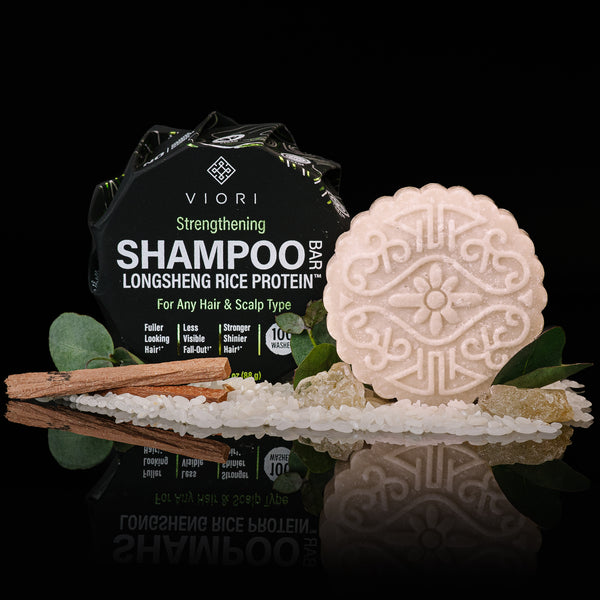
That fresh, botanical impression is usually built from combinations like:
- Green notes that read as “crushed leaf” or “fresh cut stems”
- Citrus top notes that signal clean
- Light florals to lift and brighten
- Woods and soft musks for warmth and staying power
Viori’s FAQs explain that their scented bars use fragrance oils that combine essential oils with natural-equivalent fragrance components, chosen with a clean-scent approach. If fragrance tends to bother your scalp, Viori also offers Native Essence, an unscented option with no added fragrance-often a smart starting point for anyone who’s reactive or simply wants to keep variables low.
Botanicals are tricky in real formulas (which is why they’re often used lightly)
Botanical extracts sound straightforward: add plants, get plant benefits. In practice, many extracts are difficult to formulate because they can interfere with cleansing systems and stability.
Depending on the extract, you can run into issues like:
- Electrolytes that change foam and performance
- Polyphenols that discolor or react in complex formulas
- pH drift that affects how hair feels after rinsing
- Batch variability that makes results inconsistent
This is one reason solid formats can be appealing: less free water can simplify certain stability challenges. But bars also require smart engineering so they rinse cleanly, don’t leave residue, and hold their shape between uses. Viori recommends keeping bars out of direct water contact and letting them dry between washes; many customers report they last 60+ washes when stored properly.
What people usually mean when they say they want an “herbal” shampoo
In my chair, “herbal” is usually shorthand for a specific outcome. Most clients are chasing one (or more) of these:
1) Scalp comfort
Comfort is rarely about how botanical something sounds. It’s more often about balanced cleansing, a hair-friendly pH, and avoiding triggers (fragrance is a common one). Viori notes ingredients like aloe vera and bamboo are included to help with dryness and dry-scalp flaking, and their unscented option is often recommended for sensitive scalps.
2) Oil control without feeling stripped
Oil control is about cleansing strategy, not “stronger herbs.” Viori notes Citrus Yao includes citric acid, which helps break down oil effectively and can help some people go longer between washes-without that harsh, over-cleansed feel.
3) Stronger, shinier hair
That healthy, glossy “botanical hair” look is typically supported by protein balance, smart conditioning, and reduced friction during washing. Viori’s bars feature fermented Longsheng rice water and include components like hydrolyzed rice protein plus nutrients such as inositol (vitamin B8) and panthenol (vitamin B5). Their FAQs also note they use a lower concentration of rice water because overly concentrated rice water used too often can disrupt pH.
The “waxy buildup” problem: it’s not detox-here’s what it usually is
When people switch to a more “natural” or “herbal-feeling” shampoo and their hair turns dull, sticky, or coated, the internet loves to call it a detox phase. Technically, it’s usually one of these issues:
WHAT CUSTOMERS ARE SAYING
Real reviews for Hidden Waterfall Barra de Champú
- Hard water leaving mineral film on the cuticle
- Overly gentle cleansing that doesn’t fully remove sebum and styling residue
- Too much heavy conditioning for low-porosity hair
- Technique problems (especially with bars), creating uneven application and excess friction
Viori specifically recommends building lather in your hands and applying with your fingers rather than rubbing the bar directly on your scalp-especially if your hair is color-treated-because less friction means less cuticle disruption and more even distribution.
How to get that “herbal essence” freshness reliably (using Viori as a roadmap)
If you want the clean, light, botanical vibe to actually show up in your results, choose your routine based on scalp behavior first-not just scent preference.
Viori’s guidance breaks it down simply:
- Oily scalp: tends to feel oily 1-2 days after washing
- Normal scalp: tends to feel oily around day 3
- Dry scalp: tends to feel oily 4+ days after washing
From there, a practical Viori routine looks like this:
- Oily or greasy scalp: try Citrus Yao shampoo and conditioner.
- Dry scalp or dry hair: look toward Terrace Garden, Hidden Waterfall, or Native Essence.
- Oily scalp + dry ends: use Citrus Yao shampoo on the scalp, then a more moisturizing conditioner on mid-lengths and ends (such as Terrace Garden, Hidden Waterfall, or Native Essence).
- Sensitive scalp or fragrance concerns: start with Native Essence (unscented) to keep things simple and predictable.
Final thoughts: “herbal” is a promise-results come from engineering
The term “herbal essence shampoo” isn’t a technical category. It’s a sensory expectation: fresh, clean, light, comfortable. To get that consistently, you want a product built around effective but gentle cleansing, pH balance, and conditioning that doesn’t leave residue.
That’s why I like teaching clients to shop with their scalp and hair behavior in mind. When you match the cleanse and conditioning strategy to your scalp type and porosity, the “herbal” feeling stops being a gamble-and starts being your baseline.
If you want a personalized direction using Viori, share three details: how quickly your roots get oily, whether your ends feel dry, and whether your hair is color-treated. With that, it’s easy to map a routine (and a scent choice) that gives you that fresh, botanical shower experience-without the surprise waxiness or the frizz spiral.


