
Homemade shampoo bars sound like the ultimate win: less plastic, fewer bottles, and a tidy little bar that promises “clean hair, naturally.” I get the appeal-truly. But after 20 years working with every hair type under the sun, I can tell you this is one of the most misunderstood DIY projects in haircare.
Here’s the truth most tutorials skip: a “shampoo bar” can be a soap bar, or it can be a true shampoo bar. They look similar. They behave wildly differently. And because a bar is a solid you physically drag across hair, the mechanics (friction, distribution, buildup patterns) matter just as much as the ingredient list.
What “homemade shampoo bar” usually means
Most DIY recipes fall into one of two camps. If you know which camp you’re in, you’ll instantly understand 90% of the success stories-and 90% of the horror stories.
1) Soap-based bars (oils + lye)
These are made through saponification-a chemical reaction where oils are combined with sodium hydroxide (lye) and cured into a solid bar. This is real soap. It can be gorgeous and effective for skin, but hair is a different material with different rules.
NOT SURE WHICH PRODUCT IS RIGHT FOR YOU?
TAKE THE QUIZTakes 30 seconds · 134,000+ customers matched
The biggest issue is that soap is naturally alkaline, and hair generally behaves best in a mildly acidic environment. Alkalinity changes how the cuticle sits, how strands slide past each other, and how easily hair tangles.
2) True shampoo bars (non-soap surfactant bars)
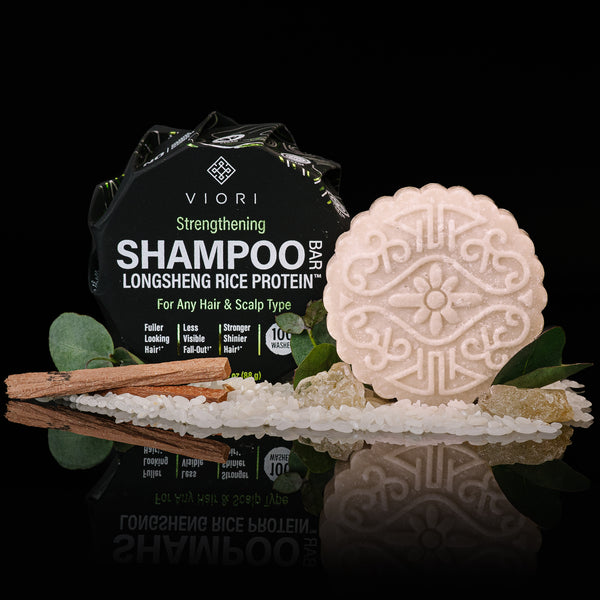
A true shampoo bar is typically built on gentle cleansers (surfactants) designed for hair performance. For example, Viori uses Sodium Cocoyl Isethionate (SCI), a mild cleanser derived from coconut that’s often nicknamed “baby foam” in the industry because it’s gentle while still cleansing well.
Another major difference is control: a well-formulated shampoo bar can be pH balanced, which is one of the most important (and most overlooked) factors in long-term hair health.
Hair is not skin (and that’s where DIY goes sideways)
Your scalp is living skin. Your mid-lengths and ends are not-they’re hair fiber, and that fiber can’t “heal.” It can only be protected, conditioned, and handled in a way that reduces wear.
When a product is too alkaline, or when you apply it with too much friction, you’re not just changing how hair feels in the shower. You can change how it behaves over time: more frizz, more tangling, more snapping, and (for color-treated hair) faster fading.
pH: the quiet detail that decides whether hair shines or frays
Viori is very clear about why they keep their bars pH balanced: hair products should sit roughly between 3.5 and 6.5. Products that lean more alkaline can dry hair out and damage it long-term.
That isn’t a scare tactic-it’s basic hair structure. Think of the cuticle like tiny overlapping shingles. When the environment is too alkaline, those shingles lift and catch. When the pH is balanced, they lie flatter.
- Alkaline conditions can increase swelling of the hair shaft and lift the cuticle, which raises friction and makes tangling more likely.
- Balanced pH supports smoother cuticle behavior, better light reflection (shine), and easier detangling.
The rarely discussed problem: bar friction (yes, it’s a big deal)
This is the angle that almost never gets enough attention: a bar is a concentrated solid. If you rub it directly on your hair, you’re combining cleanser + pressure + friction in the same spot.
That friction can create uneven results-over-cleansed patches near where you scrub, and under-cleansed areas where the bar doesn’t distribute well. It can also rough up the cuticle, especially if your hair is already dry, porous, or color-treated.
One of the smartest technique tips in Viori’s own guidance (especially for color-treated hair) is to build lather in your hands and apply with your hands rather than grinding the bar directly onto your scalp. It’s gentler, more even, and far more hair-friendly.
The “waxy hair” mystery: it’s often hard water chemistry, not a detox
If you’ve ever tried a homemade bar and ended up with hair that felt coated, tacky, heavy, or dull, you’re not alone. Many people get told it’s a “transition period.” Sometimes it is. But often, it’s just chemistry.
With hard water, minerals like calcium and magnesium can react with soap (true soap bars) and form insoluble deposits. That’s basically the hair version of bathtub soap scum, and it can cling to the cuticle and scalp.
- Hair can feel waxy or film-coated
- Shine can look muted because the cuticle surface becomes uneven
- Detangling can get harder because friction increases
- The scalp can feel “off” because residue accumulates around the roots
A pH-balanced, non-soap cleanser system tends to avoid that specific mineral/soap reaction, which is one reason many people find bars like Viori’s easier to use consistently-especially in hard water areas.
Strengthening ingredients: more isn’t always better
DIY recipes love the idea of “loading up” on strengthening add-ins-rice water, proteins, botanical powders. The problem is that hair doesn’t respond well to extremes, especially when the pH isn’t controlled.
Viori addresses this nuance directly: they use a lower concentration of Longsheng rice water because very high concentrations used too often can disrupt the hair and scalp’s pH. Their approach is to keep it safe and pH balanced while pairing it with other nutrient-rich ingredients for comparable benefits.
Professionally speaking, the question isn’t “Is protein good?” It’s:
- How porous is your hair?
- How often are you using strengthening ingredients?
- Are you balancing that routine with enough moisture and conditioning slip?
Conditioner isn’t optional-here’s the real reason
A lot of DIY routines treat conditioner like a nice extra. In practice, it’s a core part of keeping hair manageable and resilient. After cleansing, hair is more vulnerable to friction damage from brushing, towel-drying, heat, and just general wear.
Viori explains it in a way I appreciate: conditioner is positively charged, so it binds to the hair strand and helps replace what cleansing temporarily removes until natural sebum returns. That “cling” is part of why conditioner improves slip and helps reduce breakage during detangling.
Also, don’t judge conditioner bars by foam. Viori points out that conditioner won’t lather like shampoo because it isn’t built to foam-it’s built to deposit, smooth, and support the cuticle.
WHAT CUSTOMERS ARE SAYING
Real reviews for Hidden Waterfall Barra de Champú
If you still want to DIY, set the right goal
DIY can absolutely be a fun project, but it helps to be honest about what you’re making.
If you make a lye-based bar
You’re making soap. It may work for some hair types and some water conditions, but results will depend heavily on hard water, technique, and how your hair handles alkalinity.
If you want a bar that behaves like modern shampoo
You’ll want a true shampoo bar approach-a gentle surfactant system with pH control and a conditioning strategy. That’s the territory Viori lives in: mild cleansing (like SCI), pH balance, and a conditioner system designed to support hair slip and comfort.
A salon-smart way to use any shampoo bar (including DIY)
If you want your bar routine to feel better and perform better, technique is everything. Here’s a professional, hair-friendly method.
- Wet hair thoroughly (bars need water to distribute evenly).
- Lather the bar in your hands first, then apply the lather to your scalp.
- Cleanse the scalp with fingertips; let the suds rinse through the ends rather than scrubbing lengths.
- Use conditioner from mid-lengths to ends and let it sit for a few minutes before rinsing.
- Rinse very well-bars are concentrated, and incomplete rinsing can mimic buildup.
- Store the bar dry between uses (a holder that lets it air out helps prevent softening and waste).
Final thoughts
Homemade shampoo bars aren’t automatically bad, and they aren’t automatically better. They’re simply a format-and in that format, pH, water chemistry, conditioning strategy, and friction make or break the result.
If you want a bar routine that’s designed around how hair actually behaves, Viori’s shampoo and conditioner bars are built with those realities in mind: pH balanced, gentle cleansing with SCI, supportive conditioning ingredients, and a thoughtful use of fermented Longsheng rice water at a level intended to be safe for regular use.
If you share whether your scalp runs oily/normal/dry (how many days until it feels oily), your hair porosity (low/medium/high), and whether your hair is color-treated, I can help you dial in the most bar-friendly routine and technique for your specific hair.


