
If you’ve been Googling “how long to soak rice for hair”, you’ve probably seen answers that range from a quick 10 minutes to a multi-day “ferment until it smells.” And if you tried one of those methods and ended up with hair that felt either amazing or strangely rough, you’re not imagining things.
Here’s the truth from a stylist’s perspective: soak time is only the surface-level question. What really determines your results is what that time does to the mixture-how much starch ends up in the water, whether it starts drifting into fermentation, and how your hair and scalp respond to the final concentration and pH.
The unique angle most people miss is this: “How long” is rarely the real variable. It’s a stand-in for temperature, dilution, cleanliness, porosity, and how residue-prone your hair is. Once you understand that, rice water stops being a gamble.
Soaking vs. fermenting: same rice, totally different behavior
Most DIY advice lumps everything under “rice water,” but there are two very different processes happening depending on time and storage conditions.
NOT SURE WHICH PRODUCT IS RIGHT FOR YOU?
TAKE THE QUIZTakes 30 seconds · 134,000+ customers matched
Soaking (simple extraction)
A basic soak pulls into the water mostly surface starches and other water-soluble components. This is usually where you get that milky, slippery feel.
The part that’s rarely said out loud: that slip is often starch film, not the same thing as true conditioning. Film can feel great while your hair is wet, then turn into dryness, dullness, or tangling once it dries-especially if your hair holds onto buildup easily.
Fermenting (microbial activity + pH drift)
Leave rice water sitting long enough-especially warm-and it tends to shift toward fermentation. That can change the smell, the acidity, and how reactive it feels on your scalp and hair.
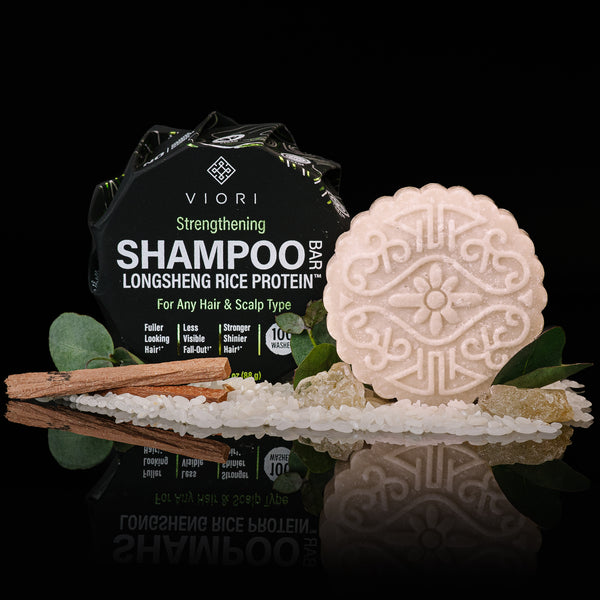
This is one reason Viori uses a lower concentration of fermented Longsheng rice water in its bars. In their FAQs, they note that rice water at high concentration can disrupt hair and scalp pH if used too often or in excess. Their approach is designed to support similar benefits in a pH-balanced way that can be used regularly if desired.
The “milky water” myth: cloudier isn’t always better
A lot of people equate cloudy rice water with “strength.” But technically, the cloudy look is largely about starch dispersion. Starches can create a smoothing, thickening feel-until they don’t.
When rice water goes wrong, the complaints tend to sound like this:
- Ends feel stiff or straw-like
- Hair tangles more easily, especially when drying
- Hair looks dull instead of shiny
- Scalp feels tight, itchy, or uncomfortable
In many cases, it’s not that rice is “drying.” It’s that you’ve deposited too much film without enough balancing hydration and slip, which increases friction-particularly at the mid-lengths and ends.
So how long should you soak rice for hair? Here are the ranges that actually make sense
Instead of chasing one magic number, choose a time window based on how quickly rice water is likely to become heavy, irritating, or unpredictable for your hair.
Quick soak: 10-30 minutes (the best starting point)
This is my go-to recommendation for most people because it keeps things light and repeatable. You’ll usually get benefits without driving the mixture into stronger odor, heavier residue, or bigger pH changes.
This window is especially smart if you have:
- Fine hair that weighs down easily
- Low porosity hair that builds up quickly
- Sensitive scalp or a history of irritation
- No idea how your hair will react yet (first-time users)
Medium soak: 1-4 hours (more coating, more to manage)
A longer soak often increases that “slip” feeling, but it also increases the chance of a heavier deposit. If your hair loves a film-forming effect, you might enjoy this-just don’t confuse “more slip” with “more strength.”
If hair starts feeling coated or dull afterward, treat that as feedback: shorten the soak time, dilute more, and make sure you condition properly.
Overnight soak: 8-12 hours (often becomes accidental fermentation)
At room temperature, an overnight soak frequently shifts into early fermentation territory-whether you intended it or not. That’s where results can become less predictable.
If your scalp is reactive, flaky, or easily irritated, this is the window where you’ll most often see problems show up first.
Long fermentation: 24+ hours (high variability, higher risk)
Fermentation can change the profile of the mixture, but DIY conditions aren’t controlled. Temperature swings, container cleanliness, rice type, and timing all influence the final result.
If you want rice-water-style benefits with fewer variables, a pH-balanced routine is generally more reliable. That’s a big part of why Viori’s bars are formulated the way they are-designed to support moisture, strength, shine, and scalp comfort without relying on high-concentration DIY experiments.
The most overlooked factor: your hair porosity decides your “ideal” soak time
Two people can do the same soak and have totally different outcomes because porosity changes how your hair absorbs, holds, and releases residue.
If you have low porosity hair
Low porosity hair tends to repel moisture and protein while collecting buildup more easily. It often does best with lighter approaches.
- Best soak: 10-30 minutes
- Best strategy: dilute and rinse thoroughly
If you have medium porosity hair
This hair type usually has the most flexibility. You can experiment, but you still want to avoid heavy residue.
WHAT CUSTOMERS ARE SAYING
Real reviews for Hidden Waterfall Barra de Champú
- Best soak: 30-120 minutes as a practical range
- Adjust based on feel: dullness or stiffness means go shorter or dilute
If you have high porosity or damaged hair
High porosity hair absorbs quickly but struggles to retain moisture. The key isn’t pushing longer soak times-it’s reducing friction and sealing in softness afterward.
- Best soak: short to medium
- Non-negotiable: follow with conditioning
What to do after rice water (this is where most routines fall apart)
People often judge rice water by how hair feels immediately after rinsing. But the real test is how it feels as it dries-and how it behaves at detangling time.
Conditioner matters because it helps reduce friction and improve manageability. Viori’s guidance explains it simply: cleansing removes some protective oils, and conditioner helps temporarily replace that protection by bonding to the hair shaft. That’s especially helpful if your hair is exposed to heat, sun, water, or mechanical wear.
The four mistakes that get blamed on “wrong soak time”
- Not rinsing the rice first, which dumps extra powdery starch into your mixture
- Using the rice water too concentrated, which increases film and dullness
- Letting it sit warm too long, which nudges it toward fermentation and pH shifts
- Skipping conditioner afterward, which leaves friction unaddressed
My most reliable, low-drama method (simple and repeatable)
If you want an approach that’s more likely to help than hurt, start here:
- Soak time: 10-30 minutes
- Dilute if your hair is fine, low porosity, or buildup-prone
- Use once per week at first, then adjust
- Condition afterward to keep hair smooth and low-friction
If you want rice-water benefits without the guesswork
If your goal is consistency-especially if you wash often-consider a formula designed to deliver rice-water-style results without the pH and concentration rollercoaster. Viori’s shampoo and conditioner bars use fermented Longsheng rice water in a pH-balanced format and at a lower concentration, specifically because high-concentration rice water can disrupt hair and scalp pH when overused.
Picking a Viori option based on scalp needs
- Citrus Yao: commonly recommended for normal to oily scalps (helpful for oil control)
- Terrace Garden: a more moisturizing choice for normal to dry scalps
- Hidden Waterfall: a versatile option often used across multiple scalp types
- Native Essence: unscented and typically the most comfortable pick for sensitive scalps
Bottom line: the “best” soak time is the one your hair can tolerate repeatedly
If you’re looking for the one perfect number, I’ll save you the frustration: it doesn’t exist. The best soak time is the one that gives you benefits without residue, irritation, stiffness, or tangles.
For most people, that’s a 10-30 minute soak, used occasionally, followed by a conditioning step. Start there, listen to your hair, and adjust with intention-not internet pressure.


