
After two decades of working with every hair texture imaginable, I've heard this question more times than I can count: "Can I use bar soap on my hair?"
Here's what I always tell people-you're asking the wrong question.
The real issue isn't whether your cleanser comes in a bar or bottle. What matters is understanding the profound chemical difference between true soap and modern cleansing bars, and how that difference interacts with your hair's unique protein structure in ways that will either transform or destroy your results.
This conversation rarely happens outside cosmetic chemistry labs, yet it holds the key to why some people absolutely thrive with bar cleansers while others experience complete hair catastrophe.
Let me take you behind the scenes of what's really happening when bar meets hair.
The Chemistry That Nobody Talks About
What You Think "Soap" Is (And Why That Matters)
When someone asks about using "bar soap" on their hair, they're usually picturing that traditional bar sitting in their shower. But here's the thing most people don't realize: real soap and modern cleansing bars are completely different products at a molecular level.
True soap comes from saponification-a chemical reaction between fats or oils and lye (sodium hydroxide). This ancient process creates molecules with a water-loving head and an oil-loving tail. The crucial detail that changes everything? True soap is inherently alkaline, with a pH between 9-10.
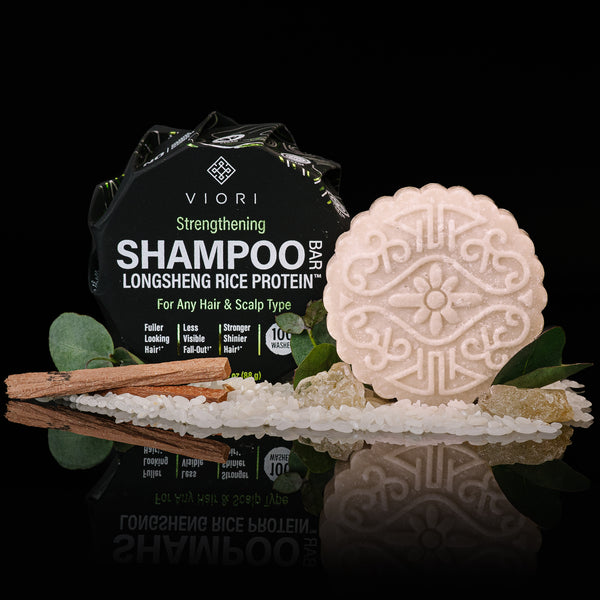
Now here's where it gets interesting: most modern "bar cleansers" marketed for hair-including quality shampoo bars like those from Viori-aren't actually soap at all. They're solid synthetic detergents, what we call "syndets" in the industry.
This distinction matters more than you might think.
Your Hair's pH "Sweet Spot" Explained
Your hair is fascinatingly complex at a molecular level. It behaves as what chemists call an "amphoteric polymer"-meaning it can act as both an acid and a base depending on its environment.
NOT SURE WHICH PRODUCT IS RIGHT FOR YOU?
TAKE THE QUIZTakes 30 seconds · 134,000+ customers matched
Hair has what's called an isoelectric point around pH 3.67. Think of this as your hair's neutral zone-the pH where the protein carries no electrical charge. But here's where things get critical:
When pH rises above this point (becomes more alkaline), your hair proteins develop a negative charge.
When you use true soap at pH 9-10 on your hair, several destructive things happen simultaneously:
- The cuticle scales lift up like shingles on a roof during a windstorm
- Hair strands repel each other (that negative charge makes them push apart, causing frizz and tangling)
- The bonds that give hair its strength become vulnerable to breakage
- In hard water, soap forms crusty deposits that cement onto your hair shaft-that's the "waxy buildup" people complain about
This is why traditional bar soap is categorically problematic for hair. It's not about the bar format-it's about the alkaline pH fundamentally conflicting with your hair's protein structure.
Why Today's Shampoo Bars Are a Different Beast Entirely
The Syndet Revolution Nobody Told You About
Here's where products like Viori's shampoo bars represent something entirely different from traditional soap.
These bars are formulated with synthetic detergents-primarily Sodium Cocoyl Isethionate (SCI). Despite the chemical-sounding name, SCI is derived from coconut oil, but it's been molecularly modified in ways that make it perfect for hair:
- It can be formulated to a neutral pH of 5-7, compatible with hair's natural pH of 4.5-5.5
- It cleanses effectively without stripping natural oils as aggressively as harsh sulfates
- It works in hard water without forming that waxy soap scum
- It's biodegradable, breaking down naturally in the environment
When a brand like Viori says their bars are "pH balanced," this is what they mean-a flexibility that's chemically impossible with true soap.
The Conditioning Secret Hidden in the Formula
Here's a technical detail that reveals sophisticated formulation work: Viori includes an ingredient called Behentrimonium Methosulfate (BTMS) in both their shampoo AND conditioner bars.
This is unusual, and it's worth understanding why it matters.
BTMS is a cationic surfactant-it carries a positive charge, opposite to most cleansing ingredients. In professional formulations:
In conditioner, BTMS is standard. It deposits on damaged (negatively-charged) areas of hair, providing slip and detangling power.
In shampoo, this is less common but strategically brilliant. The cationic molecules deposit even during the cleansing phase, partially offsetting any drying effects. This creates what's called a "2-in-1" effect-you're getting simultaneous cleansing and conditioning.
This explains why some users report not needing conditioner with certain shampoo bars. The formula is providing conditioning benefits during the cleansing phase itself.
One quick note because I see this confusion constantly: despite the name "methosulfate," BTMS is completely different from harsh sulfates like Sodium Lauryl Sulfate. That "methosulfate" refers to a different part of the molecule entirely-this is actually a gentle conditioning agent, not a stripping cleanser.
The Hard Water Problem: Your Location Determines Everything
The Silent Saboteur in Your Shower
One of the most overlooked factors in the bar cleanser debate is your water quality-and this is where true soap and modern syndets show dramatically different behaviors.
Hard water contains dissolved minerals, primarily calcium and magnesium. When traditional soap meets these minerals, chemistry creates an insoluble precipitate-soap scum. You see it on your shower walls, but when it forms on hair, it:
- Creates a waxy, dull coating
- Prevents moisture absorption
- Causes progressive buildup with each wash
- Leads to that "straw-like" texture many people report
Modern syndets like SCI don't form these insoluble complexes. They maintain their cleansing ability and rinse clean regardless of water hardness.
This is why your location dramatically affects your experience with bar cleansers. Someone in Seattle with soft water (around 25 ppm calcium carbonate) will have a completely different experience than someone in Phoenix with very hard water (around 270 ppm) using the exact same bar.
If you've tried a bar cleanser and experienced awful buildup, hard water is likely the culprit-not the product format itself.
The Protein Buildup Paradox
Here's an advanced concept that affects long-term bar use: ingredients like the hydrolyzed rice protein in Viori's formula can create buildup through a completely different mechanism than soap scum.
Here's the pattern:
- Proteins are attracted to damaged (negatively-charged) sites on hair
- With repeated use, proteins layer upon proteins
- Initially, this improves texture-the protein "masks" damage
- Eventually, the coating becomes too thick, causing stiffness and brittleness
The clinical sign I look for: hair feels strong at first, then progressively becomes rigid and prone to snapping-especially on low-porosity hair that already resists absorption.
This isn't unique to bars, but the concentrated nature of bar formulations can accelerate this cycle. The solution is periodic clarifying-which, ironically, true soap can accomplish (though at the cost of cuticle damage).
Why Bars Aren't Universal: The Hair Type Factor
The Porosity Paradigm
Hair porosity-how readily your hair absorbs and retains moisture-creates vastly different outcomes with bar cleansers. Let me break this down by type:
Low Porosity Hair (tightly closed cuticles):
Your challenge is that your hair resists moisture and product absorption. With bars, the concentrated conditioning agents like cocoa butter or shea butter can sit on the surface rather than penetrating.
The result? Greasy, weighed-down hair without actual conditioning benefits.
Professional recommendation: If you have low-porosity hair, you often need lighter, water-based formulations found in liquid products, or use only a shampoo bar and skip the conditioner bar entirely.
High Porosity Hair (open, damaged cuticles):
Your hair absorbs everything but retains nothing. The rich emollients in quality bars can temporarily fill those cuticle gaps.
The result is often an excellent initial response-hair feels "repaired." The long-term concern is that this can mask damage without addressing it, potentially leading to the protein buildup I mentioned earlier.
Medium Porosity Hair:
This is the sweet spot. You're most likely to benefit long-term from quality bar cleansers. Your balanced cuticle structure neither rejects nor over-absorbs the formula's components.
The Curly Hair Consideration
Textured and curly hair deserves special attention. The curved hair shaft creates natural areas where cuticles lift (on the outside of each curve), making curly hair inherently more porous and fragile than straight hair.
The friction factor matters here: bar application requires physical contact-either rubbing directly on hair or working lather in your hands. This mechanical friction can:
- Disrupt curl patterns
- Cause cuticle lifting on already-vulnerable curved sections
- Lead to frizz and breakage
Technical recommendation for curly hair (Type 3-4):
- Never apply the bar directly to your hair
- Create lather thoroughly in your hands first
- Use a "scrunching" application method rather than rubbing
- Consider using the conditioner bar only on lengths and ends, not roots
With these modifications, many people with textured hair have excellent results with bars-but the application technique makes all the difference.
The Rice Water Component: Separating Science from Marketing
What Fermented Rice Water Actually Does
Since we're examining Viori specifically, let's look at their signature ingredient with technical precision: fermented Longsheng rice water.
Confirmed beneficial compounds in fermented rice water include:
- Inositol (Vitamin B8): A unique compound that can actually penetrate the hair shaft and repair damage from the inside out, improving elasticity
- Amino acids: Building blocks that temporarily bond to hair's keratin structure
- Antioxidants: Including vitamin E, ferulic acid, and allantoin
The fermentation process is key here. Fermentation breaks down complex carbohydrates, releasing bound nutrients and significantly increasing inositol concentration. This part is chemically accurate.
The mechanism:
Inositol has a unique molecular structure that allows it to penetrate into the hair cortex-the inner layer. Once inside, it increases elasticity by reinforcing hydrogen bonds between keratin proteins. This can genuinely reduce breakage during combing and styling.
The critical limitation: Inositol reinforces existing hair structure-it doesn't fundamentally rebuild severely damaged hair. On heavily bleached or chemically damaged hair, there may not be enough intact structure to reinforce.
WHAT CUSTOMERS ARE SAYING
Real reviews for Hidden Waterfall Barra de Champú
The Gray Hair Question
The Red Yao women of Longsheng are famous for maintaining dark hair well into old age. Could rice water prevent graying?
Let's examine the science honestly. Hair turns gray when:
- Melanocytes (pigment-producing cells) in follicles become depleted
- Hydrogen peroxide builds up in follicles, bleaching color from the inside
- Oxidative stress damages cells at the follicular level
Rice water contains antioxidants that could theoretically reduce oxidative stress-but this would work at the scalp and follicle level, not on existing hair shafts.
The honest professional assessment: While rice water contains compounds that might support healthy melanocyte function, the Red Yao women's results are likely multifactorial: genetics, diet, environmental factors, AND rice water use. It's observational data, not a controlled study.
Could it help? Possibly. Should you expect it to prevent gray hair? That's a significant leap from current evidence.
The Transition Period: What's Actually Happening to Your Hair
Beyond the "Detox" Myth
Many natural hair care companies reference a "transition period" when switching from conventional products. Some people see results immediately; others report it takes 2-3 months. What's actually occurring?
Weeks 1-2: The Stripping Phase
Silicones and coating agents from previous products are being removed. Hair may feel dry, tangled, or unmanageable. This isn't "detoxification" (a meaningless marketing term)-it's simply the removal of film-forming ingredients that were creating artificial smoothness.
Weeks 3-6: The Recalibration Phase
Your scalp adjusts sebum (oil) production. Many conventional products contain harsh sulfates that strip oil, causing your scalp to overproduce oil in response. As cleansing becomes gentler, sebum production normalizes.
This is why people report "going longer between washes"-not because the new product is inherently superior, but because their scalp is no longer in crisis mode.
Months 2-3: The Equilibrium Phase
Natural moisture balance is established. Any protein or moisture buildup patterns become evident. This is when you'll see your true long-term compatibility (or incompatibility) with the product.
Professional insight: The transition period's length and severity depend on:
- Your previous products (silicone-heavy formulas = longer transition)
- Water hardness (hard water = more challenging transition)
- Your hair's starting condition (damaged hair = more unpredictable results)
Environmental Considerations: The Full Picture
The Sustainability Calculus
The environmental appeal of bars is legitimate, but it deserves nuanced analysis.
Confirmed advantages:
- Packaging reduction: Paper or minimal packaging versus plastic bottles
- Transportation efficiency: Concentrated bars weigh less and require less space, reducing shipping emissions
- Water reduction: No water in the product formula itself
Underexamined considerations:
- Usage efficiency: If bars dissolve quickly or users waste product during the learning curve, environmental


